




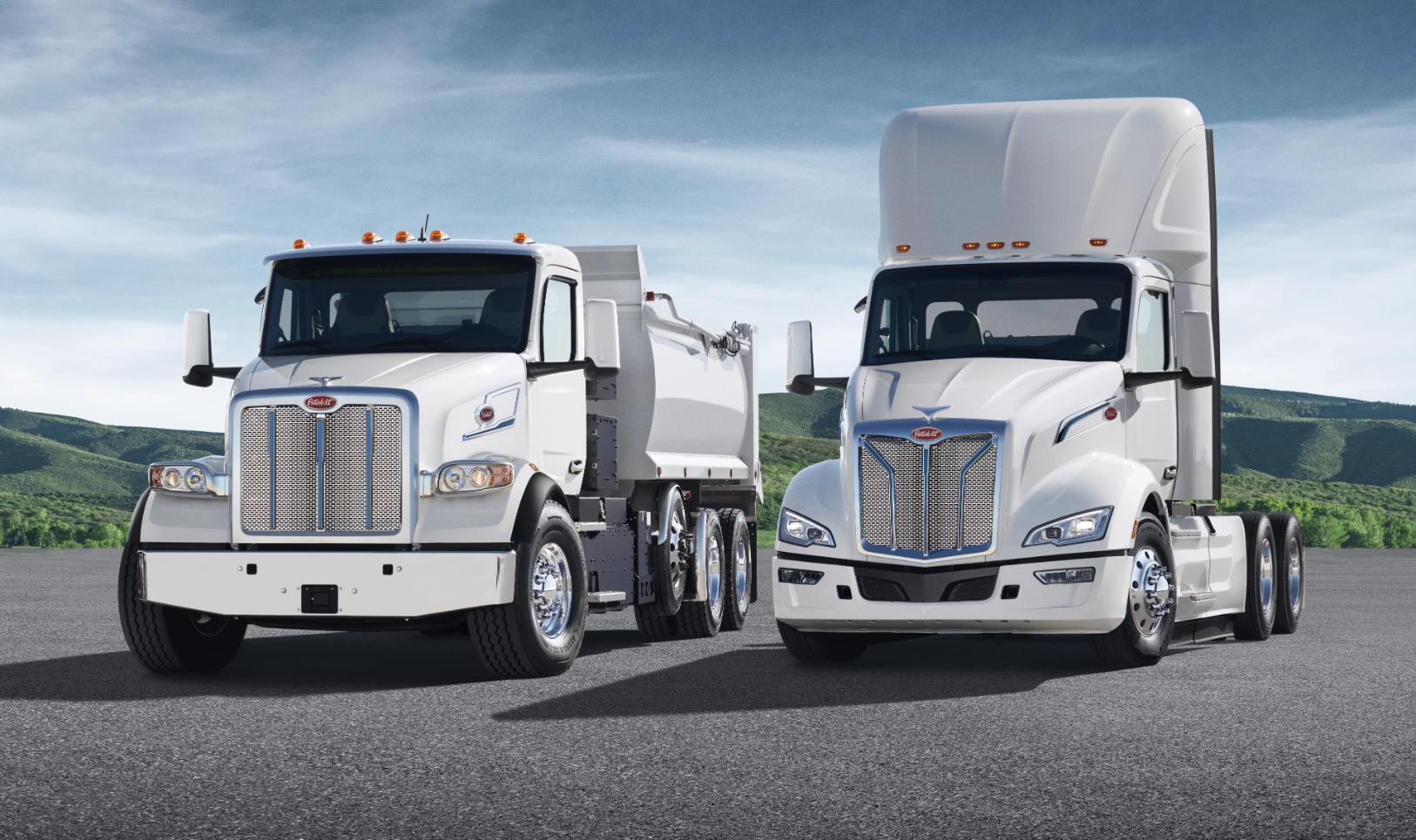
U.S. truck maker Peterbilt has launched the 567EV, its first heavy-duty battery-electric truck tailored specifically for vocational use, marking a major step in the company’s electrification strategy. The vehicle, which supports applications such as refuse collection, utility services and construction, joins an expanding electric portfolio that includes an updated version of Peterbilt’s 579EV for regional haul operations.
The new 567EV offers a gross vehicle weight rating (GVWR) of up to 82,000 pounds and will be available both as a complete truck and as a tractor unit. Customers can choose from four battery packs ranging from 250 to 625 kilowatt-hours, allowing for a driving range between 100 and 250 miles (160–400 kilometers). Fast charging to 80% capacity takes between 80 and 120 minutes, depending on the configuration.
“Designed for performance and efficiency, the next evolution of Peterbilt battery-electric vehicles offer industry-leading versatility, fast-charging capabilities and advanced safety features to meet the needs of today’s fleet and vocational operations,” said Erik Johnson, assistant general manager of Sales and Marketing for Peterbilt.
In parallel, Peterbilt introduced the next generation of its 579EV model, which is currently in use by companies such as Einride. The updated truck supports 350 kW DC fast charging, reaching 80% in 90 minutes, and offers three battery options with a maximum range of 200 miles (320 kilometers). Both the 567EV and 579EV support programmable charge scheduling, enabling fleet operators to optimize charging during off-peak electricity hours.
See also: Honda Integrates Electric Peterbilt 579EV Semi for Sustainable Transport at Alabama Plant
Peterbilt had earlier announced plans to launch a hydrogen fuel cell variant of the 579EV in 2024. However, the start of production has been postponed indefinitely, a move echoed by sister brand Kenworth. The delay is attributed to insufficient hydrogen refuelling infrastructure in the U.S. Both companies, along with European truck maker DAF, are part of commercial vehicle conglomerate Paccar.


