





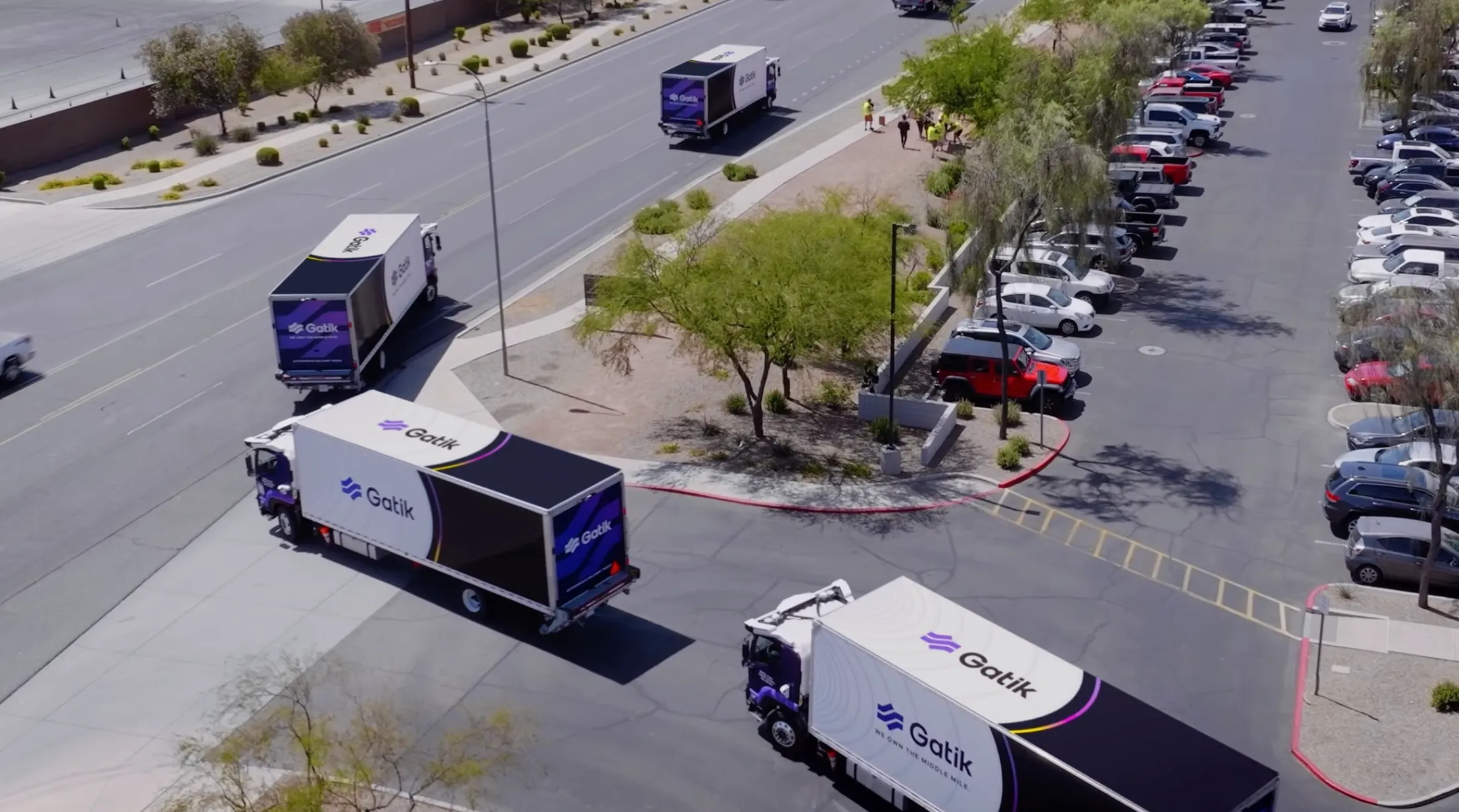
PepsiCo and Gatik have signed a multi-year agreement to expand the deployment of autonomous trucks across PepsiCo’s North American supply chain, building on an existing partnership that began in 2022.
The agreement covers the use of Gatik’s driverless freight technology within PepsiCo’s regional transportation networks, where products are moved between manufacturing facilities, distribution centers, and other operational sites. Autonomous freight operations are already running daily in Texas, Arizona, and Arkansas.

Gatik described the arrangement as the largest commercial autonomous freight deployment to date, highlighting the growing role of autonomous trucking technology in large-scale logistics operations.
Focus on Regional Supply Chain Operations
The partnership targets high-frequency transportation routes that are critical to maintaining product flow throughout PepsiCo’s food and beverage distribution network.
According to the companies, these routes involve frequent deliveries between facilities and require consistent, reliable service to support inventory management and customer demand.
“Serving our vast network of customers requires a supply chain that is safe, reliable, and built for the future,” said Jim Farrell, Senior Vice President of Supply Chain at PepsiCo.
“Gatik is already operating inside our networks and brings the autonomous freight technology, commercial experience, and scale we need to strengthen service, add capacity, and move products more consistently for our customers.”
Autonomous Trucks Already Operating Daily
Gatik’s autonomous trucks are designed to perform end-to-end freight deliveries using a combination of highway and surface-street driving capabilities.
The company said its platform includes dynamic route orchestration technology that enables customers to adjust delivery routes based on operational requirements, including adding or removing stops and responding to changing demand patterns.
According to Gatik, this flexibility helps improve on-time performance while allowing transportation networks to scale without requiring major changes to existing logistics operations.
The company reported that its autonomous freight operations currently achieve more than 98% on-time delivery performance.
Addressing Capacity Challenges
PepsiCo said the deployment forms part of its broader effort to improve transportation capacity and support operations in regional freight networks that can be difficult to staff.
The company noted that autonomous trucking technology can provide additional flexibility and reliability while helping support frontline logistics teams responsible for maintaining product availability.
The initiative also builds on PepsiCo’s experience operating one of North America’s largest private transportation fleets.
Expanding Autonomous Freight Across North America
Founded in 2017, Gatik focuses on autonomous middle-mile logistics operations and currently operates autonomous trucks across multiple regions in the United States and Canada, including Texas, Arkansas, Arizona, Nebraska, and Ontario.
The company develops AI-powered autonomous driving systems specifically designed for short- and medium-haul freight routes. Strategic partners include Isuzu Motors, NVIDIA, and Ryder.
“Autonomous trucking has reached commercial scale when it operates inside one of the most demanding supply chains on the planet,” said Gautam Narang, Co-Founder and Chief Executive Officer of Gatik.
“That is what Gatik is doing with PepsiCo. Our autonomous trucks are already moving products every day across Texas, Arizona, and Arkansas, and this partnership is proof that Gatik is becoming central to how the world’s largest companies move goods.”
As autonomous freight technology continues to mature, the expanded partnership between PepsiCo and Gatik reflects growing industry interest in deploying driverless transportation systems beyond pilot projects and into everyday commercial operations.


