


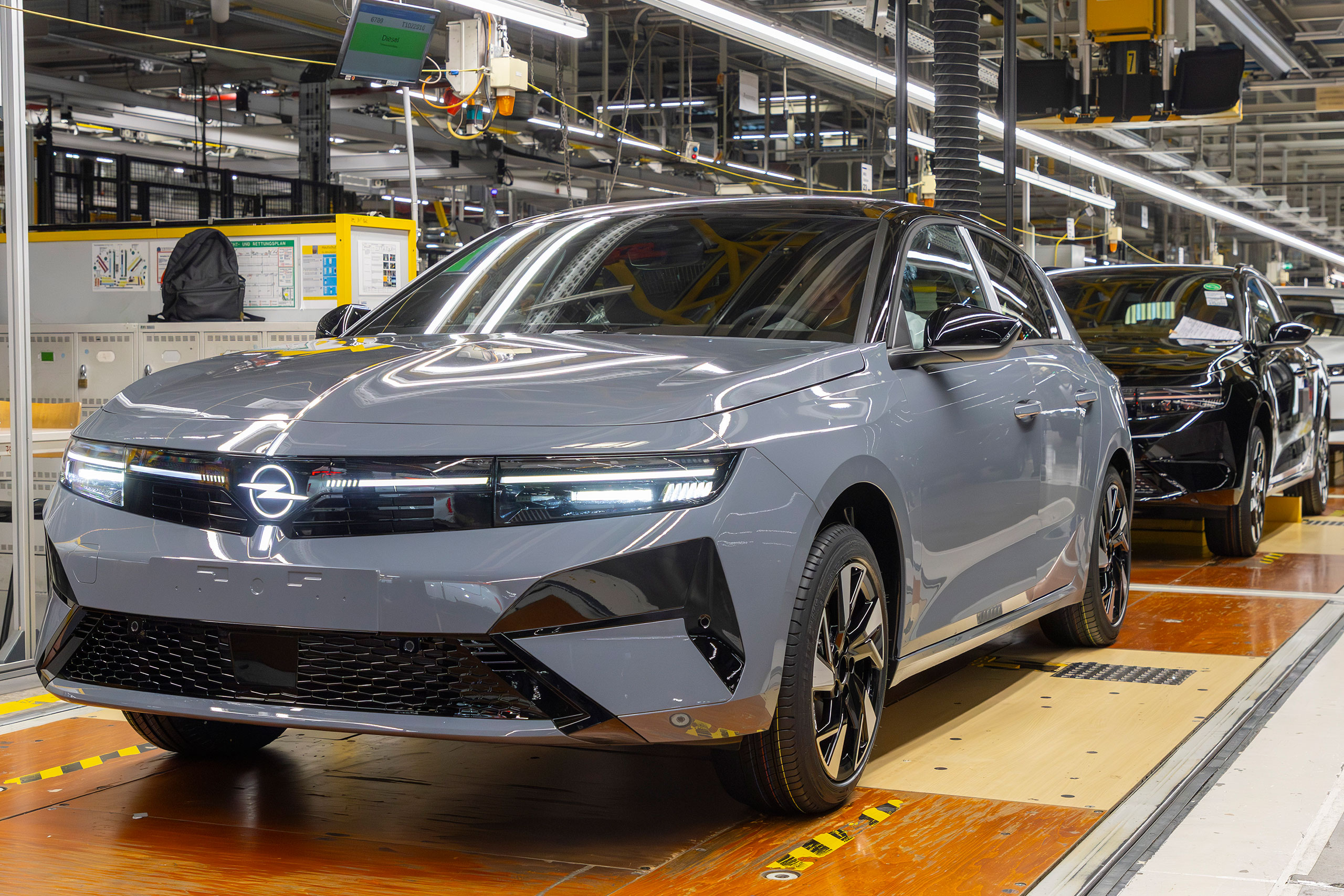
Opel has confirmed that the next-generation Astra will continue to be produced at its Rüsselsheim plant in Germany, as part of a broader commitment by Stellantis to invest more than €1 billion ($1.16 billion) in its German operations by 2030.
The announcement reinforces Rüsselsheim’s role as a key production and development hub within Stellantis while also outlining plans for new electric vehicle programs based on the group’s next-generation STLA ONE architecture.
Alongside the Astra, Opel confirmed that the next-generation Corsa will also transition to the STLA ONE platform, which is expected to play an increasingly important role across several Stellantis brands as the company pursues greater platform standardization and cost efficiencies.
Astra to Remain in Rüsselsheim
The decision secures the future of one of Opel’s most iconic nameplates at its historic home plant in Rüsselsheim, where the Astra has been produced for decades.
Opel said the new Astra will be built adjacent to the company’s upcoming grEEn-campus, a new headquarters complex that will serve as both Opel’s global headquarters and Stellantis Germany’s central operations hub.
The Astra remains a cornerstone of Opel’s lineup, continuing a legacy that stretches back nearly 90 years through the Kadett and Astra model families. Combined sales of the two nameplates have reached approximately 25 million units worldwide.
“The allocation of the next-generation Astra to our plant in Rüsselsheim demonstrates Opel’s commitment to Germany as an industrial location,” said Opel Chief Executive Florian Huettl.
“I am delighted that Rüsselsheim will remain the home of the Astra and be built in the direct vicinity of our new grEEn-campus.”
STLA ONE Platform Expansion
The announcement highlights the growing importance of Stellantis’s STLA ONE platform, which will underpin both the next-generation Astra and Corsa.
The architecture is designed to support multiple vehicle segments and powertrain configurations while delivering significant manufacturing efficiencies through greater parts sharing and platform commonality across brands.
Industry observers view the rollout as a key element of Stellantis’s strategy to improve economies of scale as it transitions toward electrified vehicle portfolios.
The platform has already been earmarked for future Peugeot C-segment vehicles and is expected to support additional Stellantis products in the coming years.
Leapmotor Partnership Accelerates Electrification
Opel also revealed plans for a new C-segment SUV being developed in cooperation with Chinese electric vehicle manufacturer Leapmotor.
The model will be designed in Rüsselsheim and developed jointly with international engineering teams before entering production at Stellantis’s Zaragoza plant in Spain beginning in 2028.
The project forms part of the broader Stellantis-Leapmotor partnership, which seeks to combine Chinese EV technologies with European manufacturing and brand expertise.
The collaboration is intended to accelerate Opel’s electrification efforts while improving development speed and reducing costs.
Investment Supports German Operations
Beyond vehicle production, the investment package includes the construction of the new grEEn-campus in Rüsselsheim, which will serve as a central hub for future engineering, design, and administrative activities.
The commitment comes amid growing scrutiny of automotive manufacturing employment and investment decisions across Europe, particularly in Germany, where the industry is navigating the transition from combustion engines to electric vehicles.
Huettl emphasized the importance of cooperation between management and employee representatives in securing the long-term future of the site.
“This investment is a clear sign that together with our social partners we can reach agreements that benefit all stakeholders,” he said.
Strategic Importance for Opel
The announcement provides greater certainty for Opel’s German manufacturing footprint while highlighting the brand’s role within Stellantis’s broader electrification strategy.
As the company prepares to launch a new generation of electric and electrified vehicles, the combination of STLA ONE-based products, continued investment in German operations, and collaboration with Leapmotor reflects a multi-pronged approach aimed at improving competitiveness in Europe’s rapidly evolving automotive market.
With production of the next-generation Astra secured and new vehicle programs in development, Opel is positioning itself for a key role in Stellantis’s future product and manufacturing plans through the end of the decade.