




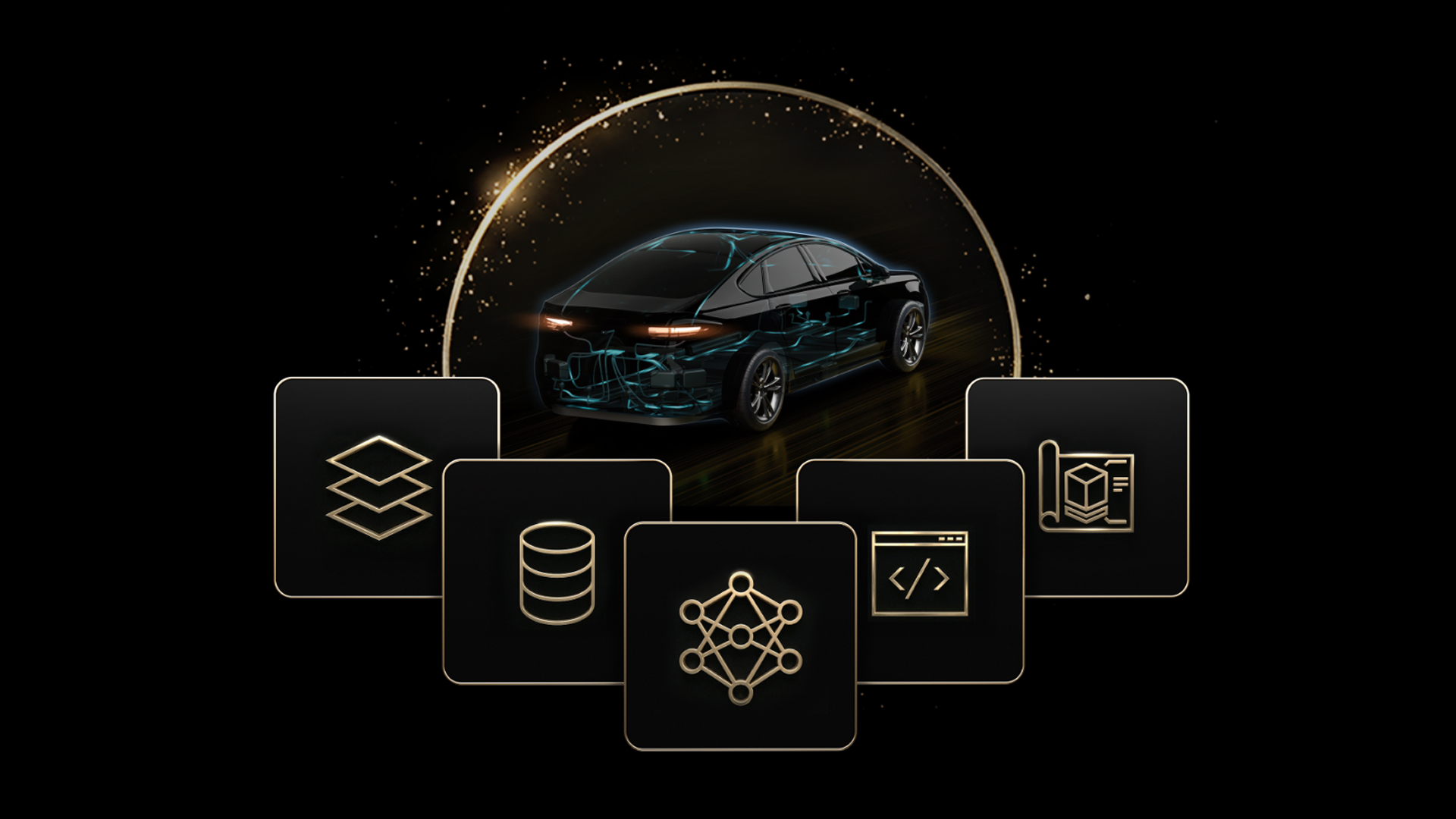
Nvidia on Monday announced Alpamayo, a new open-source family of artificial intelligence models, datasets and simulation tools that it says will enable autonomous vehicles to reason through complex driving situations, with the technology set to launch on U.S. roads later this year starting with the Mercedes-Benz CLA.
Nvidia said Alpamayo represents what Chief Executive Jensen Huang described as the world’s first “thinking” autonomous vehicle AI, moving self-driving systems beyond perception toward structured reasoning and explainable decision-making.
See also: Mercedes-Benz to Roll Out City Driving Assist System in U.S., Challenging Tesla
“It’s trained end-to-end — literally from camera in to actuation out,” Huang said. “It reasons what action it is about to take, the reason by which it came about that action, and the trajectory.”
At the core of the platform is Alpamayo 1, a 10-billion-parameter Vision-Language-Action (VLA) model designed to interpret visual input, reason through complex scenarios and generate driving actions. Nvidia said the model can handle rare or unfamiliar situations, such as traffic light outages or unusual road behavior, by breaking problems into steps and evaluating multiple outcomes before selecting a response.
See also: Lucid, Nuro and Uber Unveil Production-Intent Robotaxi at CES
“The ChatGPT moment for physical AI is here — when machines begin to understand, reason, and act in the real world,” Huang said in a separate statement, adding that Alpamayo allows autonomous vehicles to explain why they take specific actions.
Ali Kani, Nvidia’s vice president of automotive, said the system reasons through every possibility before choosing a path, rather than relying solely on pattern recognition from prior data.
Nvidia said Alpamayo is trained using both real-world and synthetic data. As part of the launch, the company is releasing an open dataset containing more than 1,700 hours of driving data collected across diverse geographies and conditions, including rare edge cases. Developers can also use Nvidia’s Cosmos generative world models to create synthetic environments for training and testing.
See also: Teradar Unveils Terahertz Automotive Sensor at CES as Automakers Reassess Lidar Strategy
The company is additionally launching AlpaSim, an open-source simulation framework available on GitHub that recreates real-world driving conditions, from sensor behavior to traffic interactions, enabling large-scale validation of autonomous systems.
Nvidia said Alpamayo 1 provides open model weights and open-source inferencing scripts, allowing developers to fine-tune the model into smaller runtime versions for vehicle deployment or use it as a foundation for tools such as reasoning-based evaluators and automated data labeling systems. Future versions of Alpamayo are expected to feature larger parameter counts, expanded reasoning capabilities and broader commercial options.