
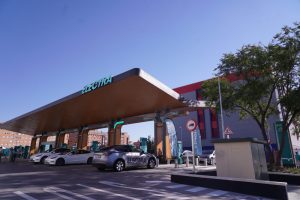


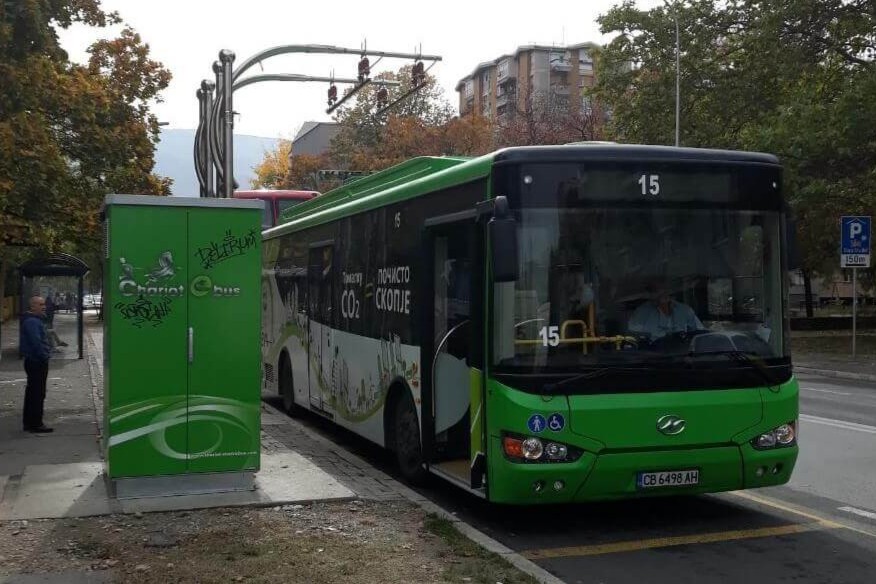
North Macedonia’s Ministry of Transport of North Macedonia has issued a tender for the procurement of 150 battery-electric buses along with 75 charging stations as part of efforts to modernise public transport and reduce emissions.
Under the plan, around 100 of the electric buses will be deployed in the capital, Skopje, while the remaining 50 vehicles will be allocated to other municipalities across the country.
The ministry has established a strict timetable for the procurement process. Interested suppliers must submit their bids by 30 March 2026. After the contract is awarded, the selected bidder will be required to deliver 30 electric buses and 15 charging stations within six months. A further 60 buses and 30 charging stations must be supplied within 12 months, with the final 60 vehicles and 30 charging stations to follow within 18 months.
According to the tender specifications, each bus must offer a minimum driving range of 325 kilometres and be equipped with a battery of at least 360 kWh capacity. The supplier must also provide a four-year warranty covering both the buses and the battery systems, as well as ensure the availability of spare parts for ten years. The charging stations included in the tender must deliver a minimum power output of 120 kW.
The total value of the contract is estimated at more than 3.1 billion denars, equivalent to approximately €50.9 million excluding VAT. The ministry states that the procurement reflects a political commitment to improving environmental performance while enhancing the efficiency of public transport systems in Skopje and other cities.
Officials also expect the electric buses to bring long-term operational benefits through reduced maintenance requirements and lower energy costs. The project forms part of a broader strategy to modernise urban mobility and strengthen the country’s transport network.
Elsewhere in the region, Belgrade is also increasing its investment in zero-emission public transport. The Serbian capital has ordered 100 electric buses from Higer Bus ahead of a world exhibition scheduled for next year. Half of the fleet will use battery-electric drivetrains, while the other half will rely on supercapacitor energy storage systems, with the vehicles expected to remain in service after the event.


