




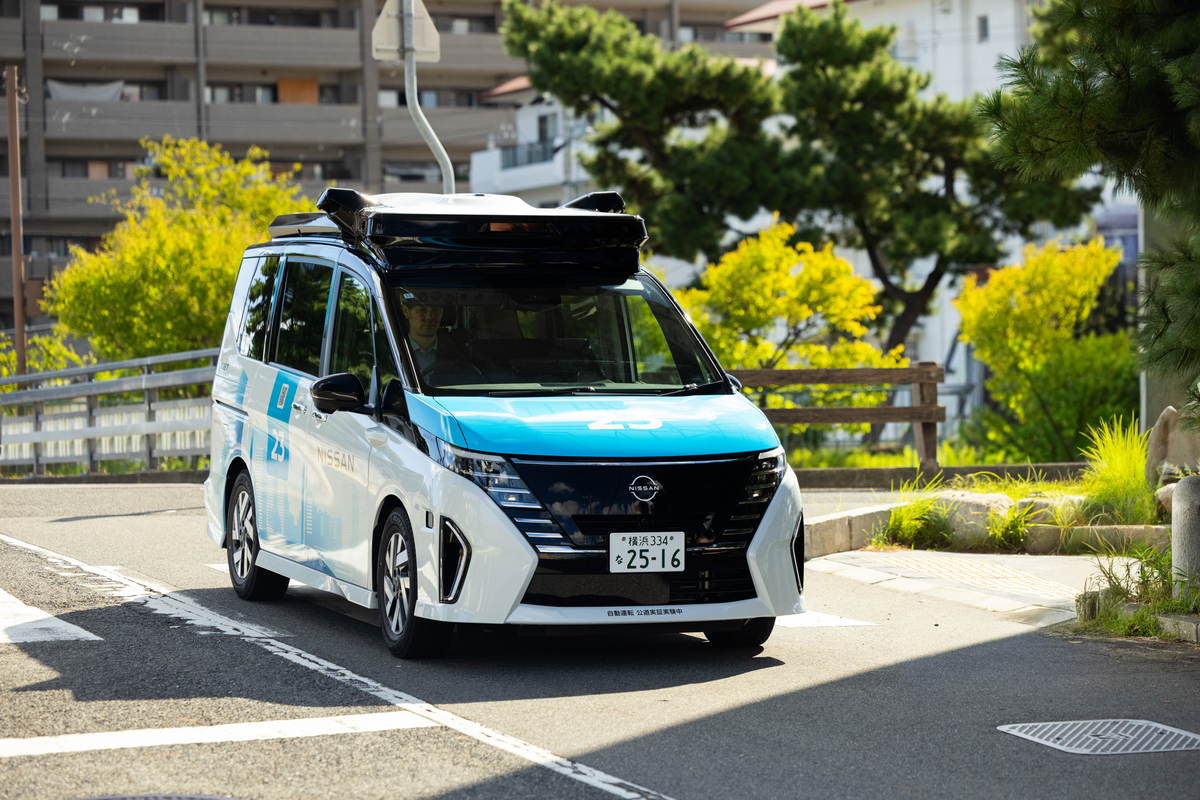
Nissan will expand its autonomous mobility service pilot in Kobe, Japan, during fiscal year 2026, building on field tests conducted the previous year. The company has opened applications for participants to experience the service in the city’s Nada Gogo sake-brewing district.
The next phase will extend the service area and introduce smartphone-based, on-demand ride booking and vehicle dispatch. The program will use Nissan Serena vehicles equipped with Level 2 driving automation.
Nissan plans to use the trial to assess the operation of the service, its potential application to tourist transportation and public acceptance of autonomous mobility. The company aims to introduce a paid service in 2027 and begin full commercial operations in Nada Gogo by 2030.
Expanded Service and Smartphone Booking
The fiscal year 2026 pilot will expand the operating area in Nada Gogo and add a smartphone-based system for requesting rides and dispatching vehicles.
The trial will examine how the booking and dispatch functions operate in the district, which is known for sake production and attracts visitors. Nissan has not disclosed the number of vehicles involved, the pilot’s operating schedule or the specific routes that will be covered.
The vehicles will use Level 2 driving automation, a system that assists with driving tasks but still requires a human driver to supervise the system and remain ready to intervene. The pilot does not represent fully driverless operation.
Centralized Monitoring in Kobe and Yokohama
Nissan will also test centralized monitoring of vehicles operating in Kobe and Yokohama. The vehicles will be monitored in real time from the company’s Remote Operations Center in Yokohama.
The trial will assess whether operations in multiple locations can be monitored from a single center. Nissan intends to use the results to evaluate the operational requirements of managing mobility services across different regions.
The company has not provided details about staffing levels, the number of vehicles that can be monitored simultaneously or the extent to which remote personnel will be able to intervene in vehicle operations.
Commercial Service Plans
Nissan is targeting the introduction of a paid service in 2027, followed by full commercial operations in Nada Gogo by 2030. These are planned milestones, and the announcement does not specify the conditions that must be met before each stage begins.
The company said it will continue conducting pilot programs in different regions, with service configurations adapted to local transportation needs.
Government-Supported Trials
The Kobe pilot is being conducted under Japan’s Digital Agency fiscal year 2025 Leading Project for Early Commercialization of Autonomous Driving Services and the Ministry of Land, Infrastructure, Transport and Tourism’s fiscal year 2026 Subsidy Program for Securing, Maintaining and Improving Regional Public Transportation.
The latter includes a project to promote the social implementation of autonomous driving.
The trials will provide Nissan with operational experience in on-demand ride booking and centralized monitoring as it evaluates the next steps for its autonomous mobility service in Japan.


