
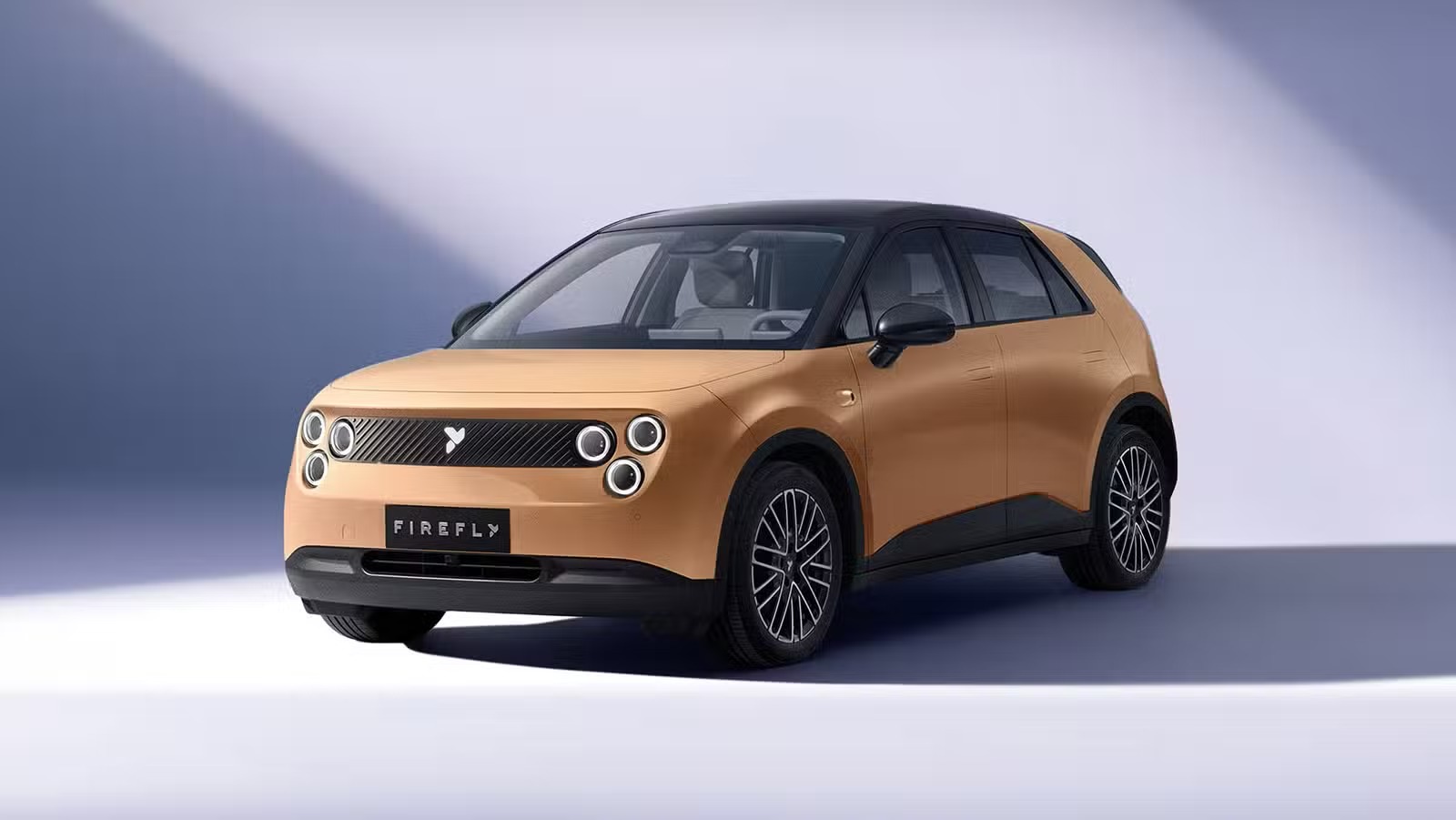
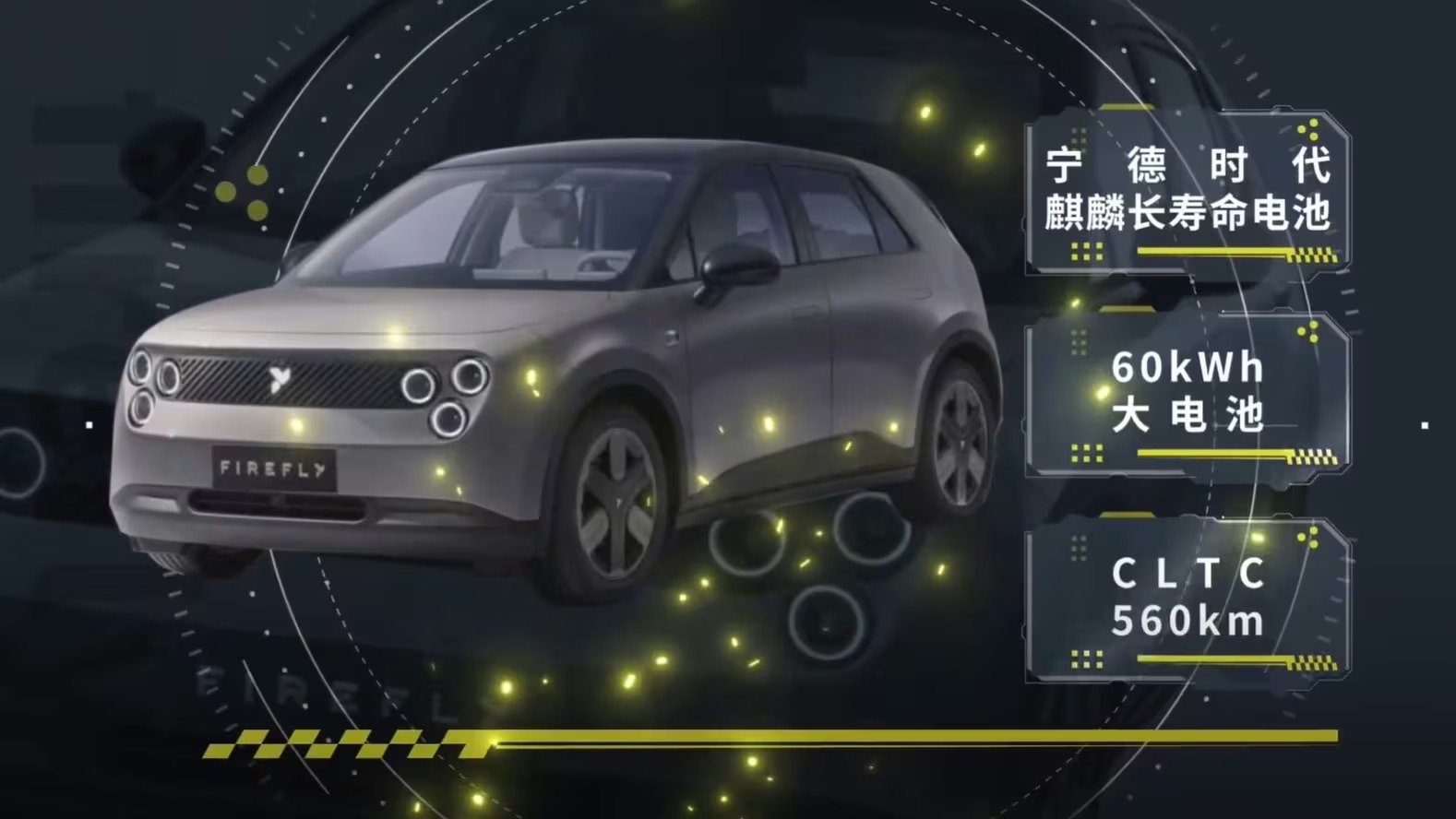
Nio’s Firefly brand has introduced a 60-kWh battery option supplied by CATL, extending the compact electric vehicle’s claimed CLTC driving range to 560 km (348 miles).
CATL confirmed on Weibo on Saturday that Firefly uses its Qilin Battery technology. The announcement followed Firefly’s launch of the larger-capacity battery on Friday, adding a longer-range option to the model’s existing lineup.
The new battery increases the vehicle’s claimed range by 140 km compared with the original 42-kWh pack, representing an improvement of approximately 33%.
Firefly Battery Options and Pricing
| Specification | Standard-Range Version | Long-Range Version |
|---|---|---|
| Battery supplier | Sunwoda | CATL |
| Battery capacity | 42 kWh | 60 kWh |
| Battery chemistry | Lithium iron phosphate (LFP) | Nickel-cobalt-manganese (NCM) |
| CLTC driving range | 420 km | 560 km |
| Price including battery | Not specified in the provided information | 136,800 yuan |
| Price under BaaS | Not specified in the provided information | 79,800 yuan |
| Monthly battery rental | Not specified in the provided information | 599 yuan |
Firefly says the larger battery does not change the vehicle’s battery dimensions or curb weight, allowing the increased capacity without altering those specifications.
CATL Qilin Battery Adds Longer Range
The original 42-kWh battery is supplied by Sunwoda and uses LFP cells. The new 60-kWh pack uses NCM chemistry, which offers a different balance of energy density and battery performance.
Sunwoda is one of China’s major battery manufacturers outside the largest suppliers and is also a significant battery partner for Li Auto.
CATL introduced its Qilin battery product line in 2022 and unveiled its third generation in April 2026. However, the company’s announcement did not specify which Qilin generation is used in Firefly’s new battery or disclose its charging rate.
For buyers, the larger capacity provides additional driving range between charges or battery swaps. The actual distance achieved will depend on driving conditions, vehicle use and other factors.
Three-Minute Battery Swapping Remains an Option
Despite the increased battery capacity, Firefly’s battery-swapping capability remains an important part of the ownership proposition. Like other eligible vehicles from Nio, Firefly models can replenish their batteries through a swap that takes approximately three minutes.
Battery swapping allows drivers to exchange a depleted battery for a charged unit rather than waiting for conventional charging to finish. This can reduce downtime for drivers who have access to compatible swap stations.
The availability of a longer-range battery therefore gives customers another choice without removing the brand’s battery-swapping approach.
Battery Subscription Lowers the Starting Price
The Firefly equipped with the 60-kWh battery starts at 136,800 yuan (approximately $20,360), including the battery.
Under Nio’s Battery as a Service (BaaS) subscription model, the vehicle starts at 79,800 yuan, with a monthly battery rental fee of 599 yuan. The arrangement separates the initial vehicle purchase from battery ownership, reducing the upfront price in exchange for recurring rental payments.
The new battery option expands Firefly’s range of choices for customers who want additional driving distance. Its combination of a larger battery, battery-swapping access and subscription-based pricing gives the brand several ways to address different ownership and usage preferences in China’s competitive electric vehicle market.