





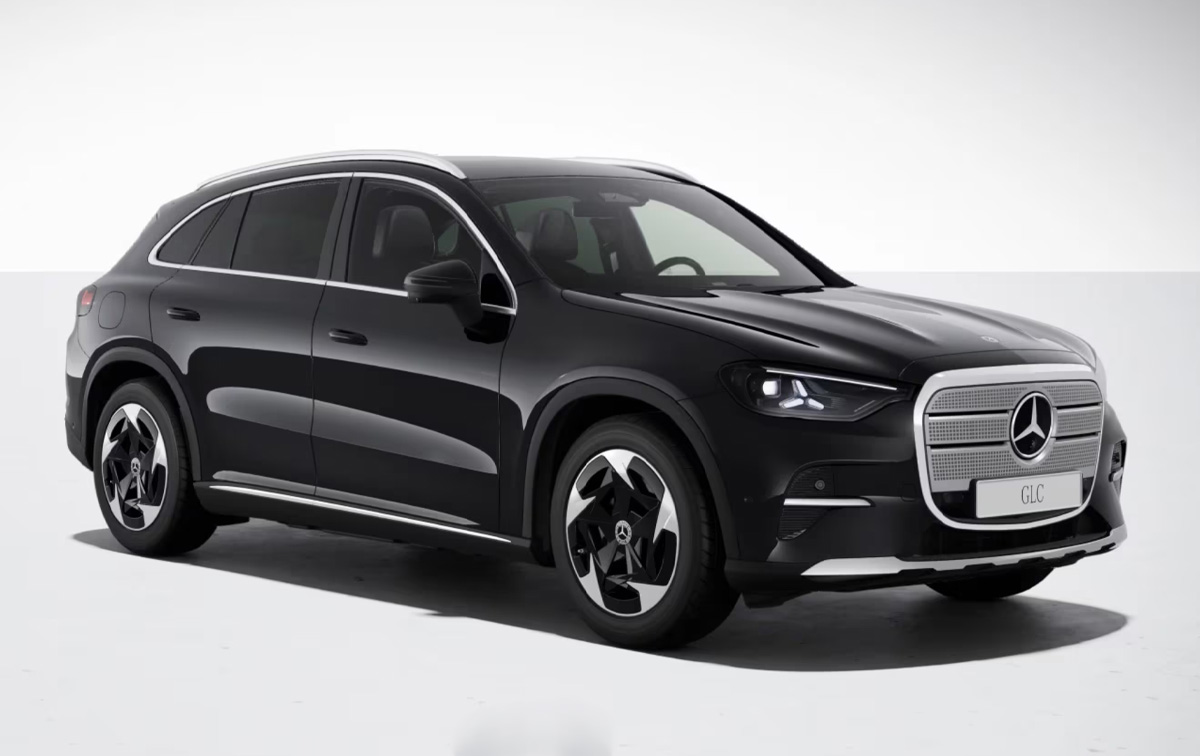
Mercedes-Benz has expanded its battery-electric GLC lineup in Germany by opening order books for two new variants, the GLC 250 and GLC 300 4MATIC. The additions join the previously launched GLC 400 4MATIC, broadening the range of powertrain and pricing options available for the brand’s new electric SUV built on the MB.EA-M platform.
The new GLC 250 starts at €64,736, while the GLC 300 4MATIC is priced from €68,306. Customer deliveries are expected to begin toward the end of 2026.
Two New Powertrain Options
The GLC 250 features a rear-wheel-drive configuration with an output of 260 kW. Mercedes-Benz says the model can accelerate from 0 to 100 km/h in 5.9 seconds and reach a top speed of 210 km/h.
Positioned above it, the GLC 300 4MATIC delivers 310 kW through an all-wheel-drive system. The variant completes the 0-100 km/h sprint in 4.7 seconds while maintaining the same electronically limited top speed of 210 km/h.
Both models sit below the current flagship GLC 400 4MATIC, which produces 360 kW and has been available since order books opened in October 2025.
Smaller Battery, Competitive Range
Unlike the GLC 400 4MATIC, which uses a 94 kWh battery with a usable capacity of 94 kWh, the new GLC 250 and GLC 300 4MATIC are equipped with a smaller battery offering 85 kWh of usable energy capacity.
Despite the smaller pack, Mercedes-Benz quotes a WLTP range of up to 647 kilometers for the rear-wheel-drive GLC 250. The GLC 300 4MATIC delivers up to 613 kilometers on the same test cycle.
The GLC 400 4MATIC remains the longest-range model in the lineup with up to 673 kilometers of WLTP range, or more than 700 kilometers when equipped with the optional Long Range Edition package.
Fast Charging Capability
Both new variants utilize Mercedes-Benz’s 800-volt electric vehicle architecture and support DC fast charging at up to 320 kW.
According to the company, charging from 10% to 80% battery capacity can be completed in approximately 22 minutes under optimal conditions.
Standard AC charging is rated at 11 kW, while an optional 22 kW onboard charger is available for €655. Customers who require compatibility with 400-volt DC charging stations can also order an optional DC charging system for the same price.
Extensive Standard Equipment
Mercedes-Benz includes a broad range of features as standard across the new electric GLC variants.
Standard equipment includes a panoramic sunroof, acoustic glass for improved thermal and sound insulation, LED headlights, a rear-view camera, automatic climate control, heated front seats, and a suite of driver assistance technologies.
The cabin features a 10.3-inch digital instrument display and a 14-inch central infotainment screen powered by the latest MBUX operating system.
Premium Technology Packages
Customers seeking additional digital features can opt for several equipment packages.
The MBUX Superscreen, which adds a 14-inch passenger display, is included in the Advanced Plus Package with Digital Extras priced at €3,570.
Higher-end options such as the Burmester 3D surround sound system and Adaptive Highbeam Assist Plus are available through the Premium Package with Digital Extras, priced at €7,497.
The flagship MBUX Hyperscreen is reserved for the Premium Plus Package with Digital Extras, which costs €11,305.
More Variants Expected
Mercedes-Benz is expected to further expand the electric GLC lineup later this year with at least two additional variants.
Industry reports indicate that a GLC 300+ model equipped with the larger 94 kWh battery from the GLC 400 4MATIC is planned, alongside an entry-level rear-wheel-drive version producing 230 kW and utilizing a smaller 64 kWh battery pack.
The additions would provide a broader range of battery sizes, performance levels, and price points as Mercedes-Benz continues to build out its next-generation electric vehicle portfolio.


