

Lidl Netherlands has announced plans to supply all of its stores using electric trucks by 2027, accelerating its electrification strategy by three years compared with previous targets.
The retailer said stores in the North Holland and Flevoland regions are already supplied entirely through electric transport, marking a significant step toward nationwide deployment.
If achieved, the initiative would place Lidl among the first major retailers globally to operate a fully electric store delivery network.
Expansion of Electric Logistics Network
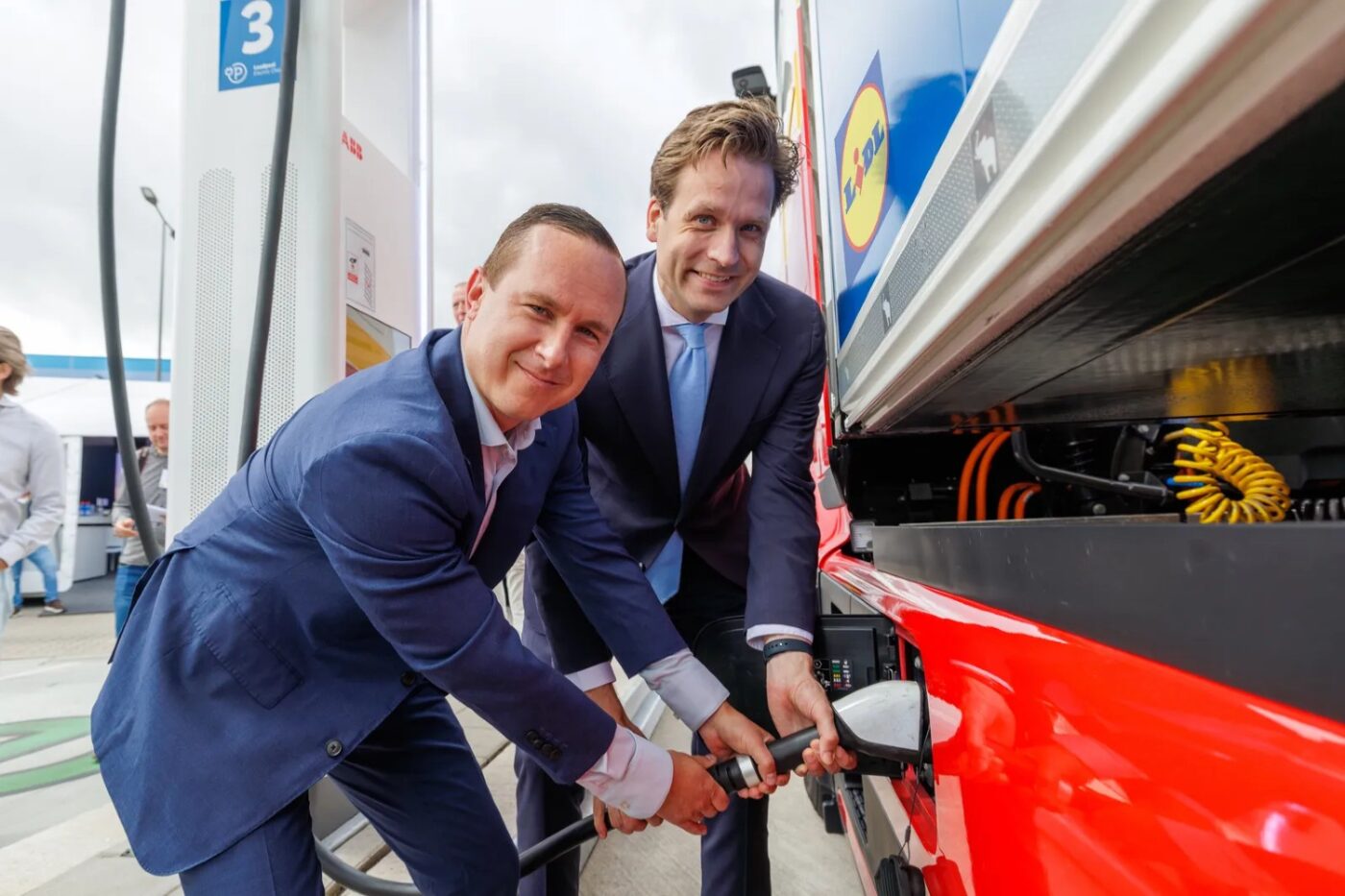
The latest milestone follows the commissioning of a new charging hub at Lidl’s logistics center in Almere, which supports fully electric deliveries across North Holland and Flevoland.

The facility includes multiple CCS fast chargers as well as a Megawatt Charging System (MCS) unit designed to support future charging capacities of up to 1.2MW.
Lidl did not disclose how many electric trucks will be required to complete the nationwide transition or provide details regarding the total size of its future electric fleet.
Government Support for Electrification
Dutch officials welcomed the announcement as part of broader efforts to decarbonize road transport and logistics operations.
“It is encouraging to see a major company like Lidl transitioning its entire supply chain to electric operations by next year,” said Vincent Karremans, the Netherlands’ Minister for Infrastructure and Water Management.
“The electrification of road and freight transport is crucial for strengthening energy independence, improving air quality and reducing CO₂ emissions. This is therefore good news for all.”
Lidl said its electrification strategy is intended to improve sustainability while maintaining operational efficiency and competitive pricing.
“Through smart investments in electric logistics, we keep food prices low for our customers,” said Peter de Roos, chief executive officer of Lidl Netherlands.
“We are therefore very proud of this achievement. It demonstrates that sustainability and affordability can go hand in hand.”
Addressing Grid Constraints
The company said the transition requires more than simply replacing diesel trucks with battery-electric vehicles.
To support charging operations, Lidl has invested in on-site renewable energy generation and battery storage systems designed to help manage electricity demand and reduce pressure on the grid.
At the Almere logistics center, Lidl has installed a 1MWh battery energy storage system alongside rooftop solar generation.
According to the company, advanced monitoring systems are used to forecast energy demand and optimize charging schedules.
“Using intelligent monitoring systems, we predict our energy needs with minute-by-minute accuracy,” said Ruud Metten, Head of Transport at Lidl Netherlands.
“When our charging stations are not in use, we make our self-generated green electricity available to third parties. This relieves pressure on the grid and helps other companies make their transport logistics more sustainable.”
Transition Away from Fossil Fuels
Lidl noted that it has already eliminated diesel use for store deliveries since 2024, relying instead on alternative fuels including bio-LNG and HVO100 as an interim solution.
The company said full electrification represents the next phase of its logistics decarbonization strategy.
Lidl is working with logistics partners, including Simon Loos, to support the transition and expand electric freight operations across the country.
The move reflects a broader trend within the retail and logistics sectors, where companies are increasingly investing in battery-electric trucks as governments introduce stricter emissions regulations and operators seek to reduce exposure to fuel price volatility and road transport charges.