
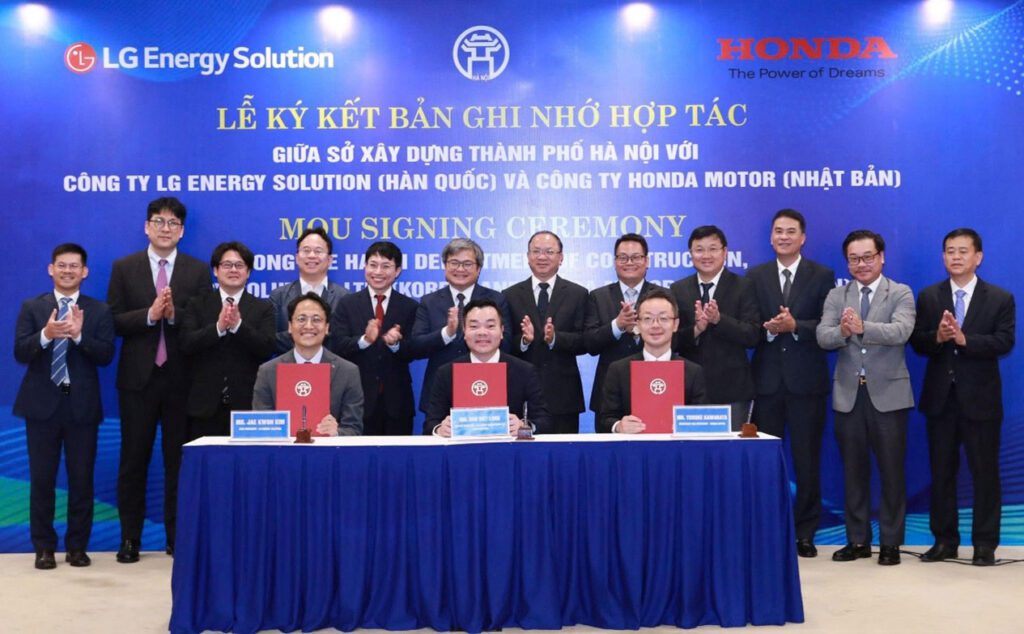
LG Energy Solution, Honda and the City of Hanoi have signed a memorandum of understanding to launch a battery-swapping pilot program for electric two-wheelers in Vietnam’s capital, marking a new step in efforts to expand electric mobility infrastructure in one of the world’s largest motorcycle markets.
The initiative will deploy approximately 50 battery-swapping stations and 500 battery-swappable electric two-wheelers across Hanoi as part of an initial demonstration phase.
Under the agreement, LG Energy Solution will supply cylindrical 2170 battery cells and oversee infrastructure operations, battery lifecycle management and safety systems. Honda will provide the electric vehicles and battery exchange technology, while the City of Hanoi will support the project through permitting and policy coordination.
Targeting a Major Two-Wheeler Market
Vietnam is one of the largest motorcycle markets globally, with around 80 million two-wheelers in operation in 2025. However, electric models accounted for only about 4% of the total fleet, highlighting significant growth potential for electrification.
Honda remains the dominant player in the market, accounting for roughly 86% of motorcycle sales in Vietnam during 2025.
The partners said the pilot is intended to evaluate battery-swapping infrastructure as a practical solution for urban transportation, particularly in densely populated cities where access to home charging can be limited.
Battery Swapping as an Alternative to Charging
Battery-swapping systems allow riders to exchange depleted batteries for fully charged units within minutes, reducing downtime compared with conventional charging methods.
The model is viewed as particularly relevant for commercial users, delivery services and commuters who depend on motorcycles for daily transportation.
LG Energy Solution said its role will include managing operational systems and ensuring battery safety and performance throughout the pilot program.
“Vietnam is one of the most important markets for the transition to electric two-wheelers in the region,” LG Energy Solution said in a statement.
“We will continue contributing to the development of the country’s eco-friendly transportation infrastructure, leveraging our differentiated battery technologies to significantly enhance safety, usage time, and battery lifespan.”
Supported by Local Policy Initiatives
The project comes as Hanoi explores measures aimed at reducing vehicle emissions and promoting cleaner transportation options.
City authorities have announced plans to gradually restrict the use of internal combustion engine motorcycles in certain urban areas over the coming years, creating additional momentum for alternative mobility solutions.
“Korea and Japan are leading countries in battery-swapping stations for electric two-wheelers,” said Truong Viet Dung, vice mayor of Hanoi.
“We look forward to expanding BSS infrastructure in Hanoi through the technological expertise of LG Energy Solution and Honda.”
Testing Infrastructure Ahead of Wider Adoption
While the pilot represents a relatively small deployment compared with the size of Vietnam’s motorcycle fleet, the initiative could help establish operational standards and assess consumer acceptance of battery-swapping technology.
Industry participants are increasingly evaluating battery swapping as one potential pathway to accelerate electric two-wheeler adoption, particularly in markets where affordability, charging access and vehicle utilization rates remain key considerations.
The results of the pilot may help inform future expansion plans as Vietnam continues to develop its electric mobility ecosystem.