
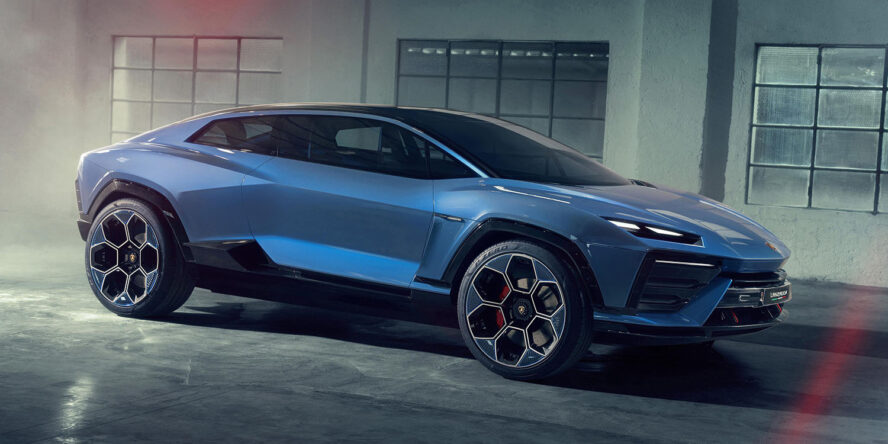
Lamborghini has scrapped plans to launch its first fully electric vehicle, cancelling the Lanzador model that had been scheduled for a 2028 debut and instead pivoting toward plug-in hybrid technology across its lineup.
Chief Executive Stephan Winkelmann told The Times that pursuing battery-electric vehicles could become an “expensive hobby” for the Italian supercar maker, which is owned by Germany’s Audi. The decision means Lamborghini will introduce a new plug-in hybrid in place of the Lanzador, with the company aiming for an entirely plug-in hybrid portfolio by 2030.
Winkelmann said the brand intends to retain internal combustion engines for as long as possible, arguing that its customers value the sensory experience associated with traditional powertrains. He noted that demand growth for electric vehicles in Lamborghini’s target segment appears to be slowing. Buyers, he said, expect an “emotional experience” defined by sound and driving feel, something current EV technology struggles to replicate.
The Lanzador project was reassessed internally over the past year and quietly discontinued toward the end of 2023 following consultations with customers, dealers and market analysts. “Investing heavily in full-EV development when the market and customer base are not ready would be an expensive hobby, and financially irresponsible towards shareholders, customers [and] to our employees and their families,” Winkelmann said.
While recent European Union policy discussions could allow limited internal combustion engine sales beyond 2035 under certain conditions, Winkelmann indicated that regulatory changes were not the primary driver behind the decision.
He did not completely rule out electric models in the future. “Never say never, but only when the time is right. For the foreseeable future, only PHEVs,” he said, adding that the company would continue developing electrification technologies to remain prepared for eventual market shifts.
Lamborghini has already begun transitioning its lineup to hybrid powertrains, following industry trends among performance brands seeking to reduce emissions while maintaining high output and driving character.