
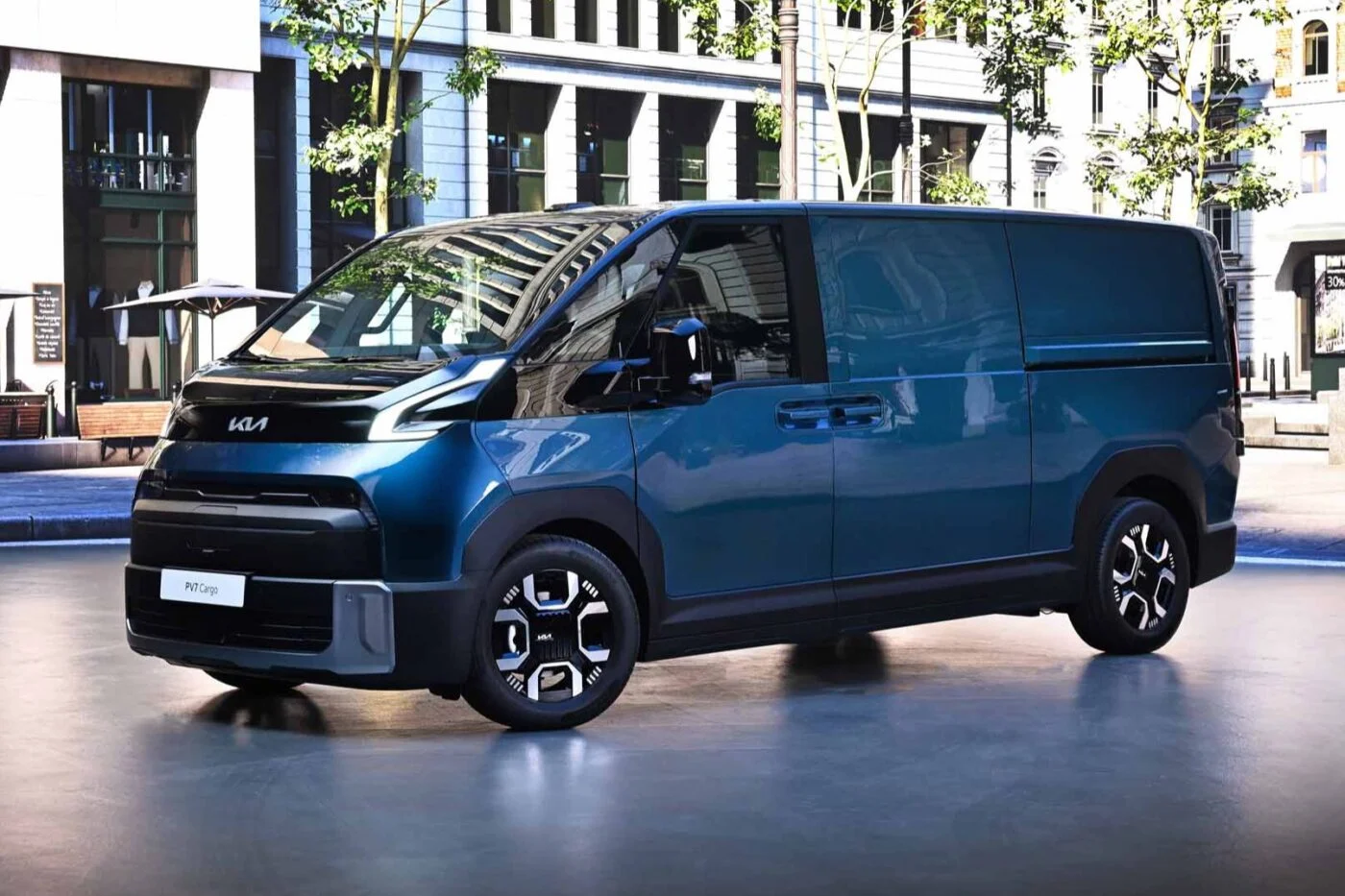
Kia has unveiled the PV7 electric van at IAA Transportation 2026, expanding its Platform Beyond Vehicle (PBV) range with a larger commercial model that offers more cargo capacity, payload and battery energy than the smaller PV5.
The PV7 will use an 800-volt electrical architecture, compared with the PV5’s 400-volt system, and will be offered with two NMC battery options. European deliveries are planned to begin in the second half of 2027.
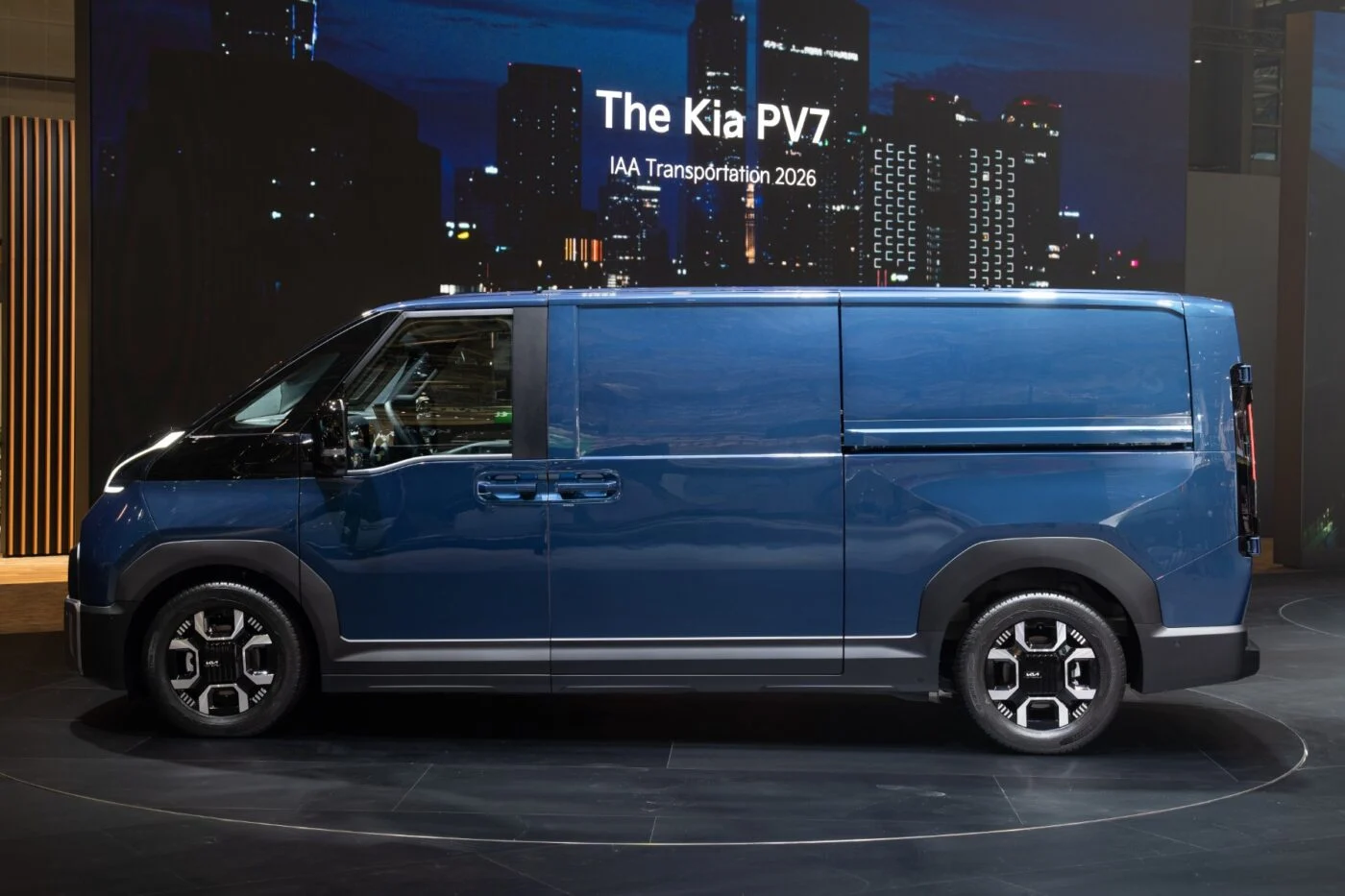
The PV7 is the second model in Kia’s PBV strategy, which the company introduced at the beginning of 2024. The smaller PV5 was the first production model and is available in Passenger and Cargo configurations.
PV7 Moves Kia Into Larger Electric Van Segment
Kia describes the PV5 as an “Open Box” concept focused on flexibility for urban applications, while the PV7 follows a “Tool Box” approach aimed at customers requiring greater cargo capacity and payload.
The PV7 is based on E-GMP.S, or Electric Global Modular Platform for Service, a platform developed specifically for commercial applications rather than the passenger-car E-GMP architecture.
The long-wheelbase PV7 measures 5.35 metres in length, 1.995 metres in width and 1.99 metres in height, with a 3.50-metre wheelbase.
For comparison, the long-wheelbase PV5 L2 measures 4.67 metres and has a three-metre wheelbase. Kia has also announced a shorter standard PV7, although its dimensions and cargo capacity have not yet been disclosed.
Two Battery Options Available At Launch
The standard PV7 will initially use front-wheel drive and offer up to 200 kW of power and 420 Nm of torque. Kia plans to introduce an all-wheel-drive version at a later stage.
The drivetrain will be paired with either a 71.5-kWh or 96.2-kWh NMC battery, depending on market and configuration.
For the PV7 Cargo with the larger battery, Kia estimates a range of around 460 kilometres based on internal measurements using WLTP criteria. Final homologation has not yet been completed.
In its international announcement, Kia describes the range as more than 460 kilometres.
The PV5, meanwhile, is available with batteries ranging from 43.3 kWh to 71.2 kWh, with outputs of up to 120 kW depending on configuration. The largest-battery PV5 Cargo has a maximum WLTP range of 416 kilometres.
800-Volt System Enables Faster Charging
The PV7’s 800-volt electrical architecture is one of the main technical differences from the PV5.
Kia says the larger van can charge from 10% to 80% in around 25 minutes when connected to a 350-kW charging station. The company has not yet specified the vehicle’s maximum DC charging power or AC charging capability, and has not confirmed whether the charging time applies to both battery sizes.
The PV7 also features two charging ports. A combined AC/DC port is positioned at the front, while an additional AC port can optionally be installed at the rear.
Kia says this configuration is designed to reduce the need for vehicle manoeuvring at tight depots and roadside charging locations.
The van also supports vehicle-to-load (V2L), providing 230-volt power sockets both inside and outside the vehicle.
Cargo Capacity Reaches 8 Cubic Metres
The larger dimensions of the PV7 translate into a significant increase in cargo capacity.
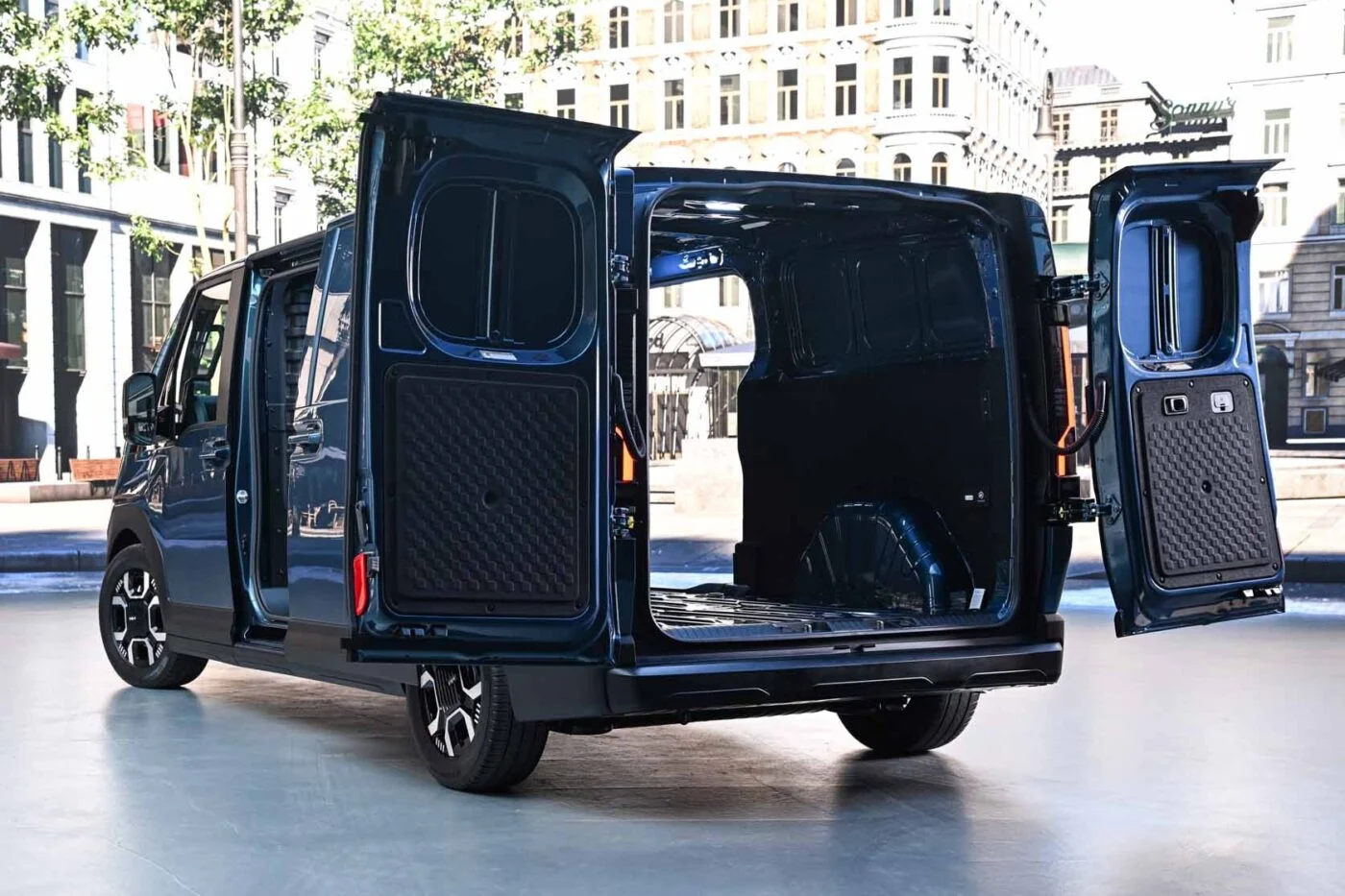
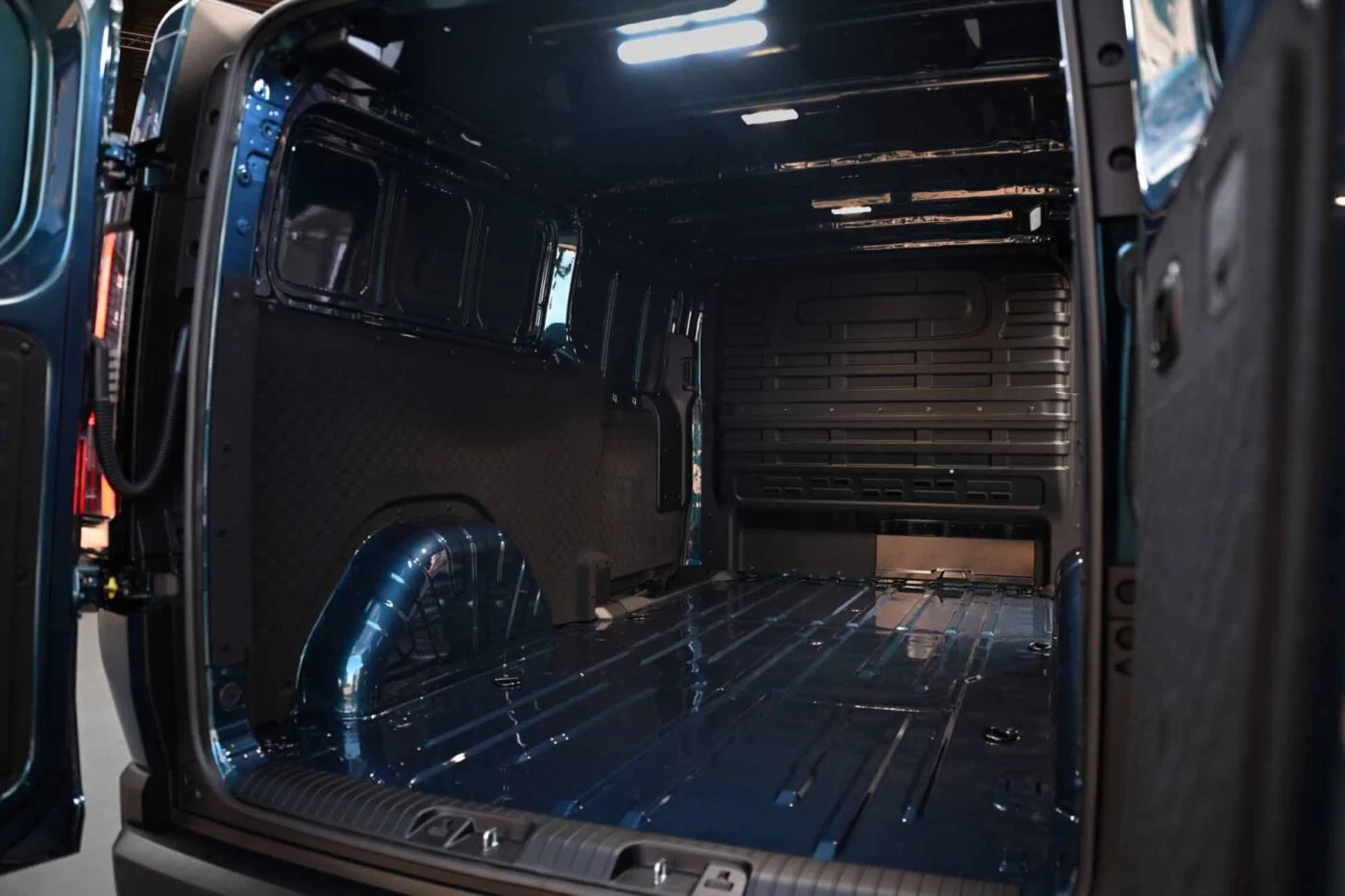
The long-wheelbase Cargo version with a standard roof provides up to 6.1 cubic metres of cargo space under VDA measurement standards and can accommodate up to three Euro pallets.
A high-roof version increases cargo capacity to as much as 8.0 cubic metres.
The PV5 Cargo L2H1 offers 4.42 cubic metres, while the previously announced high-roof PV5 L2H2 provides more than five cubic metres. The short PV5 L1H1 offers 4.03 cubic metres.
PV7 Payload Reaches 1.2 Tonnes
Kia also expects the PV7 to provide a substantially higher payload than the PV5.
The long-wheelbase PV7 Cargo has a maximum payload of 1,165 kilograms, while the shorter standard version is rated for up to 1,200 kilograms.
The PV5 Cargo’s payload ranges from 605 to 800 kilograms depending on body configuration, battery and equipment. Based on the respective maximum figures, the PV7 increases payload capacity by around 50%.
Kia has not yet announced the PV7’s permissible gross vehicle weight. The PV5 Cargo has a gross vehicle weight of 2,650 kilograms.
The PV7’s loading edge is 550 millimetres high. The figure is higher than the PV5’s loading edges, which measure 399 millimetres at the side and 419 millimetres at the rear.
For heavier loads, Kia provides a driving mode designed to adjust vehicle control according to payload.
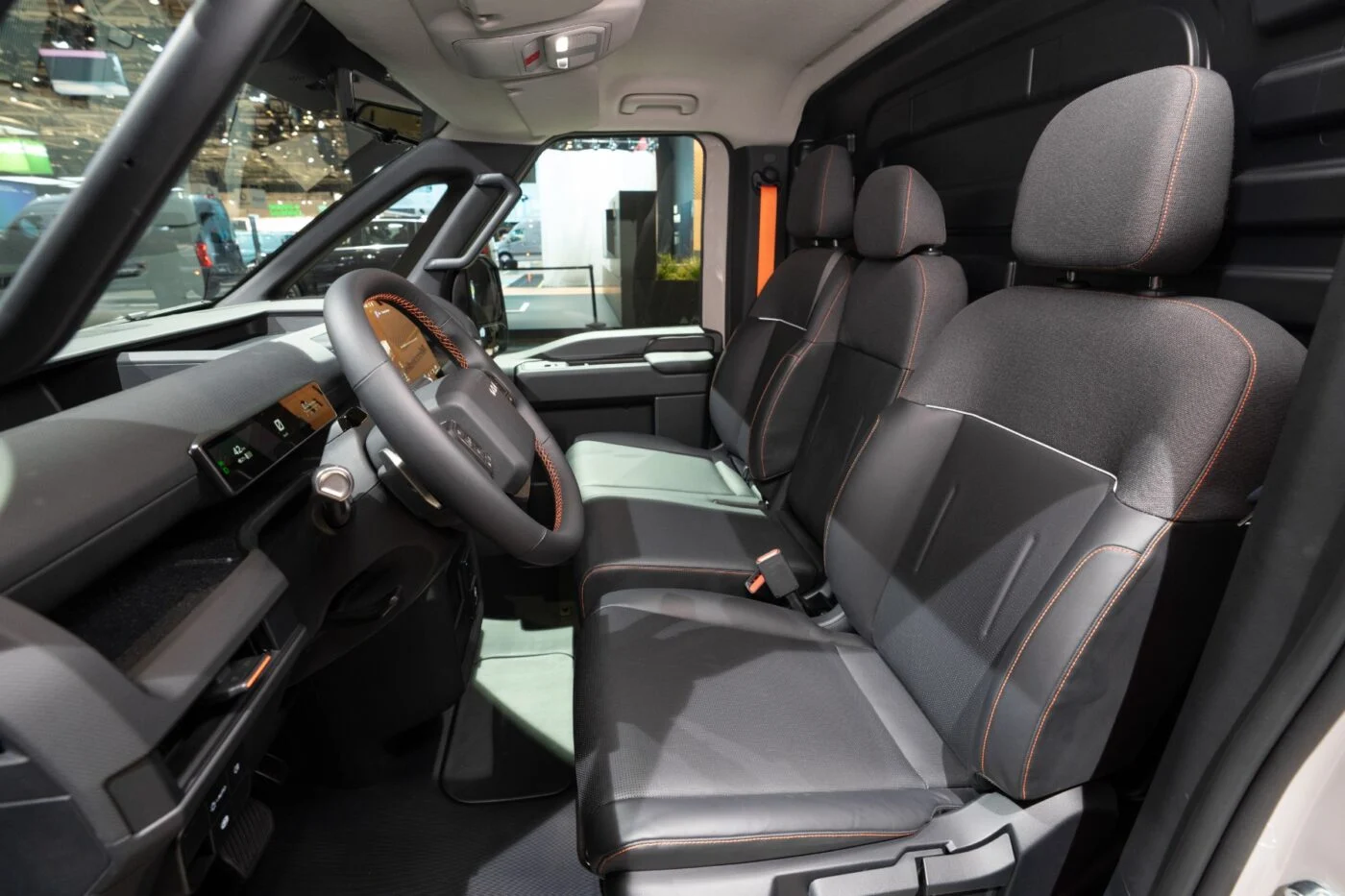
The Cargo version can be configured with two or three seats. Rear access is available through double doors or an upward-opening tailgate. A partition with a load-through opening is available with the three-seat configuration.
Passenger Version Offers Up To Nine Seats
The PV7 Passenger is intended for personnel transport, shuttle and rental services, tourism applications and family use.
The European version will accommodate up to nine occupants, while the Korean market will receive an 11-seat configuration.
The seven-seat version uses removable seats mounted on long rails. The nine-seat model can be configured with or without a fourth row.
The PV7 therefore expands Kia’s passenger-transport offering beyond the PV5 Passenger, which is available in Europe with up to seven seats.
Connected Technology Targets Fleet Operators
The PV7’s cockpit features Kia’s Pleos Connect infotainment system, which is based on Android Automotive OS.
The system includes an open application marketplace, over-the-air software updates and the Gleo AI voice assistant. Drivers receive information through 12.9-inch and 14.6-inch displays.
For commercial operators, Kia is offering Business Solutions, a package that includes fleet management capabilities, interfaces for connected vehicle data and uptime services supporting predictive diagnostics and maintenance.
Flexible Body System Enables 23 Variants
Kia plans to expand the PV7 family to as many as 23 variants.
The planned range includes three Cargo configurations covering standard, long-wheelbase and high-roof versions, two Passenger variants, a Chassis Cab and various conversion models.
The range is enabled by Kia’s Flexible Body System (FBS), a modular architecture designed to allow different body styles, derivatives and conversion vehicles to be developed around a standardised vehicle structure.
At IAA Transportation in Hannover, Kia is displaying three PV7 configurations: a long-wheelbase Passenger model and two long-wheelbase Cargo versions.
The standard and high-roof variants are not currently on display.
Kia has not yet announced prices for the PV7 and plans to release final technical specifications for the German market closer to its European launch.
PV9 To Expand Kia’s PBV Range
The PV7 is part of a broader expansion of Kia’s commercial vehicle strategy.
The company has already announced plans for an even larger PBV model, the PV9, which is scheduled to join the range in 2029.
With the PV5, PV7 and future PV9, Kia is progressively extending its electric commercial vehicle portfolio across different sizes and applications.