
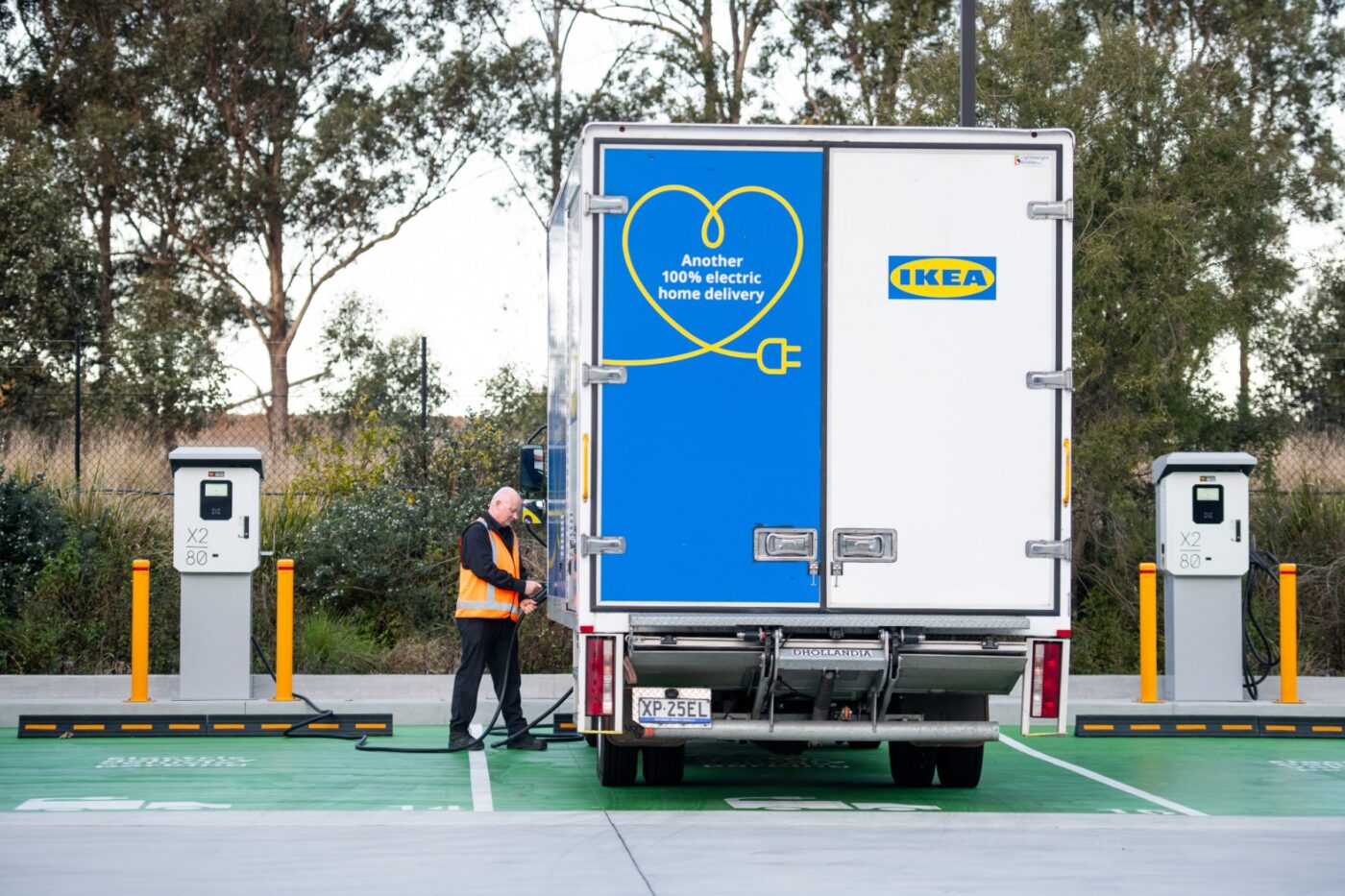
JET Charge, an electric vehicle (EV) charging solutions provider, has completed a large-scale charging infrastructure project for IKEA Australia, installing a total of 59 chargers across seven locations nationwide. The network is designed to support more than 100 electric delivery vehicles, enabling the retailer’s strategy to transition to zero-emission delivery operations.
The installation covers key IKEA sites in Tempe, Rhodes, Marsden Park, Sydney CDC, Canberra, Springvale, and North Lakes, with future installations planned for Richmond and Logan. The infrastructure integrates smart load management capabilities to handle grid constraints and ensure future-proof charging capacity.
The project is critical for enabling third-party logistics partners to deploy electric vehicles at scale across the retailer’s network. To facilitate this, a Chargefox billing system has been deployed, allowing third-party drivers to pay directly for charging sessions while automatically reimbursing IKEA for electricity use.
The infrastructure rollout has directly impacted IKEA’s sustainability targets. As of October 2025, 83 per cent of IKEA deliveries in Australia were completed by zero-emission vehicles, a significant increase from 65 per cent earlier in the year, which the company had partly attributed to infrastructure challenges.
See also: AGL Energy Partners with AMPECO to Deploy Over 150 Curbside EV Chargers in Urban Australia
Tim Washington, CEO and co-founder of JET Charge, described the project as a blueprint for the retail sector. “This project proves that zero-emission logistics isn’t just possible – it’s scalable. By building intelligent, fit-for-purpose infrastructure, we’ve given delivery partners the reliability they need on the road and IKEA the visibility to lead real emissions reductions across its supply chains. It’s a blueprint any retailer can follow,” he stated.
Alexandra Kelly, IKEA Zero Emission Delivery Project Lead for Australia and New Zealand, affirmed the importance of the investment, noting that the infrastructure, spanning the majority of the Australian delivery network, is “already having a significant impact.”