



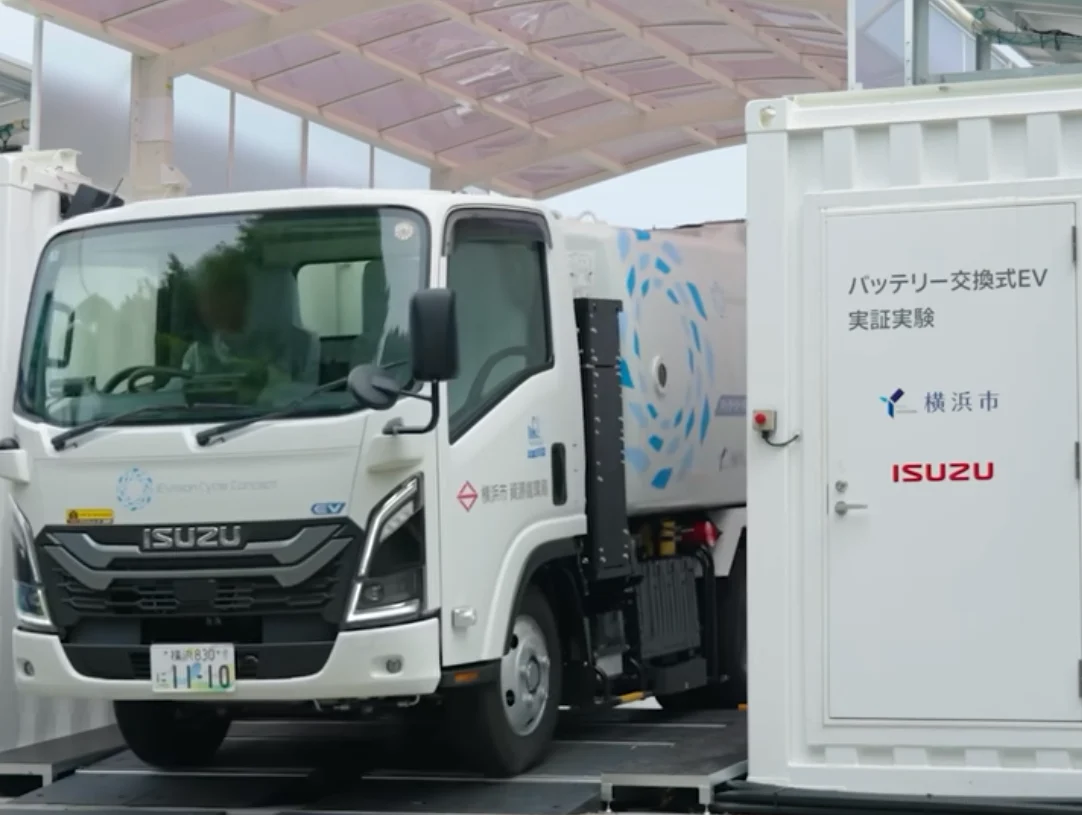
Isuzu Motors has begun testing swappable battery technology for electric refuse trucks in Yokohama, Japan, as part of a pilot project aimed at improving the operational availability of battery-electric municipal vehicles.
The trial, which will run until March 2028, is being conducted in partnership with the City of Yokohama and will assess whether automated battery swapping can reduce vehicle downtime compared with conventional charging.
Isuzu Unveils Electric D-MAX Pickup for Europe and UK with Off-Road Focus
Battery Swapping to Reduce Downtime
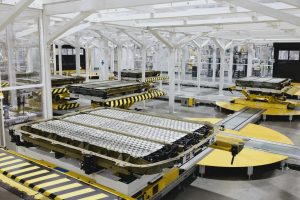
Under the project, electric refuse trucks equipped with two traction batteries will exchange depleted battery packs for fully charged units at dedicated battery swapping stations.
According to the company, the automated exchange process takes approximately three minutes, allowing the vehicles to resume waste collection operations shortly after arriving at the station.

The pilot is intended to address one of the principal operational challenges facing battery-electric refuse trucks. Although fast charging can reduce charging times, municipal waste collection vehicles typically require frequent energy replenishment because, in addition to propulsion, their waste compaction equipment also consumes significant battery power.
By replacing discharged batteries instead of waiting for them to recharge, Isuzu aims to increase vehicle utilization and reduce interruptions to daily operations.
Exploring Multiple Zero-Emission Technologies
The battery swapping initiative forms part of Isuzu’s broader efforts to improve the practicality of zero-emission commercial vehicles.
Earlier this year, Isuzu and Toyota announced the joint development of a light-duty hydrogen fuel-cell truck, which also seeks to minimize downtime through rapid refueling.
Isuzu to Build New U.S. Factory for Electric and Combustion Commercial Vehicles
Battery swapping represents an alternative approach for battery-electric vehicles, offering faster energy replenishment without relying on extended charging sessions.
Other commercial vehicle manufacturers are also evaluating similar concepts. Mitsubishi Fuso has partnered with Yamato Transport to test swappable battery technology for light-duty electric trucks in Japan.
The wider adoption of battery swapping is expected to depend on factors including infrastructure investment, operating costs and greater standardization of battery systems across different vehicle manufacturers and models.


