





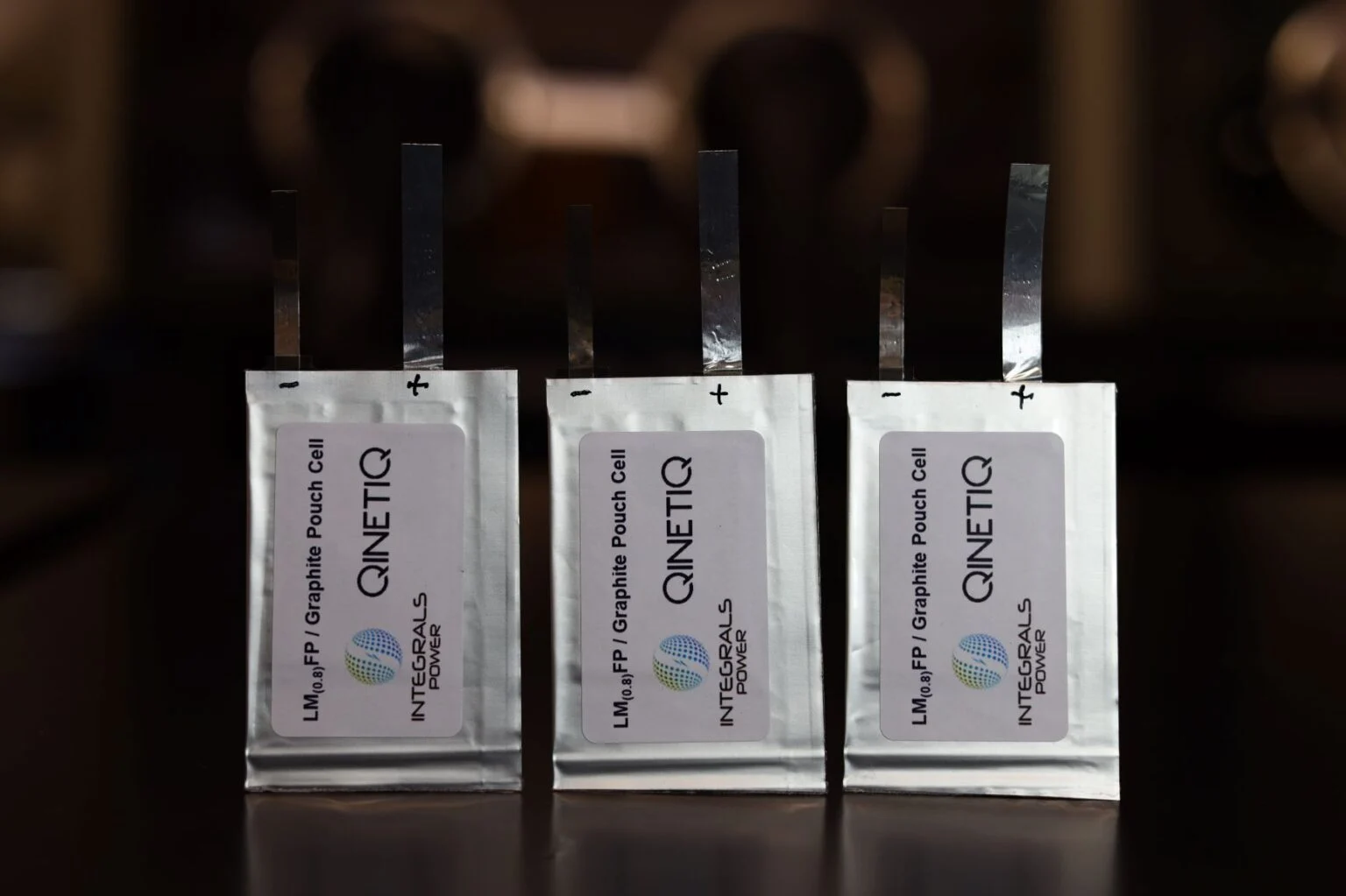
Integrals Power’s lithium manganese iron phosphate (LMFP) battery technology has reached a major testing milestone, completing more than 1,000 charge and discharge cycles while maintaining over 80% capacity. The test, conducted over five months by defense and research organization QinetiQ, highlights the performance and resilience of the company’s next-generation battery materials developed in the UK.
The LMFP pouch cells were evaluated using a 1C charge and discharge rate, commonly used as a benchmark for battery durability. The results point to the potential of LMFP chemistry to support longer-lasting electric vehicle (EV) battery packs while maintaining stable performance under sustained usage.
Integrals Power’s LMFP batteries contain 80% manganese, resulting in an energy density up to 20% higher than conventional lithium iron phosphate (LFP) batteries. In addition to improved performance, the LMFP chemistry offers safety and cost advantages over the nickel manganese cobalt (NMC) batteries that are widely used in the EV sector.
The material was both developed and manufactured at Integrals Power’s pilot facility in the UK, supporting efforts to build a localized battery supply chain. This domestic development comes as battery makers look to reduce reliance on foreign materials, particularly amid growing export controls on battery technologies from China.
The company is continuing to refine its technology, including a second-generation LMFP material designed to lower internal resistance by 30%, which could further enhance cycle life and efficiency. These developments aim to meet growing demands across sectors including electric transport, marine, and defense applications.


