



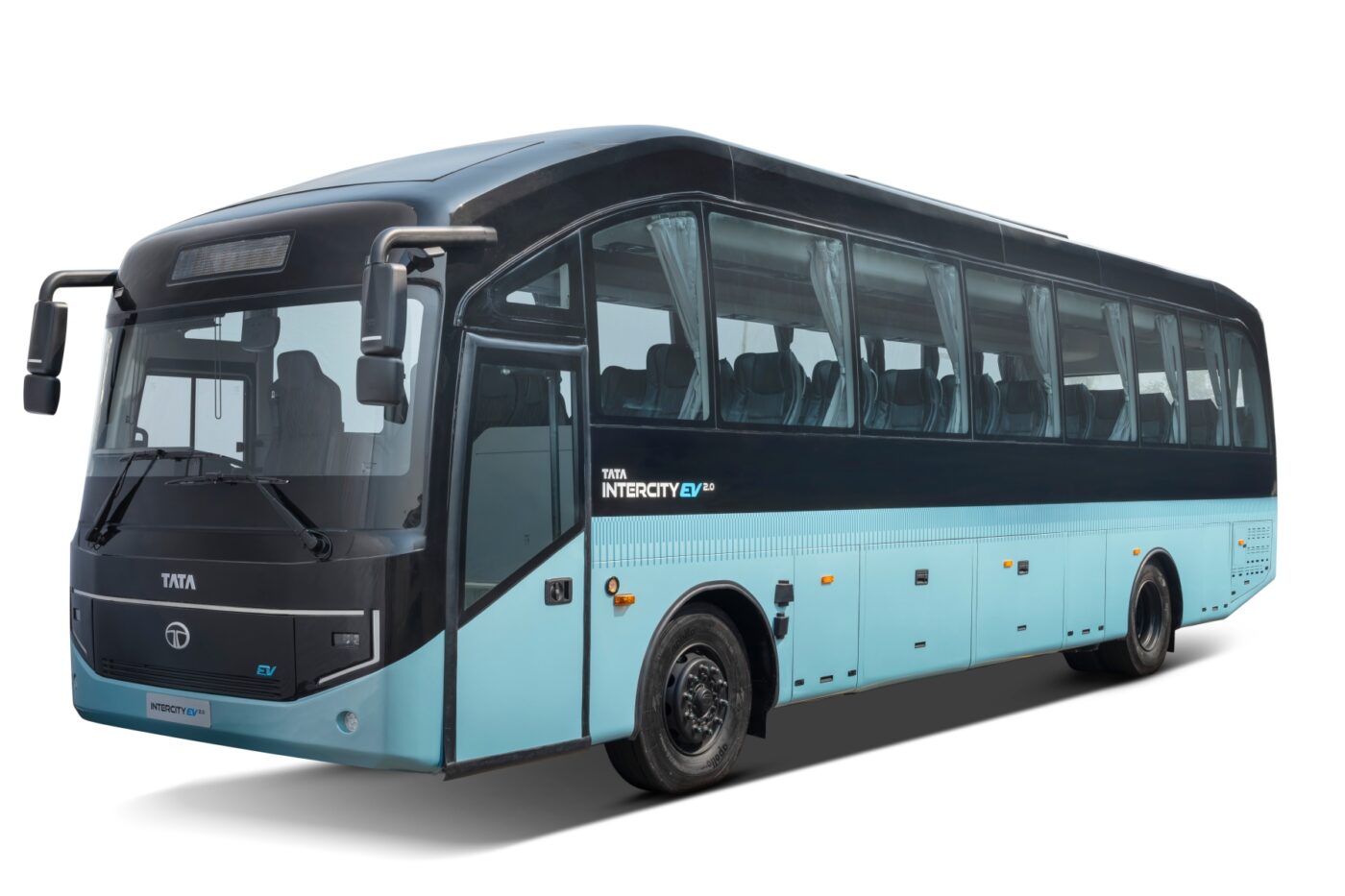
India’s state-run Convergence Energy Services Limited (CESL) will issue a tender next week to procure 10,900 electric buses under the National Electric Bus Programme (NEBP), as part of efforts to expand zero-emission public transport across key cities.
The tender, set to open on November 6, 2025, will cover several major urban centres including Hyderabad, Surat, Ahmedabad, Delhi, and Bengaluru, local media reported. The allocation plan assigns around 2,000 buses to Hyderabad, 1,600 to Surat and Ahmedabad combined, 2,800 to Delhi, and 4,500 to Bengaluru.
See also: JBM Ecolife Mobility Secures $100 Million From IFC To Expand Electric Bus Fleet In India
The procurement will include multiple bus categories such as Standard Floor, Low Floor, and Bus Rapid Transit (BRT) models, available in both air-conditioned and non-air-conditioned variants. Successful bidders will enter agreements with respective City Transport Undertakings (CTUs) to handle operations, maintenance, and charging infrastructure, with performance benchmarks for uptime, energy efficiency, and passenger comfort.
CESL’s tender will follow its aggregation-based procurement model under a Gross Cost Contract (GCC) structure, which allows private operators to own and operate buses in return for a fixed per-kilometre payment from city authorities. The model is intended to ease financial burdens on municipalities while encouraging large-scale EV adoption.
See also: GreenCell Mobility to Deploy Over 1,200 Electric Buses in India Under Government Tender
Each electric bus will replace an internal combustion engine model, contributing to reduced emissions and noise pollution. The initiative aligns with India’s broader push to modernise public transport infrastructure and improve air quality in its most densely populated regions.
Source: outlookbusiness.com, indiatimes.com


