
India has lowered taxes on fuel cell vehicles (FCEVs) to align them with battery electric vehicles (BEVs), as part of its biggest tax reform in eight years. The move underscores the country’s view of hydrogen technology as a complement to battery-powered transport in its decarbonisation strategy.
The Goods and Services Tax (GST) on FCEVs has been reduced from 12% to 5%, bringing them on par with BEVs. By contrast, internal combustion engine (ICE) and hybrid vehicles now face rates of 18% to 40%. Previously, ICE vehicles attracted up to 28% GST plus a compensation cess of as high as 22%.
“By cutting GST to 5%, India is signaling that hydrogen fuel cells will be part of the country’s clean mobility future,” a senior government official said on condition of anonymity, since they were not authorised to speak publicly.
While BEVs accounted for 2.4% of car sales and 6.1% of two-wheeler sales in 2024, hydrogen-powered cars are not yet commercially available. Automakers are instead running pilot projects to test both passenger and commercial FCEVs under local conditions.
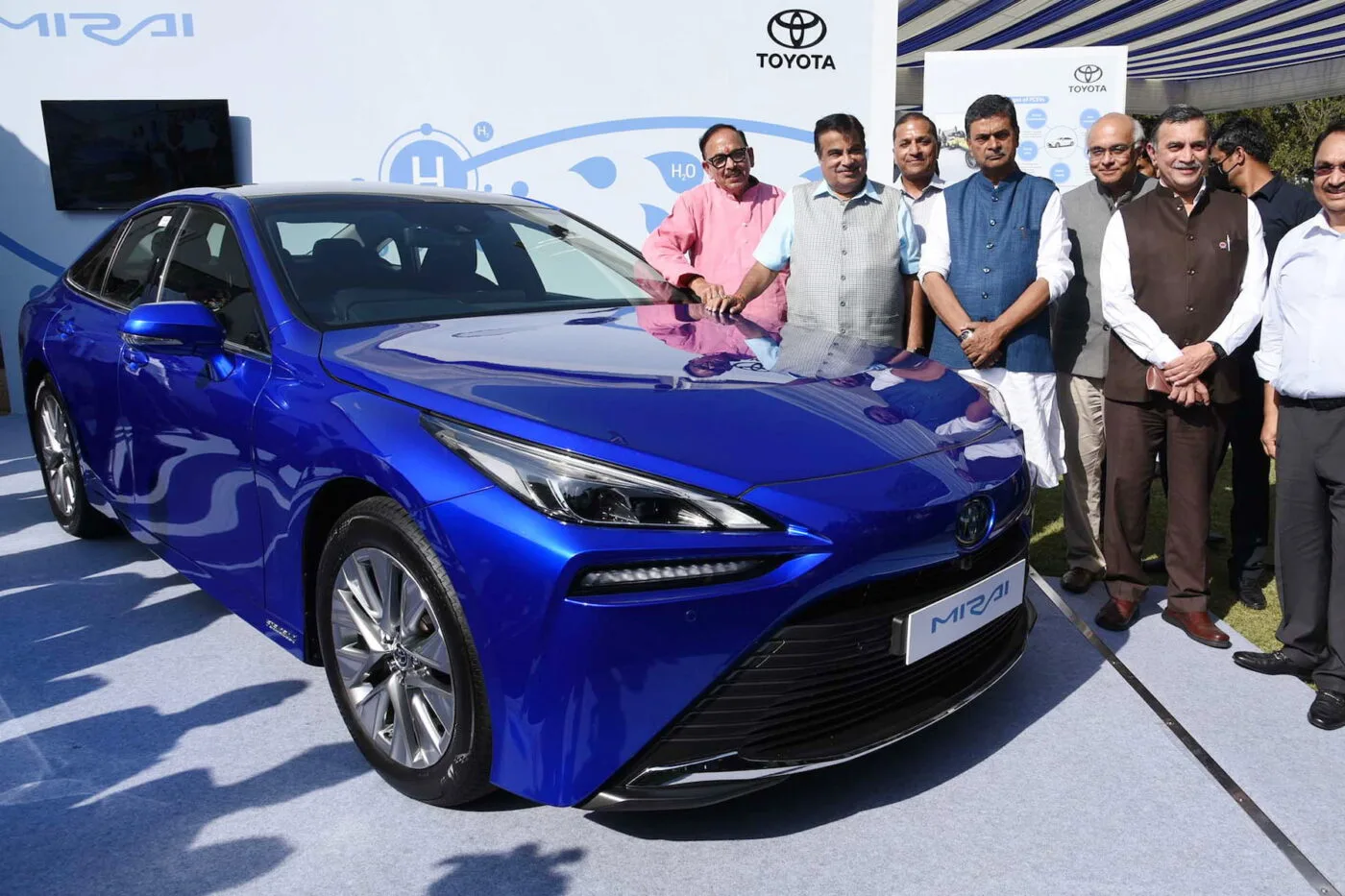
Toyota Kirloskar Motor imported the first-generation Mirai in 2019 and later brought the second generation in 2022 for testing with the International Center for Automotive Technology. Nitin Gadkari, the Minister of Road Transport & Highways, inaugurated the pilot project and has occasionally used the Mirai for official travel. Hyundai has also been testing its Nexo SUV in partnership with Indian Oil, with trials expected to run through 2027.
In the commercial sector, Tata Motors and Ashok Leyland are moving ahead with hydrogen buses and trucks. Tata began testing 16 heavy-duty hydrogen trucks in March and has already deployed 15 hydrogen fuel cell buses in Delhi. Ashok Leyland last year supplied five FCEV buses to NTPC in Ladakh and three trucks to Adani.
The pilots form part of the National Green Hydrogen Mission, which has allocated six billion rupees ($70 million) in grants to support new projects. The government aims to have more than 1,000 hydrogen buses and trucks on Indian roads by 2030.
Source: pib.gov.in