
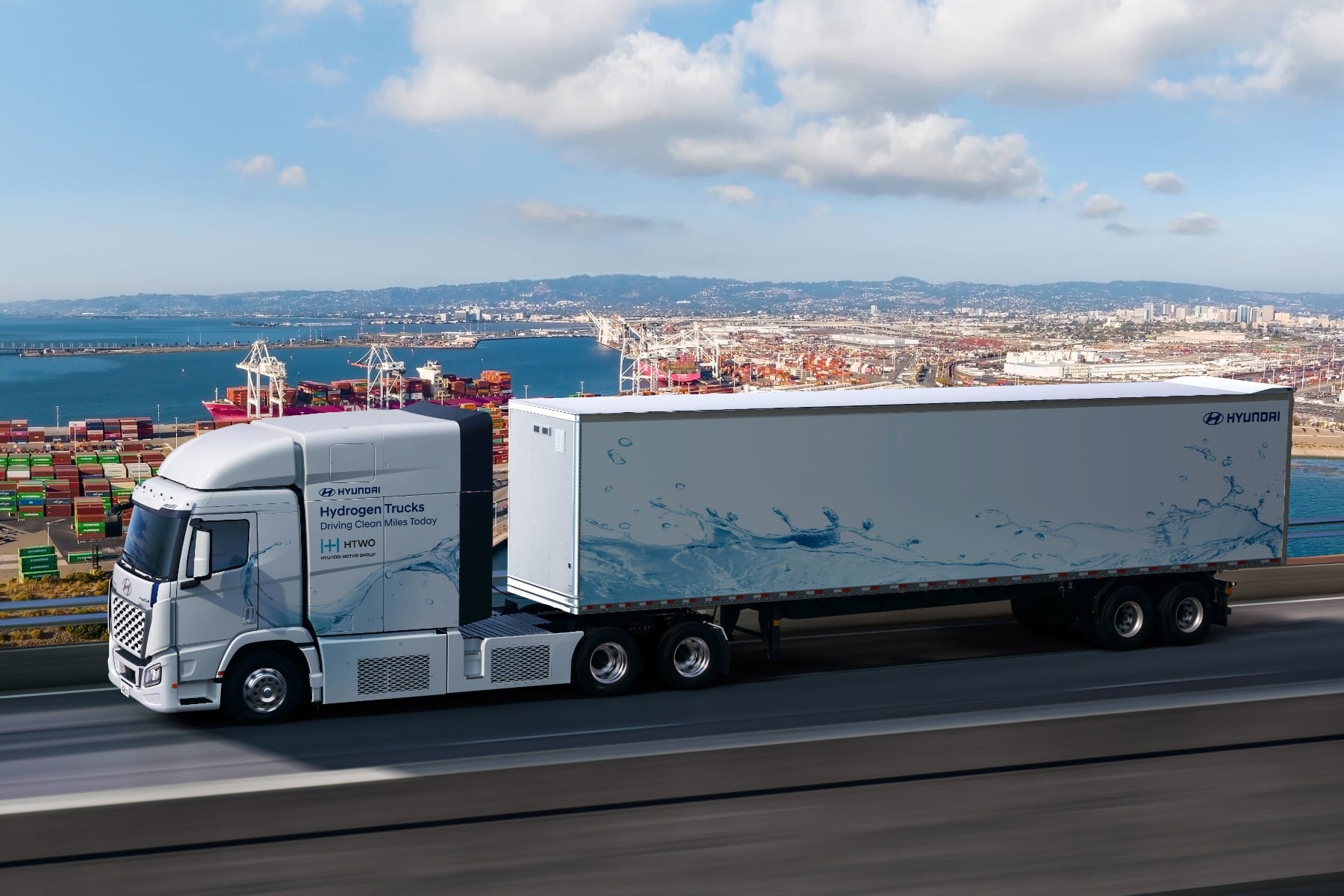
Hyundai Motor Company unveiled its next-generation XCIENT Fuel Cell truck for the North American market and announced a development partnership with autonomous driving software firm Plus, reinforcing its commitment to zero-emission and autonomous freight transportation in the United States.
The announcements were made during the Advanced Clean Transportation (ACT) Expo in Anaheim, California, where Hyundai showcased the XCIENT Fuel Cell truck adapted to meet North America’s Class 8 heavy-duty specifications. The truck features two 90-kW hydrogen fuel cell stacks delivering a total output of 180 kW, paired with a 350-kW electric motor and a 72-kWh battery. It is equipped with ten hydrogen tanks with a combined capacity of 68 kilograms, offering an estimated range of over 450 miles (approximately 725 kilometers) under standard load conditions.
See also: All-New Hyundai Nexo Launches with More Power and Hydrogen Range
The vehicle builds on Hyundai’s existing XCIENT platform, already deployed in select markets, including the United States. In 2023, Hyundai delivered 30 XCIENT trucks as part of the NorCAL ZERO project in California, following earlier deployments in Germany in 2022.
In parallel, Hyundai confirmed a collaboration with California-based company Plus to integrate Level 4 autonomous driving capabilities into the XCIENT platform. The companies presented a prototype that combines Hyundai’s hydrogen fuel cell system with Plus’s SuperDrive autonomous driving software. While no production timeline was disclosed, the partnership aims to test and validate self-driving hydrogen-powered trucks for long-haul freight applications.
See also: Hyundai to Establish Hydrogen Fuel Cell Plant in Ulsan, Expanding Hydrogen Strategy
“Hyundai Motor believes in a sustainable future powered by advanced fuel cell technologies,” said Jim Park, Senior Vice President of Commercial Vehicle and Hydrogen Business Development at Hyundai Motor North America. “We hope to continue our partnership with Plus to add autonomous driving capabilities to XCIENT Fuel Cell trucks in the future and provide our fleet operator customers with additional solutions that improve road safety and freight efficiency.”
The developments are part of Hyundai’s broader hydrogen strategy in the U.S., which includes investment in fuel production and refuelling infrastructure. The company’s subsidiary HTWO Energy is constructing its first hydrogen production and refuelling station for heavy-duty vehicles in Savannah, Georgia. Scheduled to begin operations in late 2026, the facility will initially produce 1,200 kilograms of hydrogen per day, with the potential to scale to 4,200 kilograms based on future demand.
See also: Hyundai Glovis to Deploy 21 Hydrogen Fuel-Cell Trucks for Metaplant America Logistics
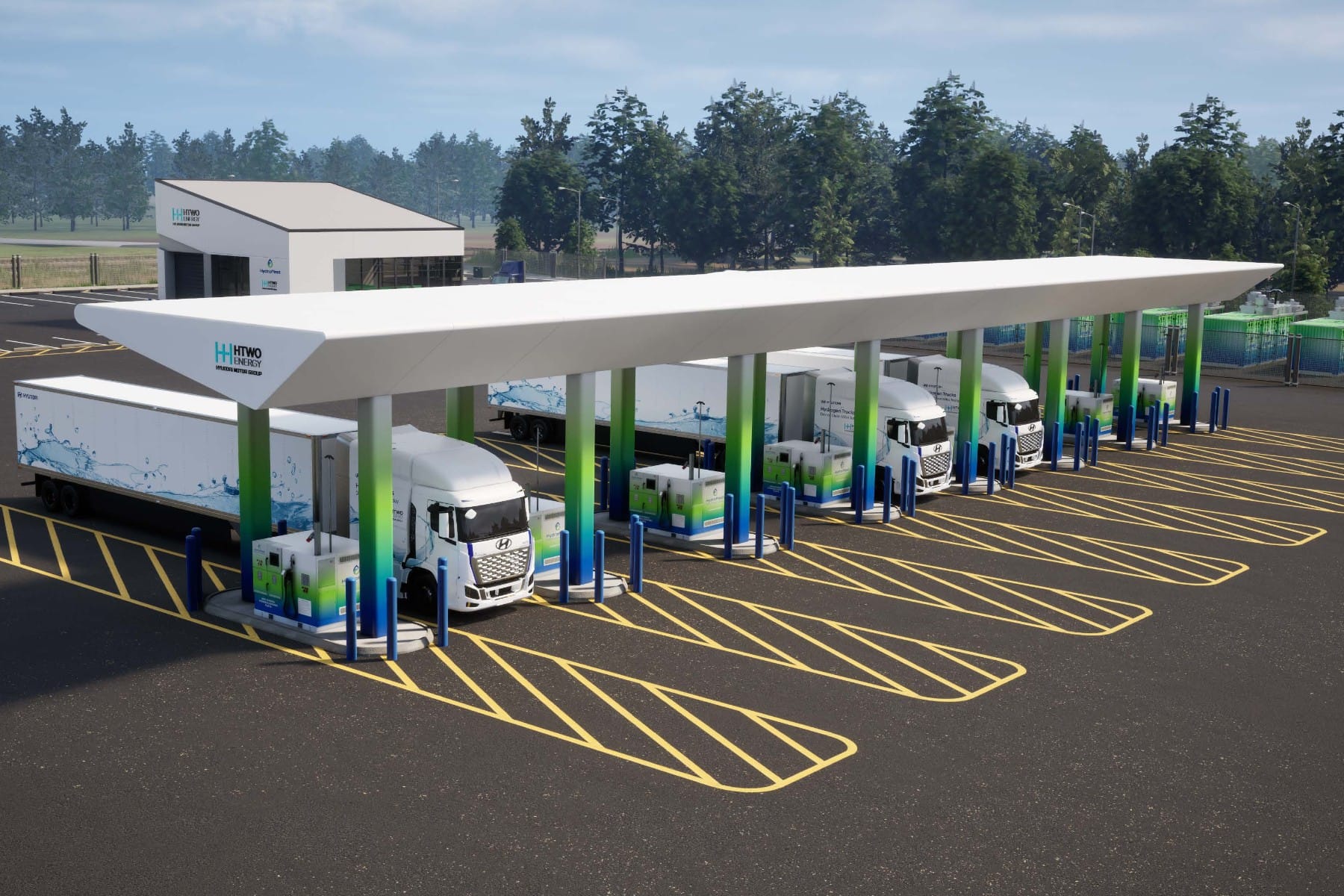
“HTWO Energy Savannah is a breakthrough hydrogen production and refuelling station for the heavy-duty trucking industry, allowing zero-emissions trucks to quickly and easily refuel at a single convenient location in the Savannah region,” Park added. “The HTWO Energy Savannah hydrogen station will also truly fulfil our vision for HMGMA Clean Logistics, allowing our innovative new electric vehicle plant to transport plant shipments within a clean, zero-emissions ecosystem.”
The refuelling station will support Hyundai’s Metaplant America facility in Georgia, which plans to use the XCIENT trucks as part of its internal logistics operations.
See also: Hyundai’s XCIENT Hydrogen Semi Trucks Debut in Georgia for Logistics Operations
Hyundai did not provide a timeline for commercial rollout of autonomous versions of the XCIENT truck, but the company indicated that continued development and infrastructure investment would support future deployment.