
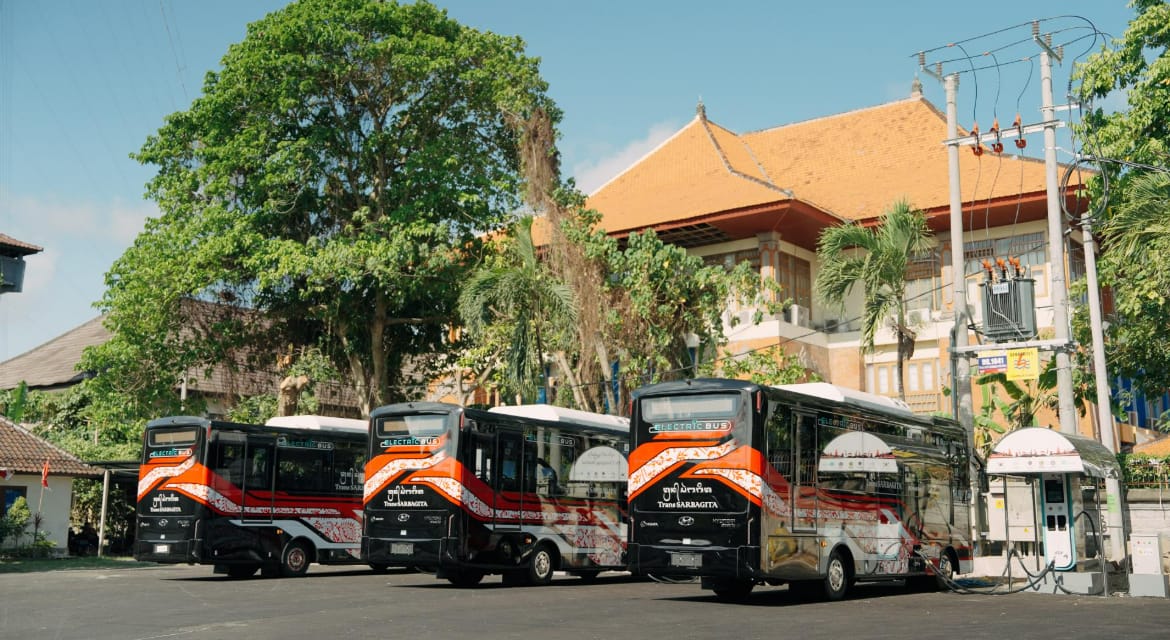
Hyundai Motor has supplied 11 County EV electric buses for Bali’s first electric public transport scheme, expanding the South Korean automaker’s commercial electric vehicle presence in Indonesia. Indonesian bus body manufacturer Laksana built the bodies on Hyundai platforms, combining imported vehicle technology with local manufacturing.
The buses measure eight metres in length and accommodate 20 passengers. Each vehicle is equipped with a 128 kWh battery and offers a driving range of more than 200 kilometres, according to the project details. The fleet was presented at the scheme’s launch on 22 October 2026.
After-Sales Support Forms Part of Hyundai’s Bid
The project is operated by the Global Green Growth Institute (GGGI) as part of a South Korean official development assistance initiative involving South Korea’s climate and energy ministry and the Indonesian government. It follows an agreement between the two countries in 2025.
Hyundai won GGGI’s tender in the second half of 2025. The selection considered vehicle quality, after-sales support capabilities and the company’s experience with development assistance projects.
To support the initial deployment, Hyundai is implementing a field quality programme that includes a local monitoring room to track vehicle condition and driving performance. The programme is intended to help identify operational issues and support fleet reliability during the early stages of service.
For a first electric public transport deployment, after-sales support can be an important consideration alongside vehicle specifications. Monitoring performance and responding to technical issues may help operators assess the practicality of expanding electric bus services.
Building on Earlier Electric Bus Deliveries in Indonesia
The Bali order follows Hyundai’s delivery of 11 County EV buses to Surabaya in November 2024. The latest deployment extends the company’s presence in Indonesia’s electric commercial vehicle market and provides another operating base for its support activities.
Hyundai plans to expand its electrified commercial vehicle business in Medan, Jakarta, Semarang and Surabaya before pursuing further opportunities across the Asia-Pacific region.
Chul Youn Park, Senior Vice President and Head of Hyundai Motor Company’s Global Commercial Vehicle and Light Commercial Vehicle Business Division, said:
“We are pleased to contribute to Bali’s transition toward sustainable transportation through the supply of electric buses. Building on our experience and growing presence in Indonesia, we aim to expand our electrified commercial vehicle business across key cities and regions in this country. Going forward, we will continue to pursue new business opportunities across the Asia-Pacific region, leveraging our competitive products and field support capabilities.”
Local Partnerships Support Electric Public Transport
The Bali project brings together Hyundai’s electric bus platforms, Laksana’s body-building capabilities and a programme supported by government partners in Indonesia and South Korea.
The deployment also highlights the role of operational support in introducing electric buses to new public transport systems. Battery range, vehicle reliability, maintenance arrangements and technical assistance can all influence how effectively operators integrate electric vehicles into daily services.
Hyundai’s approach combines vehicle supply with monitoring and field support, while its plans for further expansion in Indonesia will depend on opportunities to establish additional deployments and support networks across the country.