

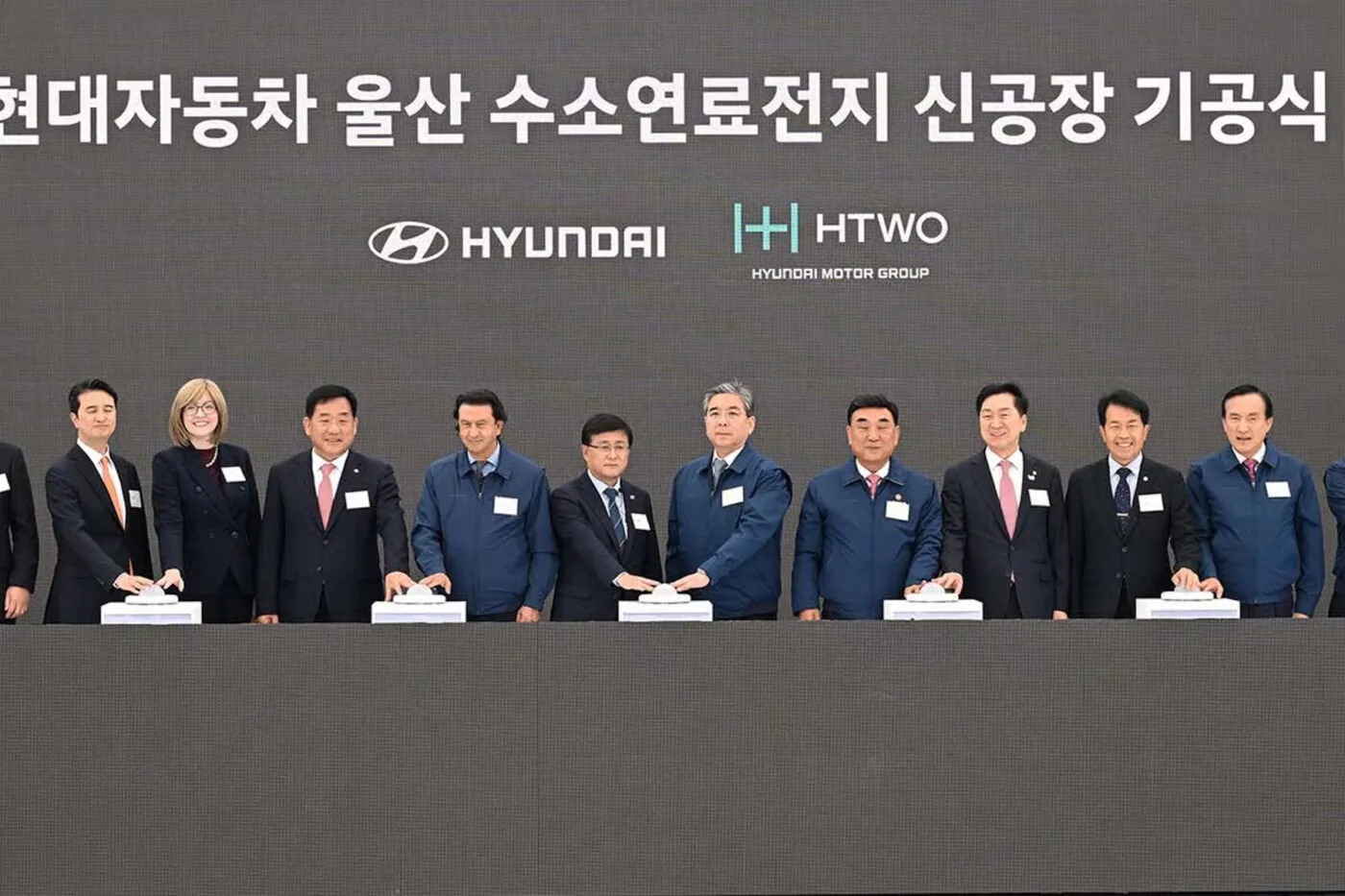
Hyundai Motor Group has broken ground on a new hydrogen fuel cell production facility in the South Korean industrial city of Ulsan, marking a key step in its broader strategy to advance hydrogen technology beyond passenger vehicles.
The new 43,000-square-metre plant will be built on the site of a former internal combustion engine and transmission factory and is scheduled to begin operations in 2027. Hyundai said the facility will have an annual production capacity of 30,000 fuel cell systems and polymer electrolyte membrane (PEM) electrolysers to support a wide range of applications including cars, commercial trucks, buses, construction machinery and ships.
See also: Hyundai Glovis to Deploy 21 Hydrogen Fuel-Cell Trucks for Metaplant America Logistics
Hyundai will invest 930 billion won ($672 million) in the conversion, and the new facility will be operated under HTWO, the group’s dedicated hydrogen brand. The company said the plant will integrate “advanced core technology” designed to enhance power output and durability while achieving cost competitiveness in global markets.
“This plant embodies Hyundai Motor Group’s strategic commitment to advancing the hydrogen society transition,” said Vice Chair Chang at the groundbreaking ceremony. “It will serve as a critical foundation for securing national economic growth momentum and establishing Korea’s leadership in the global hydrogen industry.”
See also: Hyundai, Kia, and W. L. Gore Collaborate on Advanced Fuel Cell Membrane Development
Hyundai also signed a memorandum of understanding with local bus maker KGM Commercial, which plans to use HTWO fuel cell systems in its future vehicles. The announcement underscores Hyundai’s aim to expand its hydrogen business beyond its own product lineup.
The new facility will be Hyundai’s first in South Korea to produce PEM electrolysers, which convert water into hydrogen using electricity. The company said it has achieved about 90% localisation of electrolyser components after nearly three decades of fuel cell development.
See also: Hyundai’s N Vision 74 Hydrogen Fuel-Cell Supercar Reportedly Heading for Limited Production in 2026
Earlier this year, Hyundai completed a 1 MW containerised electrolyser system that produces more than 300 kilograms of high-purity hydrogen daily. A larger 5 MW hydrogen project is also planned for Jeju Island as part of a wider effort to build a domestic hydrogen ecosystem.
South Korea’s government has long supported hydrogen initiatives as part of its energy transition goals. Senior officials attended the Ulsan ceremony, signalling continued public-private collaboration in positioning the country as a leader in hydrogen innovation.