
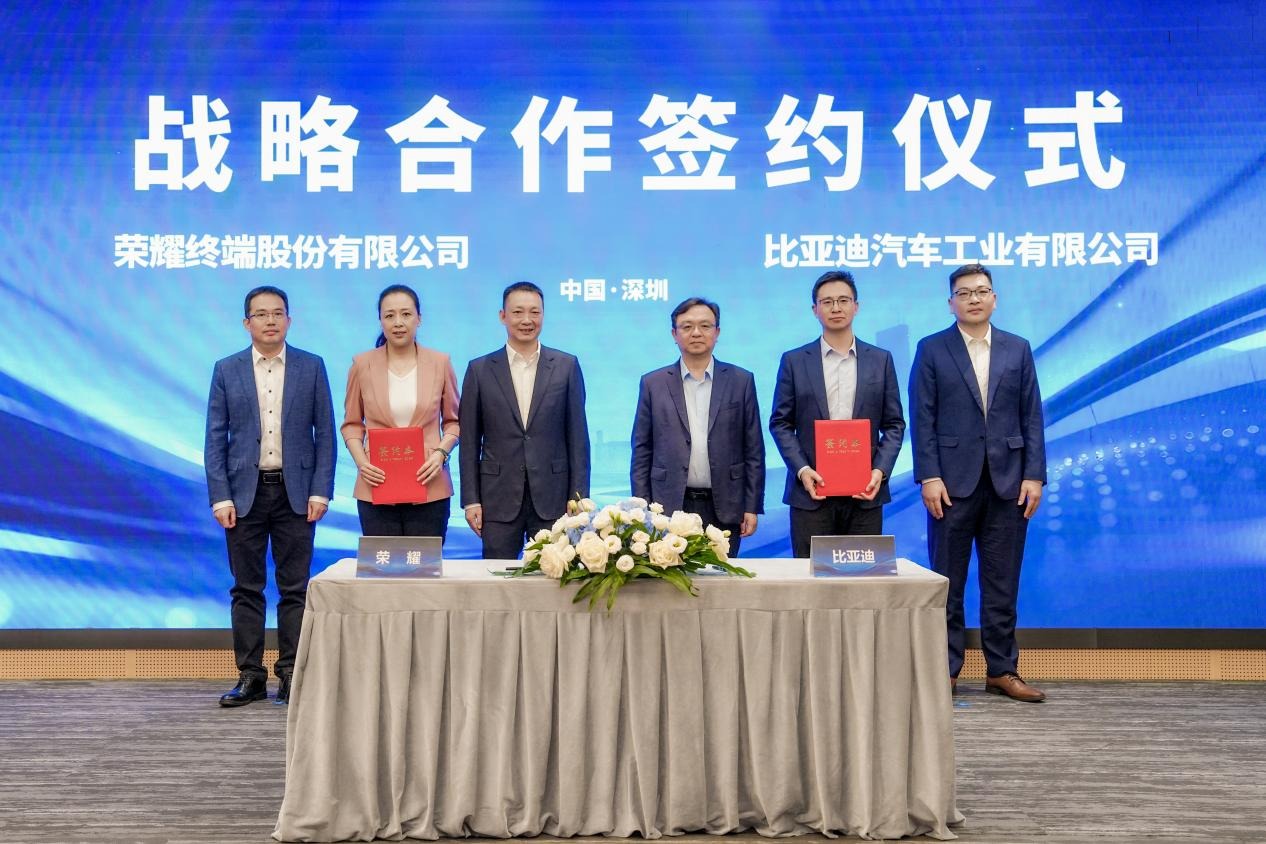
Chinese smartphone manufacturer HONOR and automaker BYD have entered into a strategic cooperation agreement aimed at advancing intelligent mobility through deeper technological integration and ecosystem collaboration. The agreement was signed on October 22 in Shenzhen, marking the beginning of a long-term partnership between the two technology leaders.
The collaboration will focus on three main areas — technology development, ecosystem integration, and joint marketing. Under the agreement, HONOR’s connected vehicle solutions will be integrated with BYD’s next-generation DiLink smart ecosystem to deliver more personalized, intelligent, and user-centric mobility experiences.
See also: BYD to Equip $14,000 Models with Advanced Battery and ADAS Tech by 2026
In the field of technology and product innovation, both companies plan to enhance cooperation in cross-device ecosystem fusion, AI Agent integration, and high-precision Bluetooth digital key technology. The partnership aims to accelerate breakthroughs that enable seamless interaction between smartphones and vehicles.
In ecosystem development, HONOR and BYD will establish a shared product and data model that connects HONOR’s smart connectivity features with BYD’s in-car systems. This approach is expected to provide platform-level interoperability, enhancing the experience for customers across both brands.
See also: BYD Refreshes Song and Qin Hybrid Models to Bolster Competitiveness in China
The two companies also plan to coordinate joint marketing and communication efforts, particularly during major product launches, such as new vehicle or smartphone introductions. These campaigns will explore creative, multi-channel outreach to strengthen brand engagement and attract a wider user base.
Li Jian, CEO of Honor Device Co., Ltd., said the collaboration represents a comprehensive strategic partnership in the AI era, with smart mobility as a key focus area. He noted that the partnership will promote joint technological advancement, industrial synergy, and ecosystem building to create what he described as “a new paradigm for smart living.”