

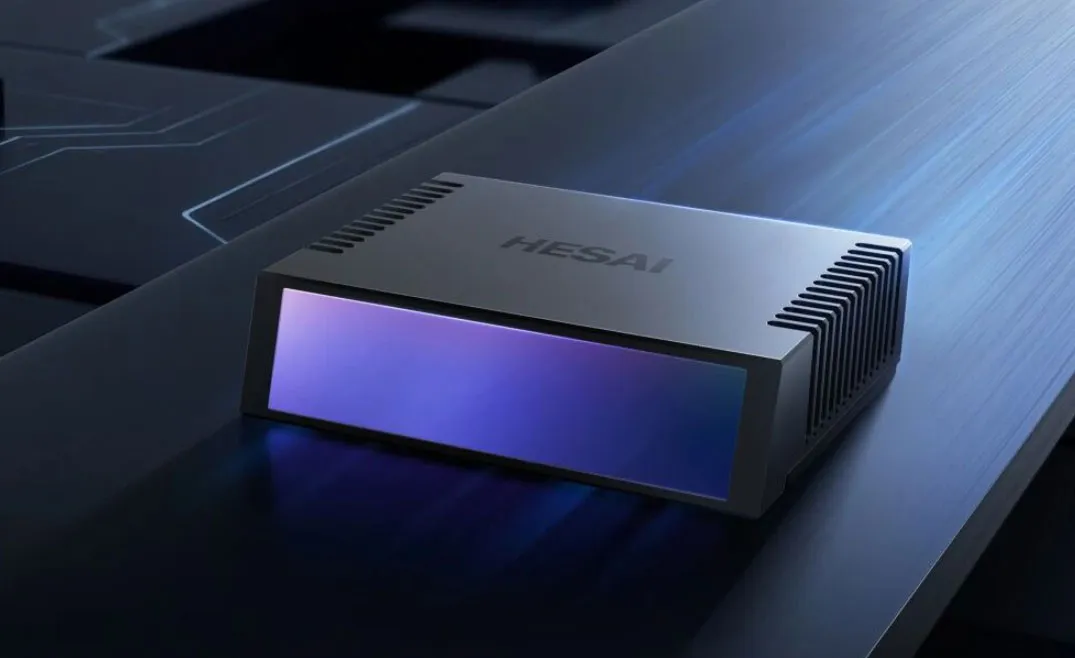
Hesai plans to double its annual production capacity to 4 million lidar units in 2026, according to information reported by TechCrunch, as the company accelerates expansion to meet rising demand from the automotive and robotics sectors.
The planned increase from 2 million units would mark a significant step up from the more than 1 million sensors Hesai produced in 2025. The company’s expansion comes amid consolidation in the global lidar industry, highlighted by the recent Chapter 11 bankruptcy filing of U.S. rival Luminar, which cited cost pressure and delayed vehicle programs as key challenges.
See also: Hesai Partners With Keeta Drone to Supply Lidar for Urban Autonomous Delivery Networks
Hesai’s growth strategy has been underpinned by improving financial performance. In November, the company raised its full-year net profit forecast to between RMB 350 million and RMB 450 million ($49 million–$63 million) after reporting record third-quarter results and reaching GAAP profitability one quarter ahead of schedule. Unaudited third-quarter revenue rose 47.5% year on year to RMB 800 million ($110 million), marking a sixth consecutive quarter of growth, while gross margin held steady at 42% and operating expenses fell 23% from a year earlier.
Net profit for the quarter reached RMB 260 million ($36 million), lifting cumulative profit for the first nine months of the year to RMB 280 million ($40 million), the company said.
See also: Hesai Technology Signs Exclusive Lidar Supply Agreement for Li Auto’s Next-Generation ADAS Platform
In November, Hesai also said it had produced and delivered more than 2 million lidar units, becoming the first automotive lidar supplier to reach that scale. The company surpassed its full-year 2025 production target of 1 million units in September and said it expects further growth as lidar adoption accelerates, particularly in China’s electric vehicle market.
Hesai said lidar sensors are now installed in about 25% of new electric vehicles sold in China, with many upcoming models expected to integrate multiple sensors per vehicle. The company counts 24 automotive customers, including a major European automaker, and said it has secured around 4 million orders for its latest ATX lidar sensor.
See also: Seyond Faces Patent Lawsuit From Hesai Ahead of Hong Kong Listing
Internationally, Hesai has continued to expand its footprint, including in the United States. In September, the company said it secured a new order worth more than $40 million from a U.S.-based robotaxi operator, its second U.S. deal that month. It also announced on Sept. 4 that it had been selected by Motional as its exclusive short-range lidar supplier. Motional, backed by Hyundai Motor, has deployed Hesai sensors on its fleet of all-electric Ioniq 5 robotaxis for two consecutive years, with each vehicle equipped with four units.
Beyond automotive uses, Hesai is positioning robotics as a longer-term growth area, supplying lidar for applications such as robotic lawnmowers and quadrupeds, and indicating potential use in humanoid robots.
Hesai, which is listed on both Nasdaq and the Hong Kong exchange, has raised hundreds of millions of dollars in recent years. The company has also faced scrutiny from U.S. authorities over alleged links to China’s military industry, allegations it has denied.