
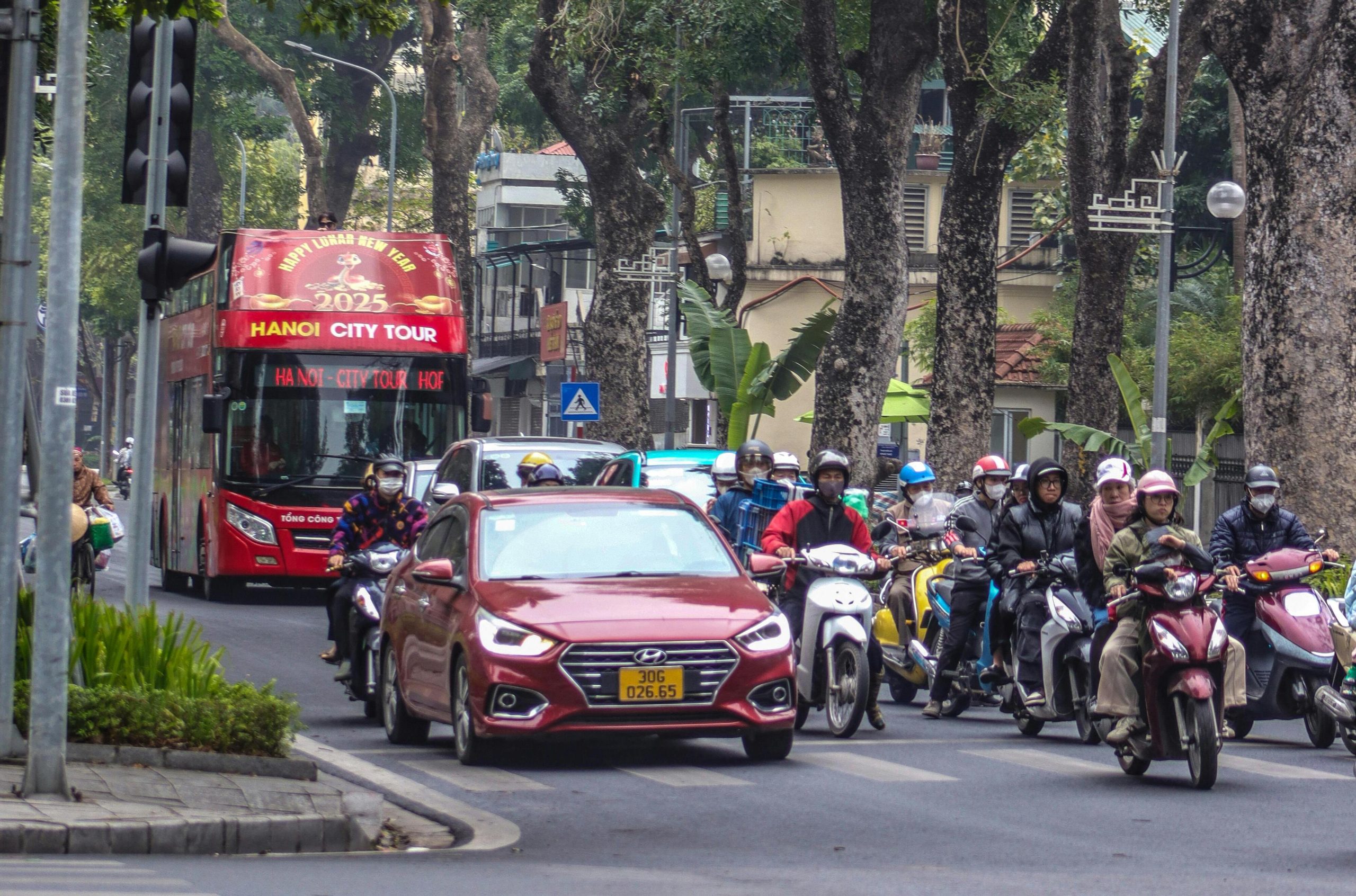
Vietnam’s capital, Hanoi, will ban all fossil fuel-powered motorbikes and scooters within Ring Road 1 from July 1, 2026, as part of a sweeping initiative to curb air pollution and shift to cleaner transportation. A large-scale subsidy program will support the transition, alongside major investments in charging infrastructure and electric public transport.
The city’s Department of Transport confirmed that a second phase of the initiative will begin in 2028, when restrictions on combustion-engine vehicles will gradually be extended to additional areas, including private cars. By 2030, a full Low Emission Zone (LEZ) is expected to be in effect up to Ring Road 3, encompassing the greater Hanoi area.
A roadmap for implementing the LEZ will be published by the third quarter of this year, with plans to pilot restricted-access zones for high-polluting vehicles. In parallel, Hanoi will aggressively promote multi-modal public transit through expanded electric bus and rail networks, supported by social investment and local budgets.
“Policies to encourage individuals to switch from fossil fuel vehicles to clean-energy options or public transport must be issued before September 30, 2025,” Vietnamnet Global reported. The city aims to replace 450,000 petrol-powered motorbikes with electric alternatives through a comprehensive subsidy scheme ahead of the 2026 deadline.
Financial incentives will also be introduced for EV manufacturers and operators of charging infrastructure. Hanoi will expand its fleet of small electric buses and four-seater EV shuttles for downtown services while increasing public charging availability.
Elsewhere in Vietnam, Ho Chi Minh City has begun electrifying its motorcycle fleet through public-private cooperation, targeting gig-economy transport services such as Grab, Be, ShopeeFood, and Ahamove. The efforts reflect a broader national push to accelerate electric mobility and reduce dependence on fossil fuels.