





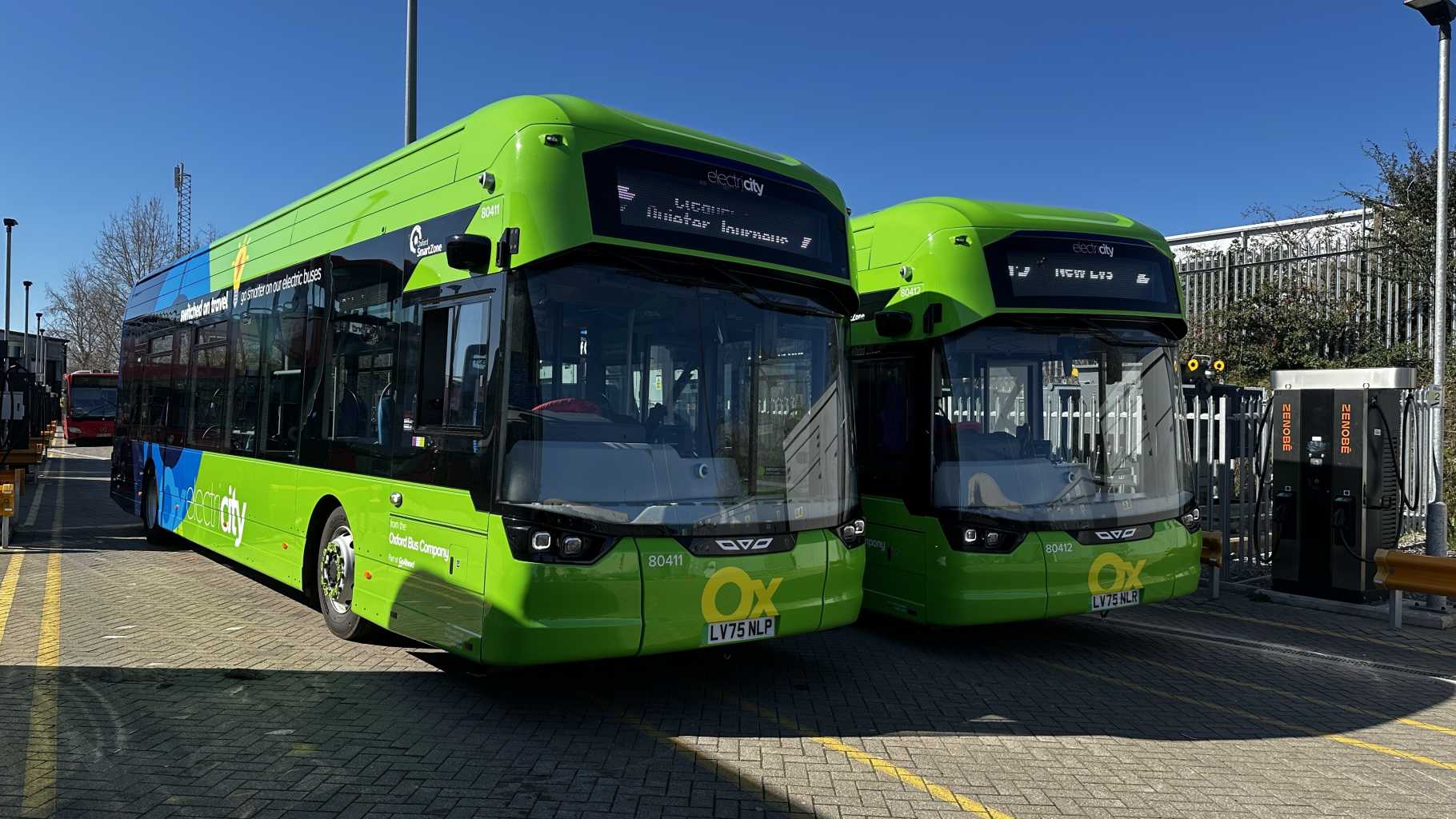
The Go-Ahead Group and Oxfordshire County Council have jointly invested more than £5.1 million to introduce 13 additional electric buses in Oxfordshire, expanding zero-emission transport services beyond Oxford city into surrounding communities.
The new fleet, operated by the Oxford Bus Company, includes nine large single-deckers and four smaller vehicles manufactured by Wrightbus and Alexander Dennis. The buses are being deployed on regional routes linking areas such as Abingdon, Great Milton, Wytham, Bicester and Chesterton, with the first vehicles already entering service.
Funding for the rollout comprises £3.9 million from Go-Ahead and £1.2 million from the council through its Vehicle Improvement Fund, supported by central government allocations aimed at improving local bus services.
Luke Marion, Managing Director of Oxford Bus Company, said the initiative marked a further step in the company’s environmental strategy. “This is another major sustainability milestone in our continued strategy to help deliver a significant contribution to improving air quality in the communities we serve,” he said. “The exciting news is it will enable us to operate electric vehicles more widely across the county, rather than mainly on routes within Oxford.”
Marion added that improved traffic conditions and policy measures had supported increased ridership. “This further investment is the result of strong partnership working and improving traffic conditions in Oxford […] This has led to increasing bus usage, which in turn has given us the confidence to commit to investing further in expanding our electric fleet,” he said.
Councillor Andrew Gant, Cabinet Member for Transport Management at Oxfordshire County Council, described the project as a result of collaboration between public and private stakeholders. “This is really good news and an excellent example of partnership working delivering real benefit and value to our residents,” he said. He added that the investment would “see an increase of vehicles on our local network which are zero emission from the tailpipe,” noting that more than one-third of services in the county are already operated by low-emission buses.
Oxford Bus Company began electrifying its fleet in 2020 and, in partnership with local authorities and Stagecoach Group, introduced 159 electric buses in 2024. The programme was supported by £32.8 million from the government’s Zero Emission Bus Regional Areas (ZEBRA) scheme, alongside additional funding from the council and operators.
According to company data, the electric fleet had completed 10 million kilometres by the end of 2025. Electric buses produce zero tailpipe emissions, reducing pollutants such as nitrogen oxides and particulate matter, which are associated with adverse health impacts. Estimates cited in the report indicate that vehicle exhaust emissions contribute to nearly 5,000 premature deaths annually in the UK.


