
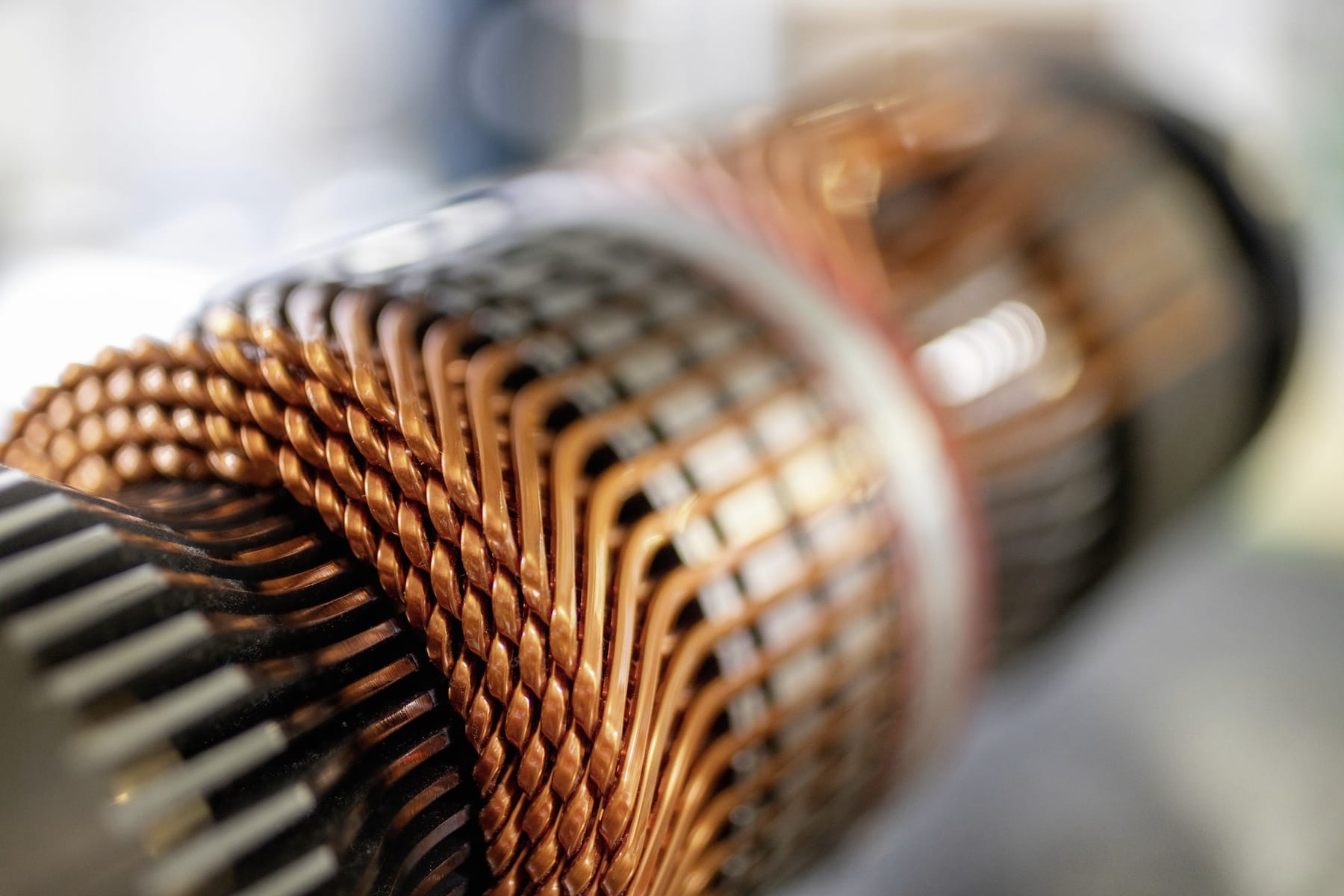
A German government-backed research initiative has been launched to develop industrial-scale recycling solutions for electric axle drive systems, as Europe seeks to reduce reliance on scarce strategic materials used in electric vehicles.
The project, known as ReDriveS, is funded by Germany’s Federal Ministry for Economic Affairs and Energy (BMWK) and brings together 25 industry and research partners, including automotive supplier Schaeffler and carmaker Volkswagen. It aims to create automated and economically viable circular economy processes for electric axle drives, or e-axles, used in battery electric vehicles.
See also: Schaeffler Begins Mass Production of High-Voltage Inverter Brick in China
E-axles integrate an electric motor, power electronics and a transmission into a compact unit and rely heavily on rare-earth magnets such as neodymium-iron-boron, materials that are largely imported into Europe. While the need to recycle these components is growing due to supply chain and environmental pressures, large-scale facilities and standardized processes remain limited, despite recent progress in the UK.
With a total budget of €25 million, more than €16 million of which is provided by BMWK, ReDriveS will focus on recycling the entire e-axle rather than individual components. The project is designed to run for 36 months and will develop robot-guided, non-destructive dismantling methods, new recycling processes and the use of digital data such as digital twins to improve material recovery and efficiency.
See also: Schaeffler Launches Tool to Simplify Electric Motor Repairs
“With ReDriveS, we are leading a flagship project for the circular economy in electromobility as the consortium leader, together with the BMWK and strong partners,” said Prof. Dr. Tim Hosenfeldt, head of central technologies at Schaeffler. “Our goal is to make electric axle drives significantly more resource-efficient through digital twins, automated dismantling and high-quality recycling—thereby securing raw materials and supply chains, reducing CO₂ emissions and strengthening Germany as a business location.”
Industry partners in the project include AVL, Bosch, Circu Li-Ion and The Battery Lifecycle Company, alongside research institutions such as the Öko-Institut and TU Clausthal. The consortium says the work will support future recycling targets and help lower the carbon footprint of electric vehicles by reducing emissions generated along the supply chain in Germany and Europe.