



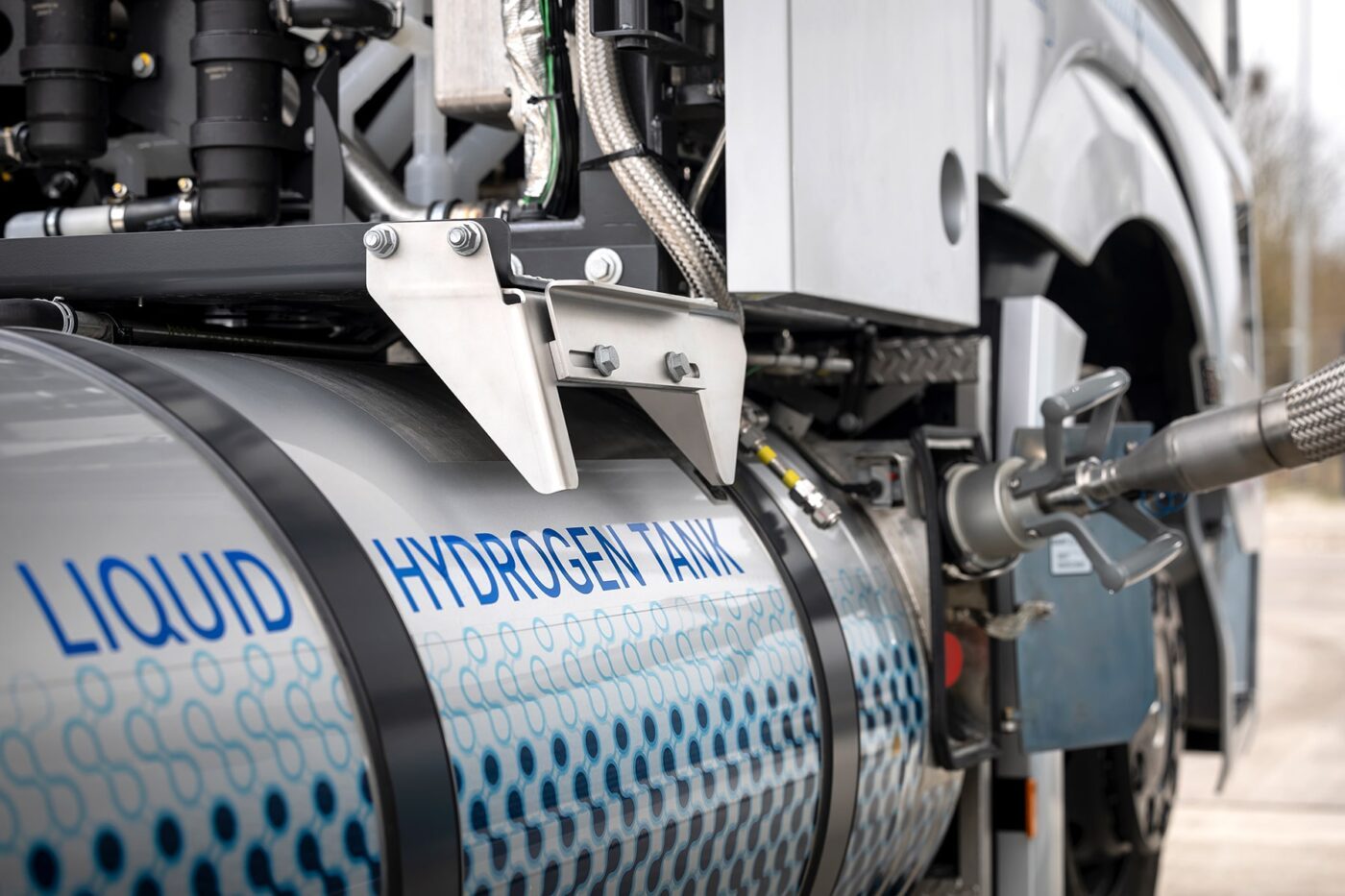
Germany’s limited and often unreliable hydrogen refuelling infrastructure remains a major obstacle for logistics companies seeking to deploy fuel cell trucks, prompting a new research initiative aimed at improving transparency, planning and utilisation of existing stations.
The Chair of Production Engineering of E-Mobility Components (PEM) at RWTH Aachen University is leading the “HyConnect” project, which is developing a digital platform designed to support the efficient use of hydrogen refuelling infrastructure. The project brings together refuelling station operator H2 Mobility, hydrogen producer and logistics provider H2 Green Power & Logistics, logistics software company Mansio and the Digital Supply Chain research group at Offenburg University of Applied Sciences.
See also: German Researchers Uncover Detailed Mechanisms Behind Fuel Cell Catalysts
Funded by the German state of North Rhine-Westphalia, the project will run for two and a half years. Its goal is to create a system that allows users to reserve refuelling capacity, simplify payment processes and improve transparency for fleet operators and infrastructure providers. The partners say this could help reduce uncertainty and support the gradual market uptake of hydrogen-powered transport.
Germany currently has fewer than 100 hydrogen refuelling stations, according to industry estimates, and several were taken out of service last year, including older first-generation 700-bar stations. While European hydrogen infrastructure is expected to expand by 2030 under the EU’s Alternative Fuels Infrastructure Regulation (AFIR), availability remains uneven, particularly for heavy-duty vehicles.
See also: Toyota Announces 2026 Mirai Fuel Cell Sedan With 402-Mile Range and $51,795 Starting Price
“Sparse infrastructure and low storage capacities of hydrogen filling stations can necessitate time-consuming and costly detours for logistics companies,” said Achim Kampker, head of PEM at RWTH Aachen University. At the same time, he said, the low number of hydrogen trucks creates uncertainty for station operators, which can translate into higher prices for users.
PEM project manager Maximilian Bayerlein said fragmented digital systems were exacerbating the problem. “Efficient data exchange between IT systems can significantly reduce these effects, but this is often only possible on a small scale using individually developed and therefore cost-intensive tools,” he said.
See also: BMW CEO Warns Europe Risks Falling Behind in Hydrogen Technology Race
The HyConnect platform is intended to combine data on hydrogen demand from fleet operators with real-time information on hydrogen availability at refuelling stations, enabling more accurate planning and helping to avoid supply bottlenecks. In the longer term, the partners aim to support investment decisions by reducing risks for both vehicle operators and infrastructure providers, including through work on hydrogen pricing models and a universal AI-based data interface.


