

Ford Motor is moving into the battery energy storage market, aiming to repurpose unused electric vehicle battery capacity to meet growing demand from data centres, utilities and power grid operators.
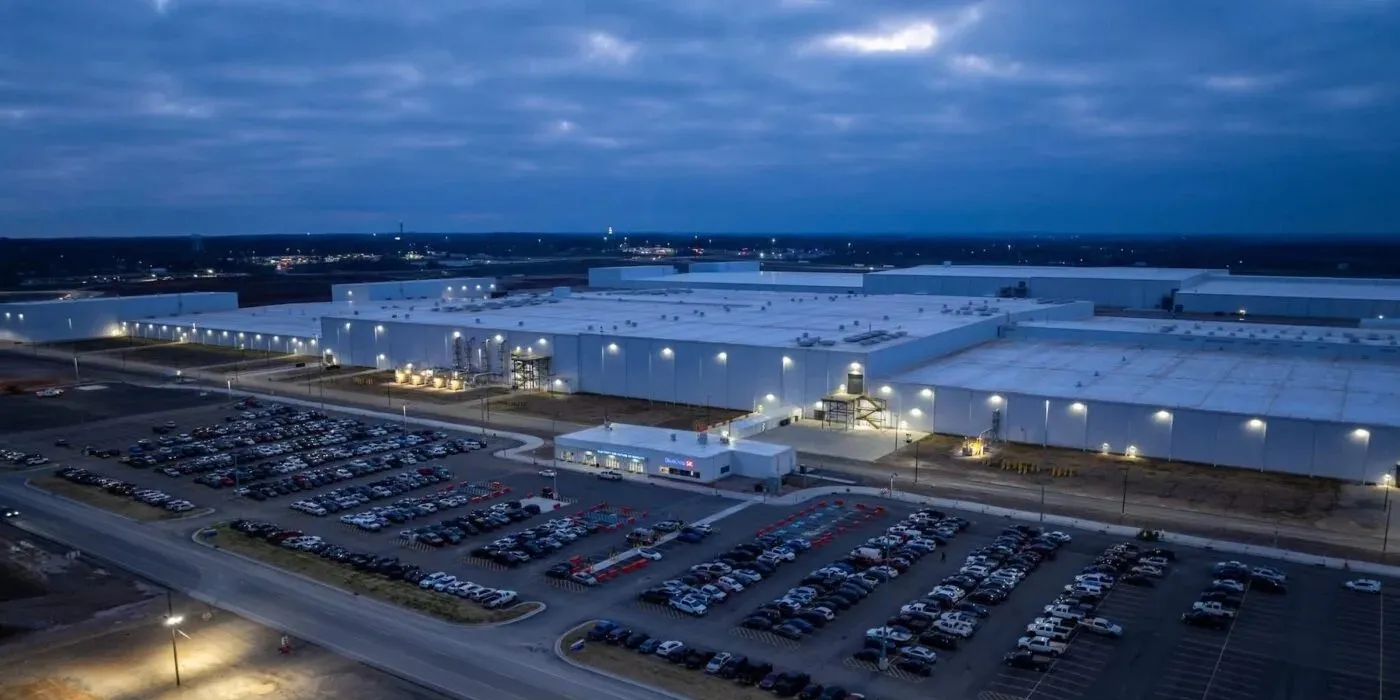
The U.S. automaker said it plans to invest about $2 billion over the next two years to convert its battery manufacturing site in Glendale, Kentucky, into a dedicated hub for producing large-scale battery energy storage systems (BESS). The facility will manufacture systems larger than 5 megawatt-hours, including lithium iron phosphate (LFP) prismatic cells, battery modules and 20-foot direct-current container systems used in grid and industrial applications.
See also: Ford Files Patent for Road Trip Energy Optimization System for Future EVs
Ford expects initial production to begin within 18 months and said the business could deploy at least 20 gigawatt-hours of energy storage annually by late 2027.
The move follows a recently reached agreement between Ford, SK On, SK Battery America and BlueOval SK, under which a Ford subsidiary will independently own and operate the Kentucky battery plants, while SK On will fully own and operate the battery facility in Tennessee.
Ford is also pursuing a parallel energy storage strategy in Michigan, where BlueOval Battery Park Michigan in Marshall is scheduled to begin manufacturing smaller LFP prismatic cells for residential energy storage systems in 2026. The site will also supply batteries for Ford’s upcoming midsize electric pickup, the first vehicle built on the company’s Universal EV Platform.
See also: Ford and Renault Announce Strategic Partnership for European EVs and Commercial Vans
The expansion into stationary energy storage comes as Ford continues to refine its electric vehicle strategy. The automaker has previously said it is preparing a next-generation version of the F-150 Lightning electric pickup featuring an extended-range electric vehicle (EREV) powertrain, as it seeks to build on the model’s role in supporting Ford’s U.S. EV sales while addressing customer demand for longer driving and towing range.