
Ford Motor Company has promised its U.S. dealer network that it will introduce five all-new vehicle models priced below $40,000 before the end of the decade, as the automaker seeks to address growing concerns over affordability in its lineup, Automotive News reported.
Ford executives outlined the plan during meetings with dealers at the National Automobile Dealers Association (NADA) show in Las Vegas, according to the report. The strategy follows years of rising transaction prices and the company’s withdrawal from several lower-priced passenger vehicles, including the recent discontinuation of the Escape crossover.
See also: Ford Says New Universal EV Platform Built Around Two Priorities: Cost and Scale
Dealers have voiced concerns that Ford’s average new-vehicle price has climbed above $50,000, leaving limited options for entry-level buyers and first-time customers.
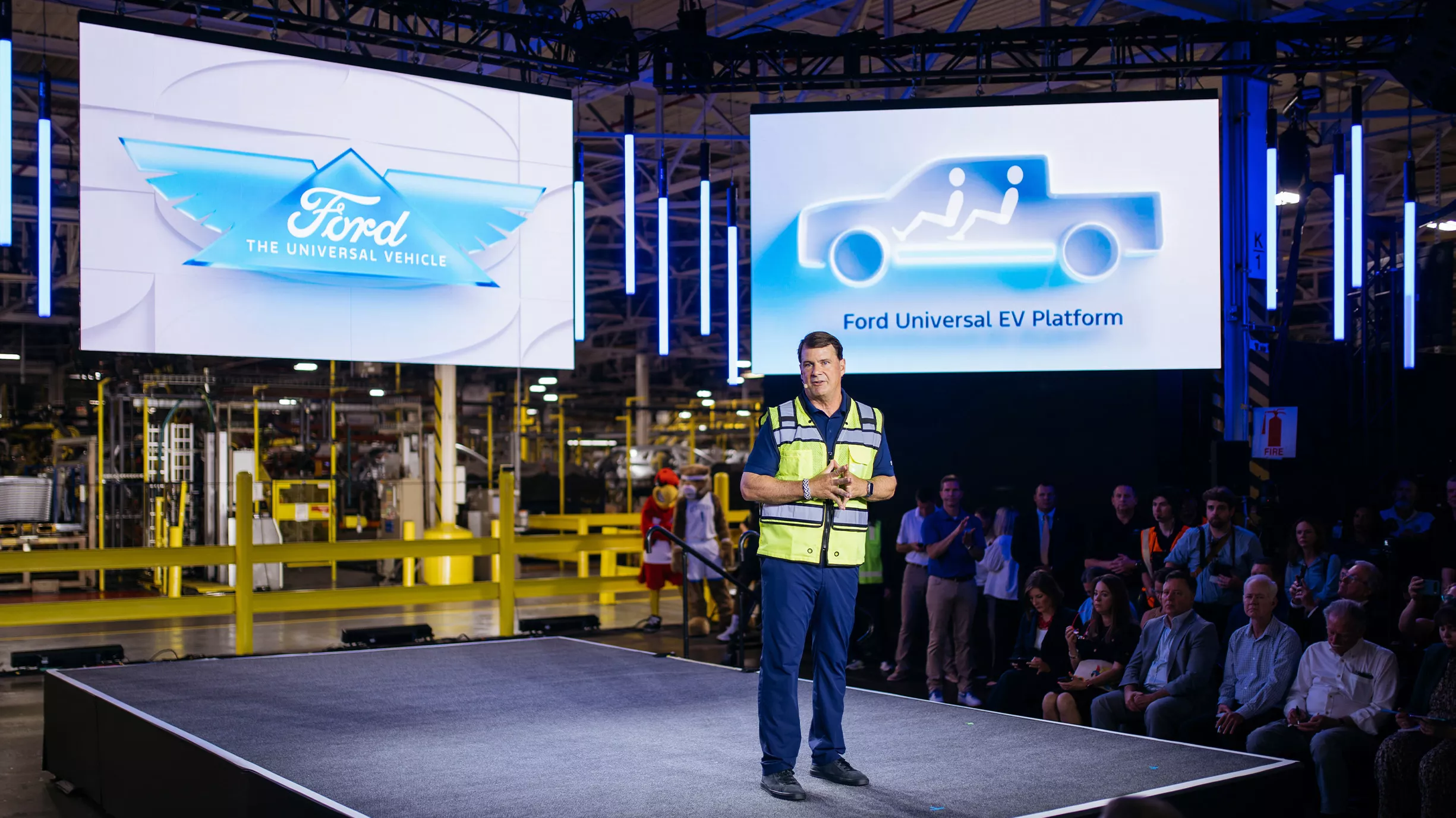
A central element of the plan is a midsize electric pickup truck scheduled for launch in 2027. The model will be the first built on Ford’s upcoming Universal EV Platform, which the company says is designed to sharply reduce manufacturing costs. Chief Executive Jim Farley has said the platform must be competitive with electric vehicles produced by Chinese automakers such as BYD in Mexico.
See also: Ford Commits $5 Billion to Build LFP-Powered Midsize EV and Universal EV Platform in the U.S.
To achieve this, Ford engineers are adopting large aluminum “unicastings” that replace more than 140 individual components with just two major parts, alongside a new “assembly tree” production method, according to previous disclosures. Industry reports have suggested the electric pickup could start at around $30,000, though Ford has not confirmed pricing.
The broader sub-$40,000 lineup will span multiple segments and powertrains, Ford executives said. “It will be across our lineup of cars, trucks, SUVs, vans, and it will be multi-energy,” Andrew Frick, president of Ford Blue and Model e, told Automotive News, adding that the vehicles will be new nameplates rather than redesigns of existing models.
See also: What We Know So Far About Ford Universal EV Platform
The “multi-energy” approach reflects a shift in Ford’s strategy away from an EV-only focus toward a more flexible mix of internal combustion, hybrid and electric vehicles. As part of that shift, the company has said it will adapt facilities such as BlueOval City in Tennessee to build more affordable gasoline and hybrid trucks alongside electric models.
With the first new low-cost vehicles not expected until 2027, Ford is also taking interim steps to retain price-sensitive customers. Frick said the company is rolling out what he described as “10 actions,” including expanding lower-cost trim levels on models such as the Explorer and Bronco, increasing certified pre-owned offerings, and offering extended financing terms and first-time buyer programmes. Ford aims to retain around 70% of customers who previously would have purchased the Escape or Edge.
See also: Ford Says New Low-Cost EV Platform Will Support Multiple Models and Cut Production Complexity
Separately, Ford said it plans to strengthen dealer support by adding more than 100 dedicated zone managers, with a focus on assisting smaller and lower-volume dealerships.
The affordability push marks a significant recalibration for Ford, which historically positioned itself as a mass-market brand, as it seeks to balance electrification ambitions with price pressures and changing consumer demand.