
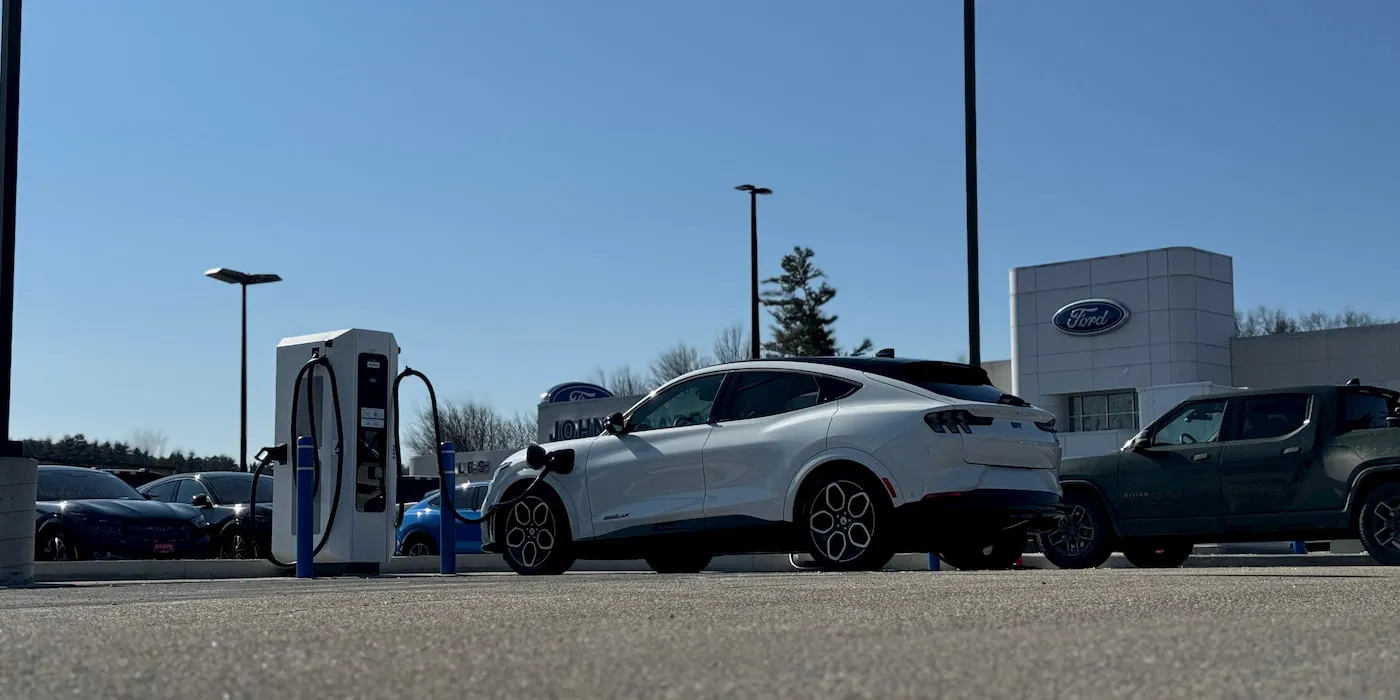
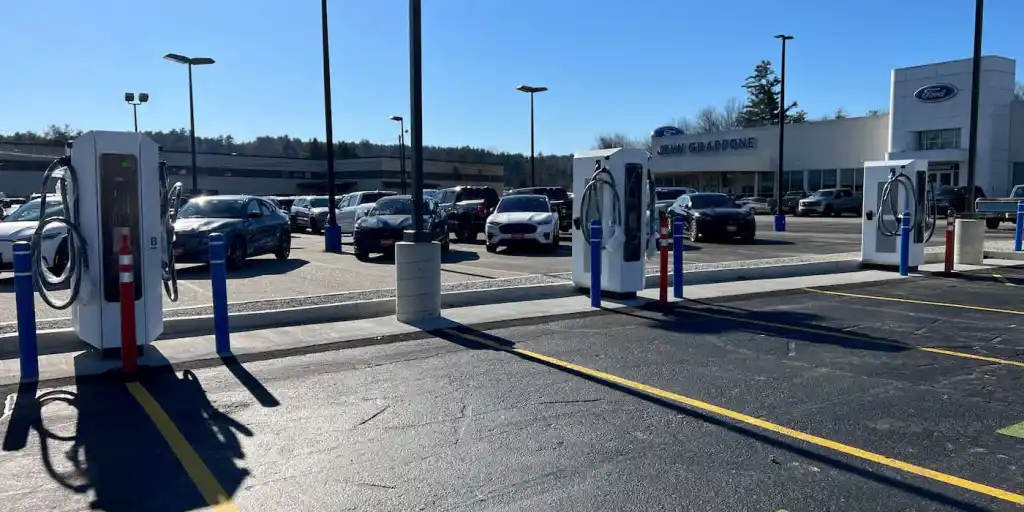
Ford Motor has launched a new fast-charging initiative designed to improve electric vehicle (EV) accessibility, unveiling its Ford Charge network on Thursday. The program makes more than 1,100 DC fast chargers at over 320 dealerships available to the public, extending access beyond Ford owners to drivers of any compatible EV.
The chargers form part of Ford’s BlueOval Charge Network, which already integrates more than 200,000 public charging points across the United States and Canada. By bringing dealership-based chargers into the fold, Ford said the initiative would provide broader coverage along major travel corridors, with most highway routes offering fast-charging access within roughly 18 miles. Over 800 Ford dealers already host more than 3,000 DC fast chargers open to public use, with the company planning further expansion in the coming years.
The new program comes as automakers face mounting pressure to improve charging reliability and convenience, a key factor in EV adoption. Ford’s dealership chargers, combined with those in the broader BlueOval network, are accessible through apps such as FordPass, PlugShare, and Shell Recharge, which display real-time availability, pricing, and route planning options. The chargers also support Plug & Charge functionality, allowing seamless use at Tesla Superchargers and Electrify America sites.
Ford Charge includes a dedicated 24/7 customer support line open to all EV drivers, regardless of vehicle brand, underscoring Ford’s strategy to expand charging infrastructure beyond its own customer base. The move highlights the automaker’s effort to position itself competitively in the U.S. charging ecosystem while complementing broader investments in its EV lineup.
The expansion follows Ford’s recent preview of its new universal EV platform, which will underpin a series of lower-cost models, including a midsize electric pickup expected to start around $30,000. Production of that vehicle is scheduled for 2027. By combining new product development with expanded charging access, Ford aims to attract mainstream buyers and close the gap with industry leader Tesla in North America’s EV market.