


Xpeng has officially launched its seventh model, the G7, a fully electric mid-size SUV, with a starting price of 195,800 yuan (approximately $27,325) in the Chinese market. The G7 is designed to directly challenge the dominance of the Tesla Model Y and new players like the Xiaomi SU7 in the highly competitive electric crossover segment. Positioned as a high-tech, family-oriented vehicle, the G7 features impressive specifications that combine performance, smart features, and everyday practicality.
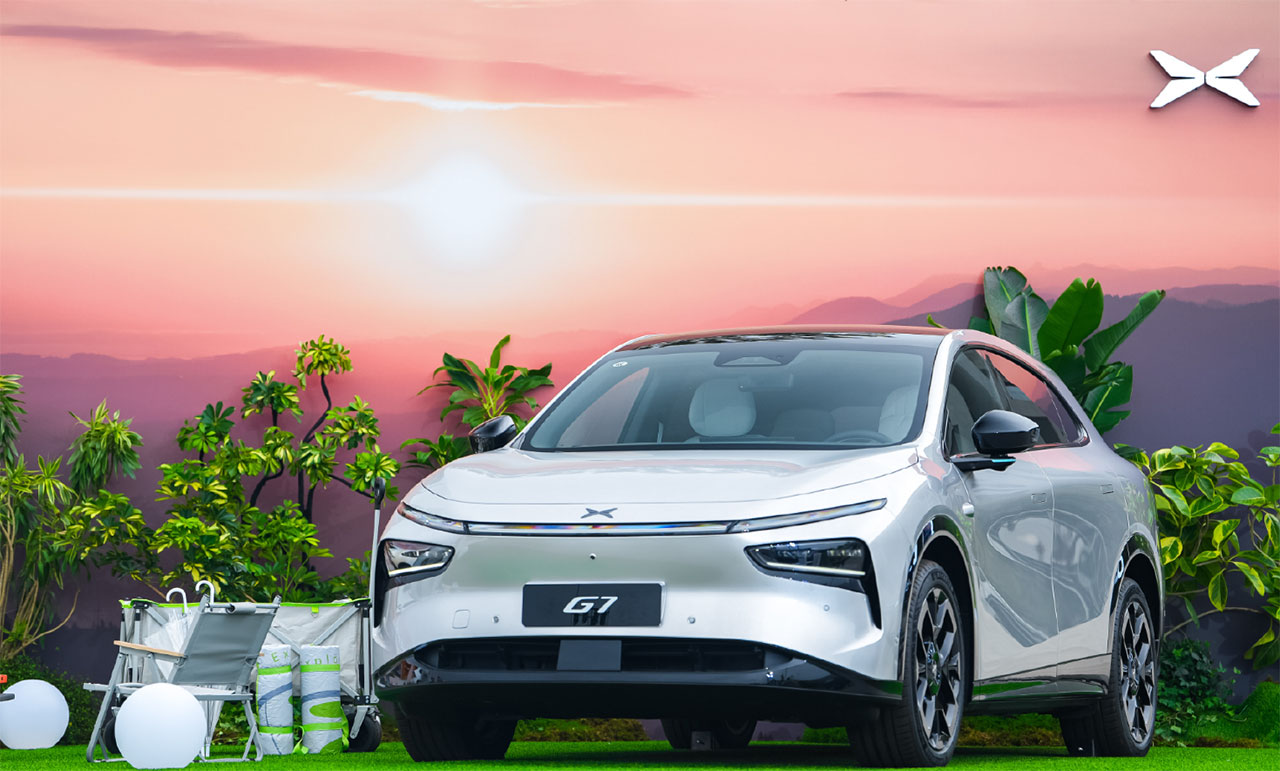
The G7 measures 4,892 mm in length, 1,925 mm in width, and 1,655 mm in height, with a 2,890 mm wheelbase, making it slightly larger than the Tesla Model Y. It adopts Xpeng’s second-generation “X Face” design language, highlighted by sleek LED running lights, a clean, closed front grille with a trapezoidal air intake, and a distinctive rear end with a “Star Ring” LED taillight and roof spoiler. The G7 is available in six exterior colors: dark gray, silver, white, black, beige, and green.

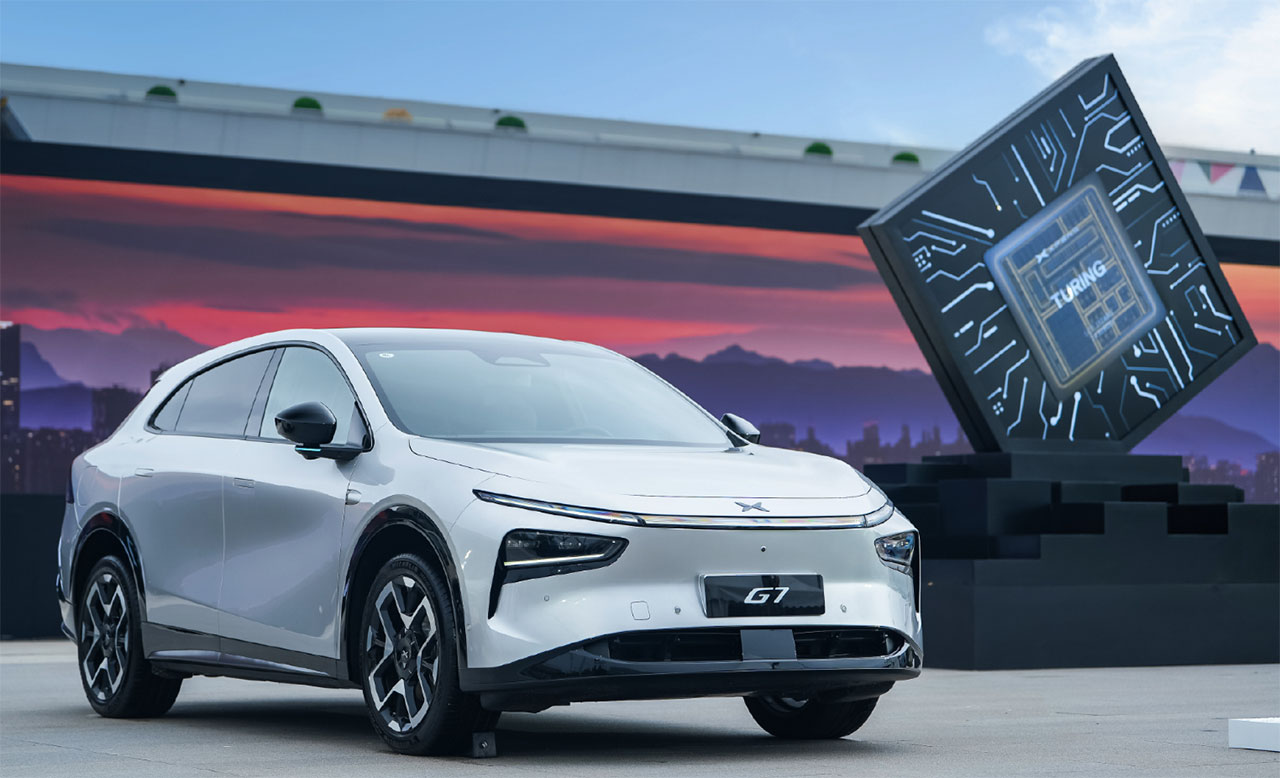
With an aerodynamic profile enhanced by a low beltline and hidden door handles, the G7 achieves a drag coefficient of 0.238 Cd, slightly higher than the Model Y’s 0.230 Cd, yet still low enough to contribute to energy efficiency and cabin quietness. Storage is generous, with a 42-liter frunk, a main trunk of 819 liters, expandable to 2,277 liters when the rear seats are folded, and a 120-liter underfloor compartment. According to Xpeng, the vehicle can accommodate 37 standard 20-inch suitcases.
The G7 is rear-wheel drive only, powered by an electric motor producing 218 kW (292 hp) and 450 Nm of torque. It accelerates from 0 to 100 km/h in 6.5 seconds and brakes to a stop from 100 km/h in 35.8 meters. It is available with two LFP battery packs—a 68.5 kWh version and a larger 80.8 kWh pack. These enable CLTC ranges of 602 km to 702 km, depending on configuration and wheel size (18- or 20-inch). Fast charging is a highlight, thanks to its 5C technology, allowing a 436 km range boost in just 10 minutes. The G7’s energy efficiency is rated at 10.8 kWh per 100 km, and it supports V2L (vehicle-to-load) output at 6 kW for external power supply.

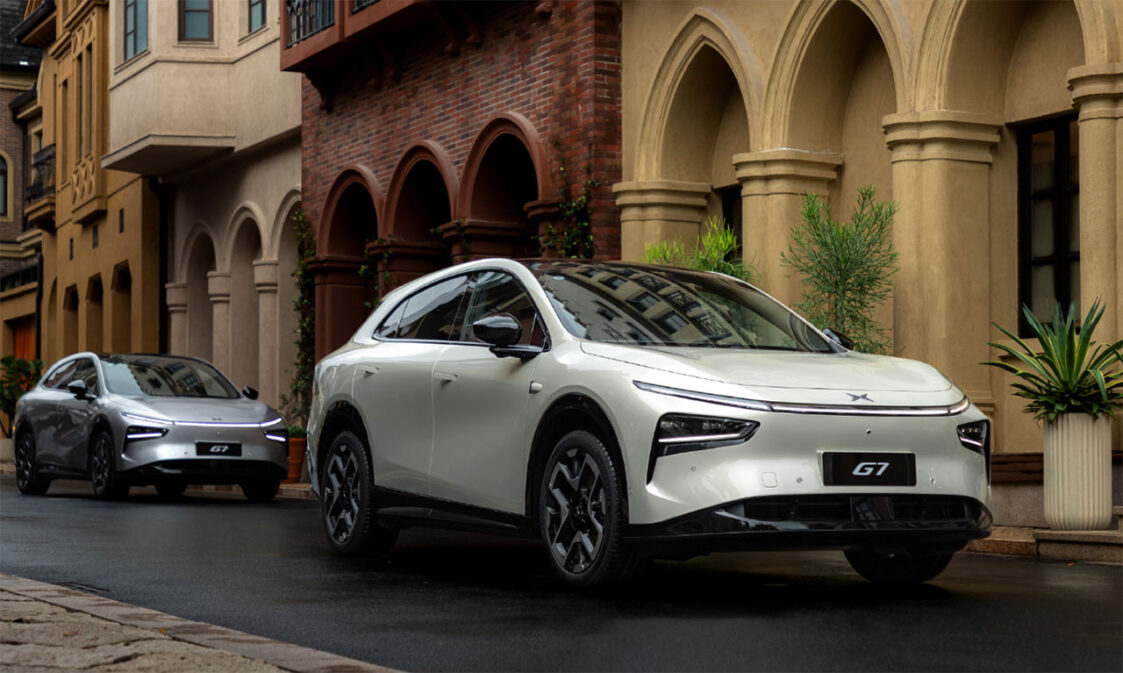
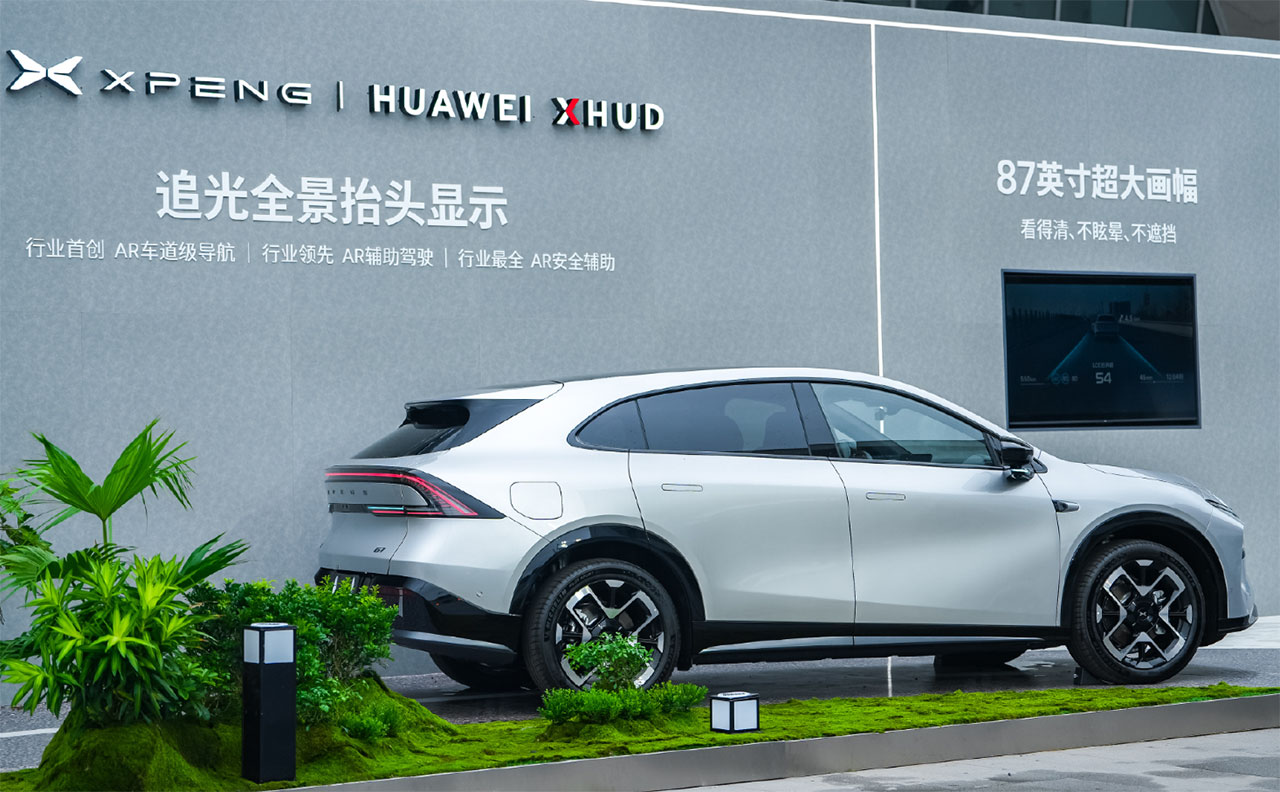
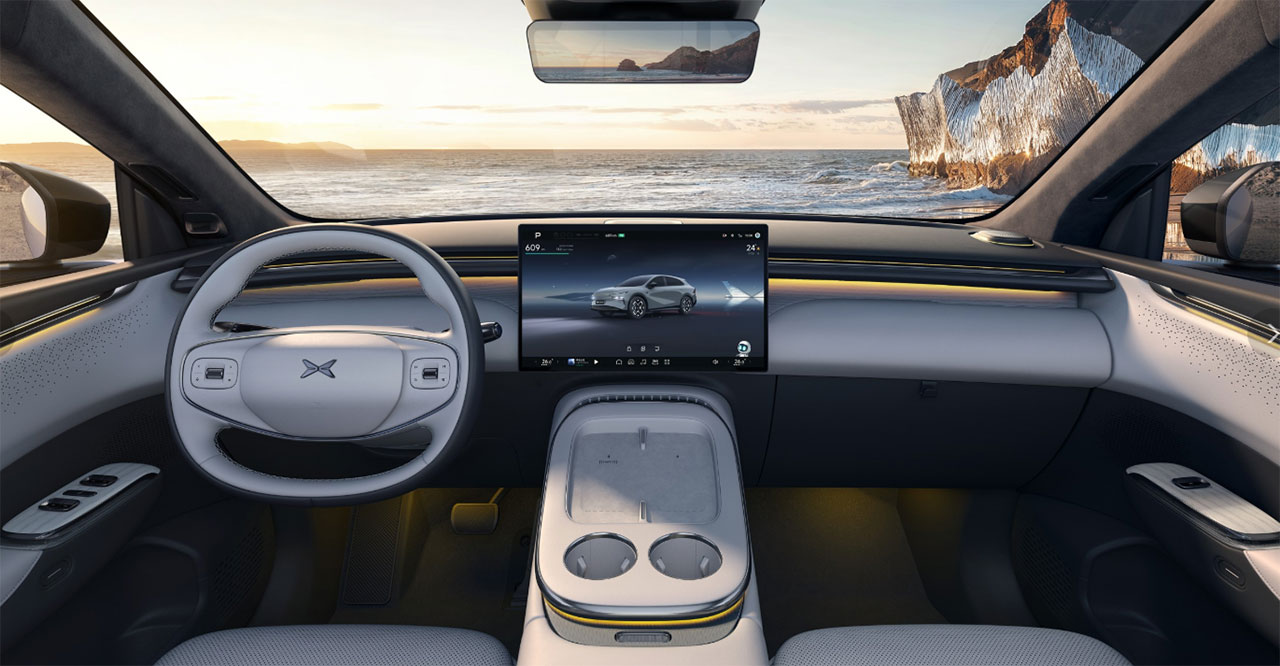
Comfort is a key priority. The AI-driven adaptive suspension system adjusts in real-time based on road conditions, with a reaction speed of just 200 milliseconds, designed to outperform rivals like the Mercedes-Benz GLE and Tesla Model Y in ride comfort. Interior refinement continues with a 15.6-inch touchscreen powered by Snapdragon 8295, and an 87-inch AR-HUD co-developed with Huawei, replacing the traditional instrument panel. This augmented display supports AR navigation, lane change prompts, and intersection guidance.
Premium features abound. The cabin offers dual 50W wireless phone chargers, a 7.1.4-channel sound system with 20 speakers, a 256-color ambient lighting setup, a 9-inch digital rear-view mirror, and a 5.9-liter lockable glovebox. There are 39 total storage compartments, including a deep 10.1-liter space under the armrest. Four seats are equipped with heating, ventilation, and massage functions. Interior color options include blue, light gray, orange, and dark gray. The G7 also boasts headroom 48.3% greater than the Model Y, with wider shoulder, elbow, and hip space in the front row.

Rear passengers benefit from a dedicated 8-inch touchscreen, a folding table for the right-side passenger, and a wireless charging pad with cooling fan in the armrest. Materials include genuine wood, leather, and metal accents, as well as a microfiber ceiling.
A core highlight of the G7 is its XNGP intelligent driving system. The Ultra variant is equipped with three proprietary Turing AI chips providing 2,250 TOPS of computing power—sufficient for L3-level autonomous capabilities and support for vision-language models that allow online learning. The Max trims feature dual Nvidia Orin-X chips for 508 TOPS. The L3 mode for the Ultra version is set to be activated via OTA update in December 2025.

Xpeng says the G7 completed demanding AEB testing scenarios including 130 km/h pedestrian braking, night-time emergency stops, and tunnel braking at 80 km/h—often challenging for autonomous systems. The G7 is fitted with 11 cameras and three mm-wave radars and has a body torsional rigidity of 41,600 Nm/degree. Its battery pack is protected by 1,500 MPa ultra-high strength steel, and the vehicle complies with C-NCAP 2024 five-star safety standards.
The G7 is available in three configurations:
-
G7 Max (602 km) – 195,800 yuan (~$27,325)
-
G7 Max (702 km) – 205,800 yuan (~$28,720)
-
G7 Ultra (702 km) – 225,800 yuan (~$31,510)
Early buyers of the Ultra version before July 31 will receive complimentary upgrades, including Nappa leather seats and power door handles. With a compelling balance of technology, range, and pricing, the Xpeng G7 is poised to become a major player in China’s EV market and a strong challenger to the Tesla Model Y.


