



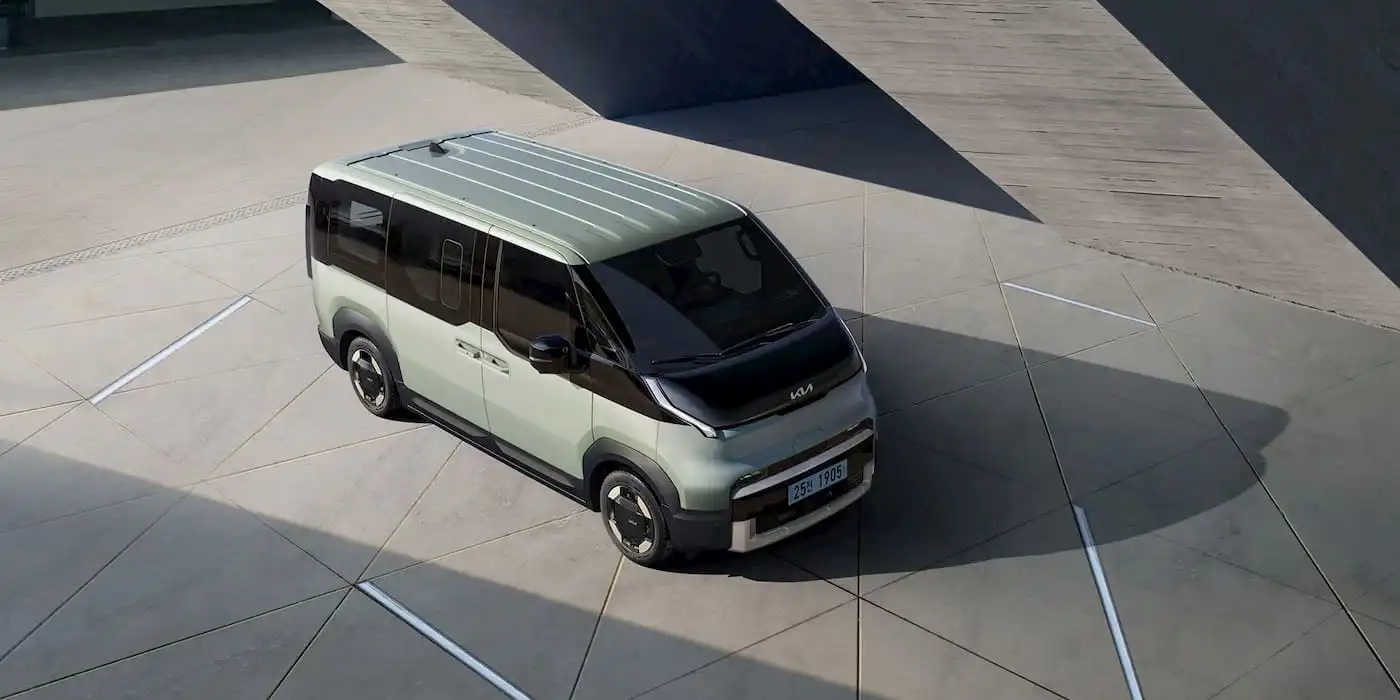
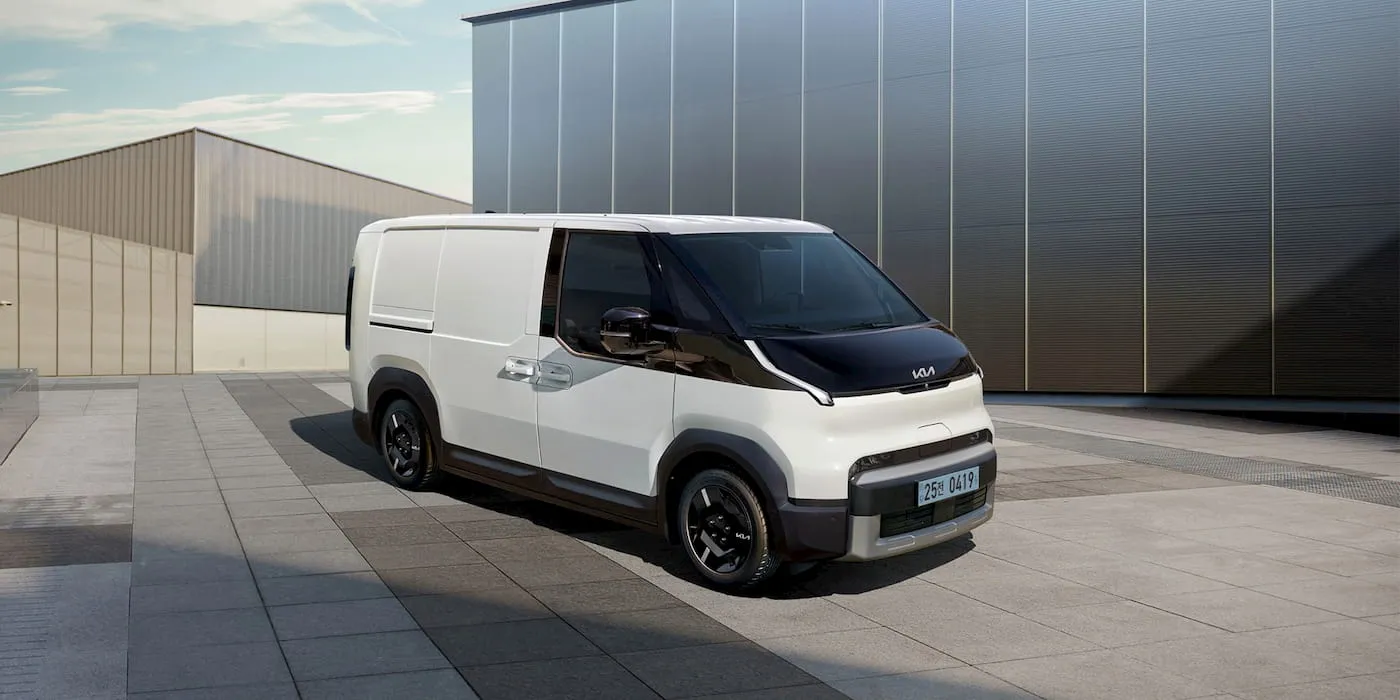
Kia has opened orders for its first electric van, the PV5, in South Korea. Built on Hyundai Motor Group’s E-GMP.S platform, the PV5 is offered in two main variants: Passenger and Cargo. The Passenger model comes with either a five-seater or a 2-3-0 seating layout, while the Cargo model is available in three configurations tailored for varying load capacities.
Dimensions and Interior Space
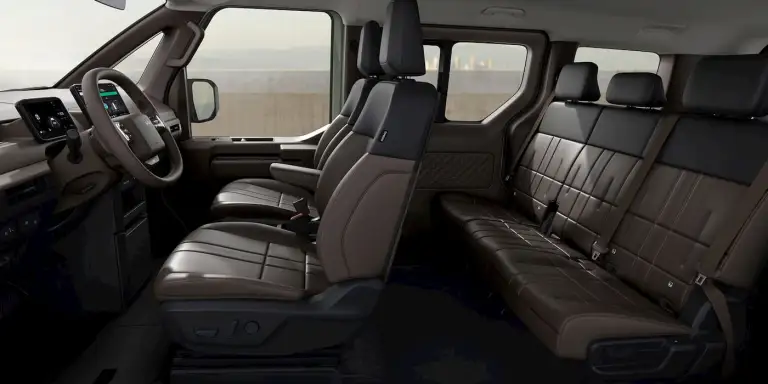
The PV5 Passenger model features a wheelbase of 2,995 millimeters, comparable to the European-spec Volkswagen ID.Buzz’s 2,998 millimeters. The five-seater version introduces a “fold & dive” rear seat function, which expands cargo capacity to 2,310 liters, enhancing flexibility for both passengers and cargo.

Battery Capacity and Driving Range
The Passenger variant is powered by a 71.2 kWh battery, providing an estimated driving range of up to 358 kilometers (222 miles). The Cargo variant offers two battery options: a 51.5 kWh pack for a 280-kilometer (174 miles) range, and a 71.2 kWh pack for up to 377 kilometers (234 miles) per charge.


Charging Capabilities
Supporting fast charging at up to 350 kW, the PV5 can recharge from 10% to 80% in approximately 30 minutes for both Passenger and Cargo models. This rapid charging feature is designed to minimize downtime for commercial and personal users alike.
Technology and Infotainment
The PV5 is equipped with a 12.9-inch central touchscreen featuring a PBV-exclusive Android Auto-based operating system (AAOS). The system supports split-screen functionality, enabling simultaneous use of navigation, music, and apps, with access to a dedicated App Market for third-party applications.
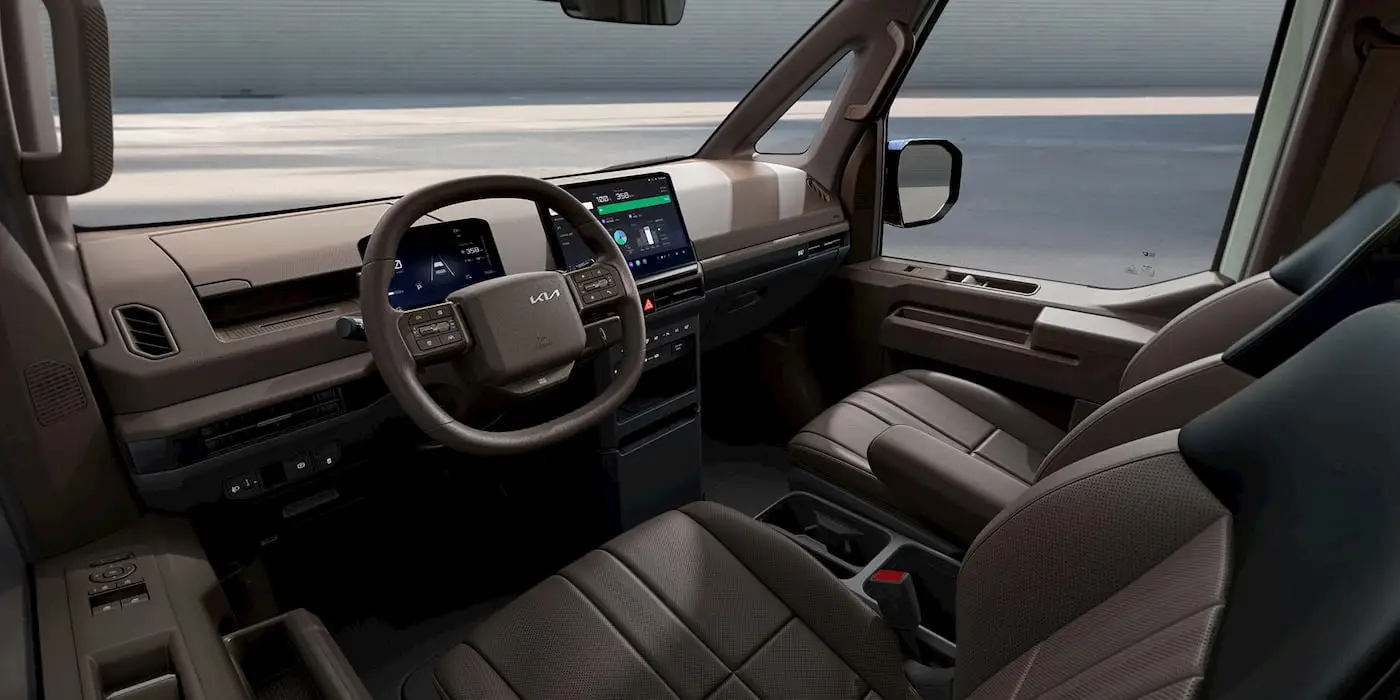
Hyundai’s new “Pleos Fleet” software platform, co-developed with 42dot, integrates vehicle control, infotainment, and cloud connectivity, aiming to enhance fleet management efficiency and reduce operational costs.
Pricing and Market Availability
In South Korea, the PV5 Passenger models start at 47.08 million won ($34,700) before subsidies. After electric vehicle tax credits and government incentives, prices are expected to fall within the 30 to 35 million won range ($25,000 to $30,000). Cargo variants begin at 42 million won ($31,000), with long-range Cargo models priced at 44.7 million won ($33,000), potentially dropping to the mid-20 million won range after subsidies.
Upcoming Variants
Kia plans to expand the PV5 lineup with several new variants, including refrigerated trucks, light campers, luxury “Prime” models, chassis cabs, open beds, and sliding trucks, further broadening the vehicle’s applications across personal and commercial sectors.


