




Eve Energy has produced two new all-solid-state batteries at its Chengdu facility, marking progress in the Chinese company’s efforts to commercialise next-generation battery technologies.
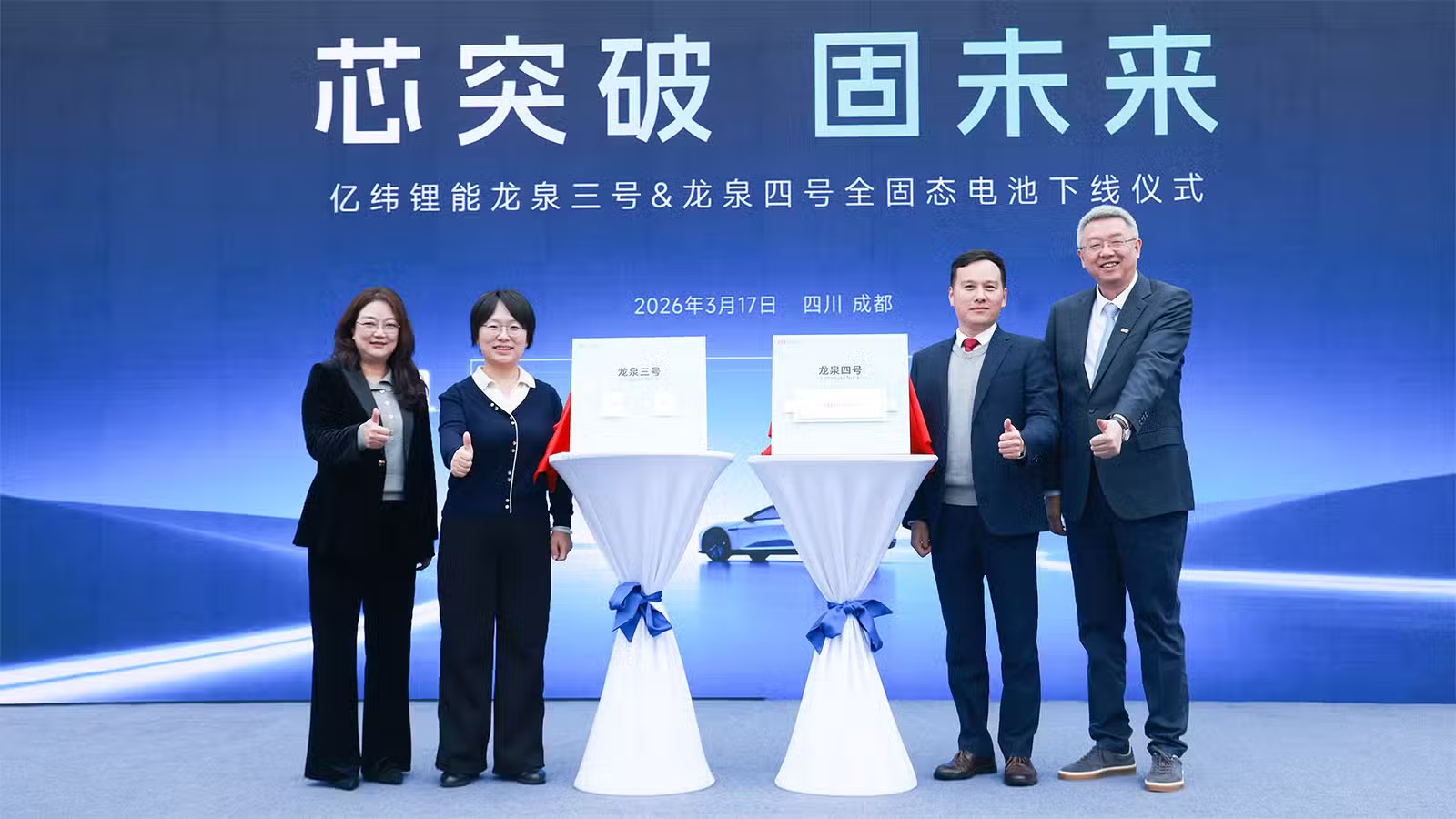
The batteries, named Longquan No. 3 and Longquan No. 4, were rolled off the production line on March 17 during a ceremony at the company’s manufacturing base in Sichuan province, according to a company statement released on Wednesday.
The Longquan No. 3 battery is designed primarily for consumer electronics and operates under low-pressure conditions below 2 megapascals (MPa), while offering high volumetric energy density. In contrast, the Longquan No. 4 battery targets electric vehicle applications, with a capacity of 60 ampere-hours and the ability to cycle under pressures of 5 MPa or less—an indicator of its early-stage readiness for practical deployment.
The rollout builds on Eve Energy’s earlier work in solid-state battery development. In 2025, the company established manufacturing capabilities for solid-state cells ranging from 10 Ah to 60 Ah at its Chengdu base, laying the groundwork for scalable production processes.
The facility has become a key hub for the company, supporting a diversified product portfolio spanning consumer batteries, power batteries, and energy storage systems. These products are used across sectors including electric vehicles, low-altitude aviation, and robotics.
Eve Energy previously introduced the Longquan No. 2 solid-state battery in September 2025, targeting applications such as humanoid robots and artificial intelligence equipment. The latest additions expand the company’s roadmap into both consumer and automotive markets.
The Chengdu site, which also hosts a research institute for solid-state batteries, is undergoing further expansion. The company aims to reach an annual production capacity of 100 GWh at the facility by the end of 2026.
Eve Energy has adopted sulfide and halide electrolyte technologies as part of its development strategy, reflecting broader industry efforts to improve energy density and safety compared with conventional lithium-ion batteries.


