

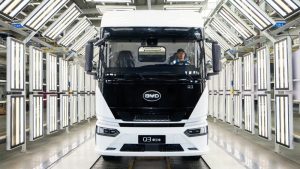


Chinese automakers increased their market share in Europe during the first quarter of 2025, largely on the back of stronger sales of combustion-engine and hybrid vehicles, according to preliminary data from market researcher Dataforce, reported by the German Automobilwoche.
Sales of Chinese-branded vehicles rose by 78% year-on-year to 148,096 units in the January to March period, boosting their market share to 4.5% in a region where overall passenger car sales declined marginally by 0.2%, figures from the European industry association ACEA show. However, growth in sales of Chinese-made electric vehicles was more subdued, rising 29% and keeping their share of the European battery-electric vehicle (BEV) market steady at 7.9%.
See also: Global EV Sales Forecast to Grow 17% in 2025 as China Extends Subsidies, Europe Tightens Rules
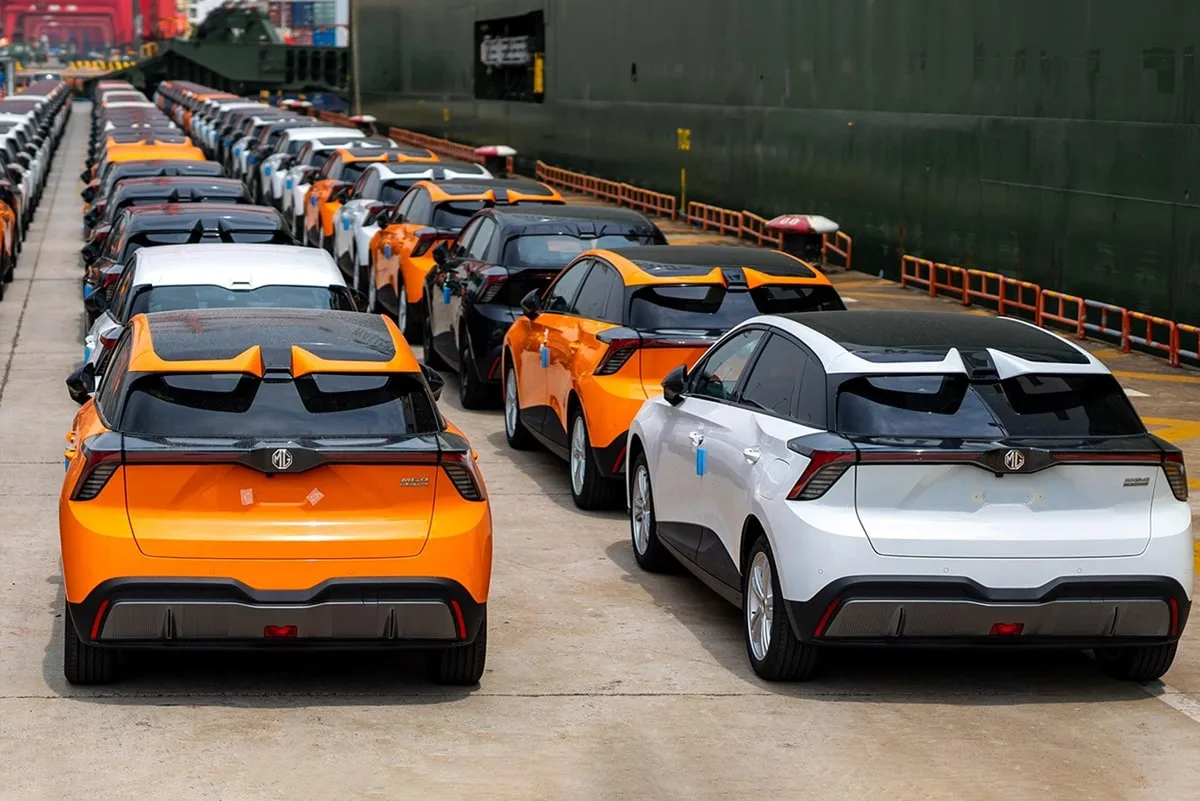
The data suggest a shift in strategy by Chinese manufacturers, many of which had initially targeted Europe with a strong focus on battery-electric models. Companies including BYD and SAIC’s MG Motor are increasingly turning to plug-in hybrids and internal combustion engine (ICE) vehicles to drive volumes. The MG ZS compact SUV was the top-selling model for SAIC in Europe, though most sales came from petrol and hybrid variants. Across MG’s lineup, the electric share in Europe dropped to 13%, according to Dataforce.
MG was the leading Chinese brand in the region in the first quarter, registering 76,583 new vehicle sales. However, the company’s growing reliance on non-electric models has pushed its fleet average CO₂ emissions more than 15 grams above its 2025 target of 95.7 g/km, raising the possibility of financial penalties. The company has signalled potential interest in joining a CO₂ emissions pool with other manufacturers and may adjust its model mix in favour of lower-emission hybrids.
See also: Europe’s EV Battery Ambitions Falter as China Steps in to Fill the Gap
Chery Group, which operates under the Omoda and Jaecoo brands, also faces emissions-related challenges. The company sold 15,663 vehicles in the quarter, placing third among Chinese brands behind MG and BYD (27,365 units). Dataforce estimates Chery’s fleet emissions exceed its 94 g/km CO₂ target by 47 grams.
While the European Commission has proposed easing the transition to the 2025 emissions targets by allowing average fleet CO₂ emissions to be calculated over multiple years, no binding legislation has yet been enacted. Manufacturers with rising ICE volumes could face higher regulatory pressure unless further policy adjustments are introduced.


