



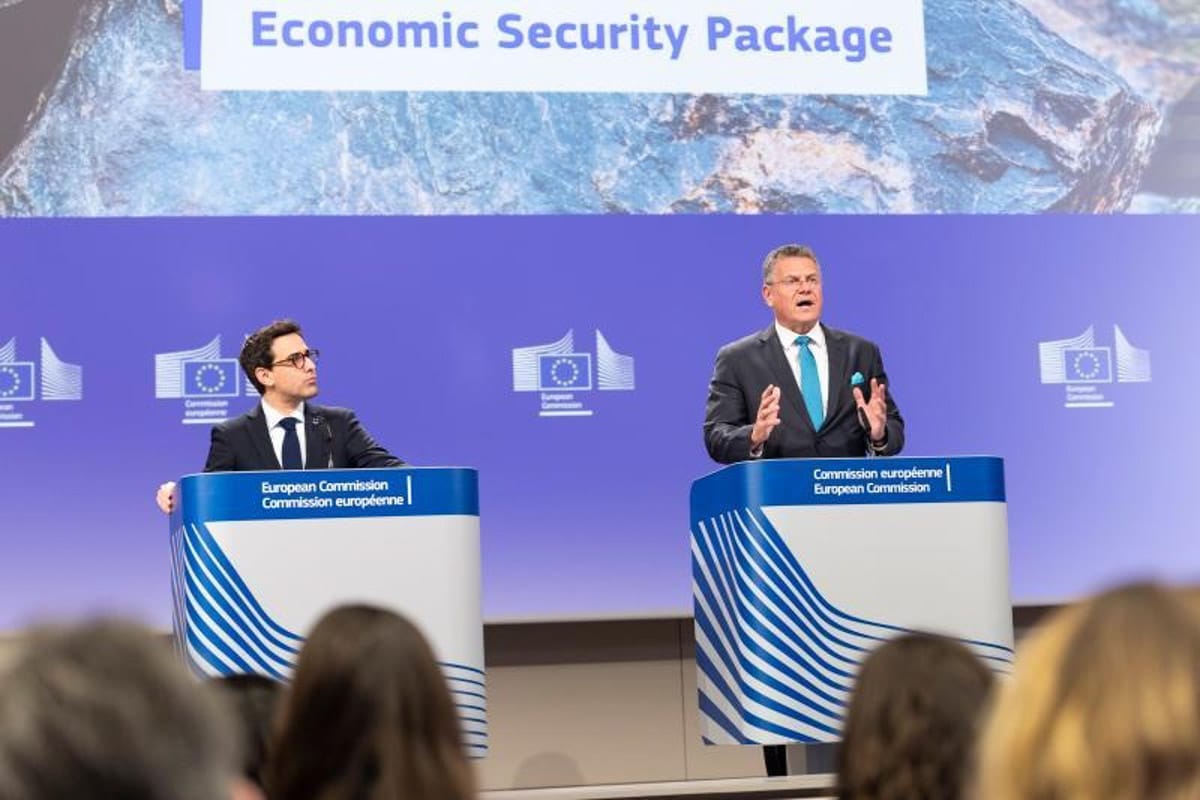
The European Commission has adopted a new action plan aimed at accelerating access to critical raw materials such as rare earths, lithium and cobalt, committing up to €3 billion over the next 12 months to support projects inside and outside the European Union.
The initiative, called “RESourceEU,” builds on the Critical Raw Materials Act and is designed to shield European industry from supply disruptions and price volatility while reducing dependence on a narrow group of suppliers. The Commission said the funding will be used to “mobilise financial de-risking tools” and to “provide alternative supplies in the short term,” reflecting a focus on both domestic production and international sourcing.
See also: EU Signals Openness to Post-2035 Combustion Engines as CO₂ Rules Review Nears
Part of the funding will support strategic projects already under way. “The Commission, European Investment Bank and Member States are already unlocking financial support for priority projects, such as for the Vulcan’s lithium extraction project in Germany, and the Greenland Resources’ Malmbjerg molybdenum project,” the Commission said in its statement. It added that further investment projects will be pursued globally under the EU’s Global Gateway framework.
Alongside funding, the plan includes proposals to streamline regulatory procedures that have held back major extraction and processing projects in Europe. The Commission said it intends to work with member states to remove administrative bottlenecks that slow down project approvals.
See also: EU Carmakers Look to Brussels for Relief as 2035 Combustion Engine Phaseout Faces Review
As part of longer-term measures, the EU will establish a European Critical Raw Materials Centre in early 2026 to provide market intelligence, coordinate strategic investments and manage joint purchasing and stockpiling. A pilot programme for coordinated stockpiling of critical materials is also scheduled to begin in 2026.
The plan also introduces safeguards to protect the EU’s internal market. The Commission said it will strengthen monitoring and crisis coordination and take steps to defend against “hostile interference.” Proposed measures include export restrictions on scrap materials from permanent magnets and the planned introduction of export duties on aluminium scrap, and possibly copper, from spring 2026.
To diversify supply chains, the EU will expand partnerships with countries including Brazil and Canada and develop tailored investment frameworks with Ukraine, the Western Balkans and parts of the Southern Neighbourhood, the Commission said.