




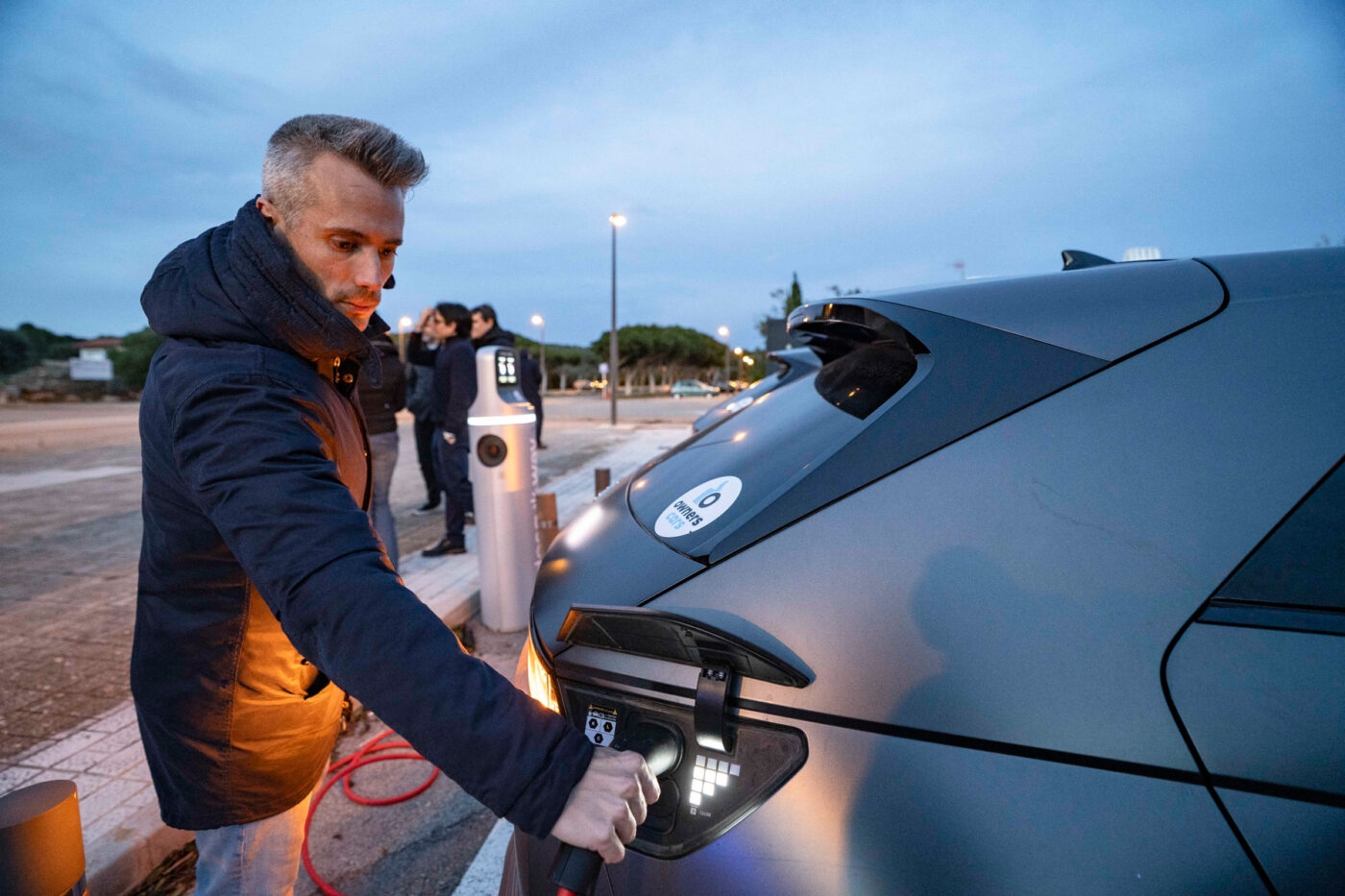
Spanish utility Endesa has launched a large-scale pilot on the Balearic island of Menorca to assess how electric vehicles can help stabilise electricity networks through smart charging, as part of a broader European research initiative.
The pilot forms part of the EU-backed Flow programme, a four-year project launched in 2022 to study how EV deployment can support energy systems. Endesa’s distribution subsidiary, e-distribución, is leading the work on the island, testing advanced demand-management tools designed to integrate vehicle charging into grid operations more efficiently and securely.
The Flow project—short for Flexible Energy Systems Leveraging the Optimal Integration of EVs Deployment Wave—brings together 30 partners across nine European countries, including utilities, vehicle manufacturers, universities, and technology firms. It is coordinated by the Catalonia Institute for Energy Research and funded through the EU’s Horizon Europe programme with a budget of about €10 million.
Menorca was selected because its electricity demand fluctuates sharply due to tourism and seasonal population changes, creating grid conditions that differ from mainland systems. The pilot will use all 33 charging points operated by Endesa on the island, ranging from 22 kW to 150 kW, to analyse how coordinated charging can reduce peak demand and prevent network congestion.
Electric vehicles are being studied as a “demand-side flexibility” resource, meaning their charging patterns can be adjusted to support grid stability. This approach requires coordination among charge point operators, mobility service providers, commercial fleets, rental companies, and individual drivers.
Endesa said the project’s findings could inform future energy and mobility policies across Europe. “The results obtained from this pioneering project will enable the development of new policies and the establishment of best practices to drive a model of electric mobility that is more efficient, sustainable, and fully integrated into the power system,” the company said.
Similar pilot projects under the Flow initiative are being conducted in the Czech Republic, Ireland, Italy, and Denmark. Industry participants include major energy companies such as Enel, along with automotive and academic partners including BMW and several European universities.
By testing how EV charging can be aligned with real-time grid conditions, researchers hope to demonstrate that widespread electrification of transport can be managed without overloading power systems while delivering benefits to both utilities and consumers.


