





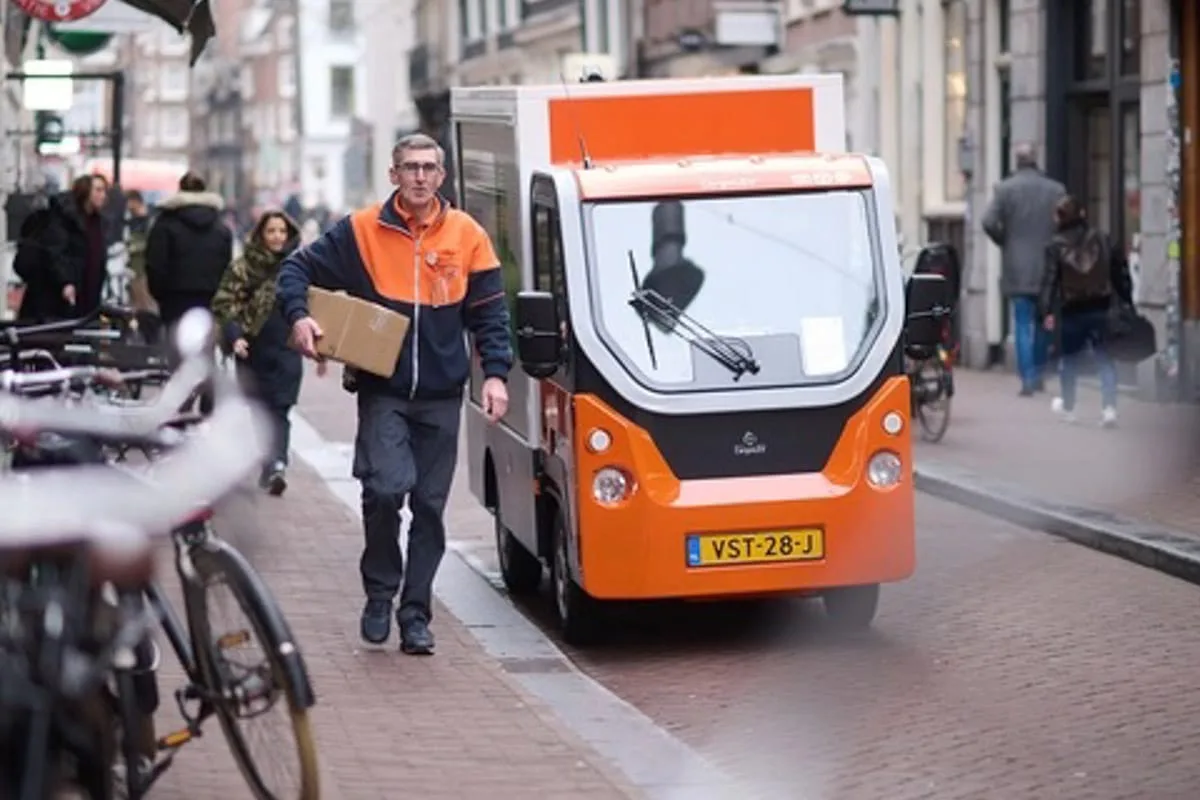
Registrations of electric vans and trucks in the Netherlands have surged following the introduction of zero-emission zones for freight transport (ZEZ-F) earlier this year, according to a new analysis by Clean Cities. The zones, launched in January 2025 and now covering 18 cities, are accelerating the transition to cleaner commercial fleets and reshaping urban logistics.
The Clean Cities report found that municipalities with ZEZ-F zones — or those located nearby — are experiencing faster electrification and a sharp decline in diesel vehicle use. In the first half of 2025, battery-electric vans accounted for 78% of all new registrations in the Netherlands, compared with an EU average of just 9%. Electric truck sales in the country rose by 188% year-on-year, representing nearly one in five electric trucks sold across the European Union.
See also: PostNL Completes 30% of Last-Mile Deliveries Emission-Free in Netherlands
“The experience in the Netherlands shows that zero-emission zones are bringing about a decisive change,” said Barbara Stoll, Director of the Clean Cities Campaign. “They provide clear rules and the certainty that companies need to invest in electric fleets. And they mean that our city centres can become ‘living neighbourhoods’ for everyone by reducing pollution, reducing noise and creating healthier, safer streets.”
The effects are visible not only in new sales but also in the vehicle fleet. In cities with ZEZ-F zones, the share of electric delivery vans increased by 6%, compared with 3% in neighboring municipalities and only 2% in areas without such zones. Clean Cities described the ZEZ-F policy as “groundbreaking,” noting that it is displacing diesel vehicles from densely populated areas while promoting cleaner freight transport.
See also: Deutz Acquires Netherlands-Based UMS to Boost Electrification Capabilities
However, the organization cautioned that regulation alone is not enough. “Success depends on a combination of regulation and financial support,” Clean Cities said, pointing to subsidies provided to Dutch municipalities and companies, along with tax incentives and temporary exemptions. Enforcement, the report added, is ensured through number plate recognition and fines.
Subsidy programs appear to have played a key role in adoption. Most companies that switched to electric fleets reported that total ownership costs for electric vans are already lower than for combustion models, though higher upfront prices remain a challenge in a low-margin logistics sector.
Based on the Netherlands’ experience, Clean Cities recommends that other cities planning zero-emission zones should announce them early, allow gradual phase-ins, align national and local regulations, and provide infrastructure support and practical guidance to help businesses adapt.
Source: Electrive


