


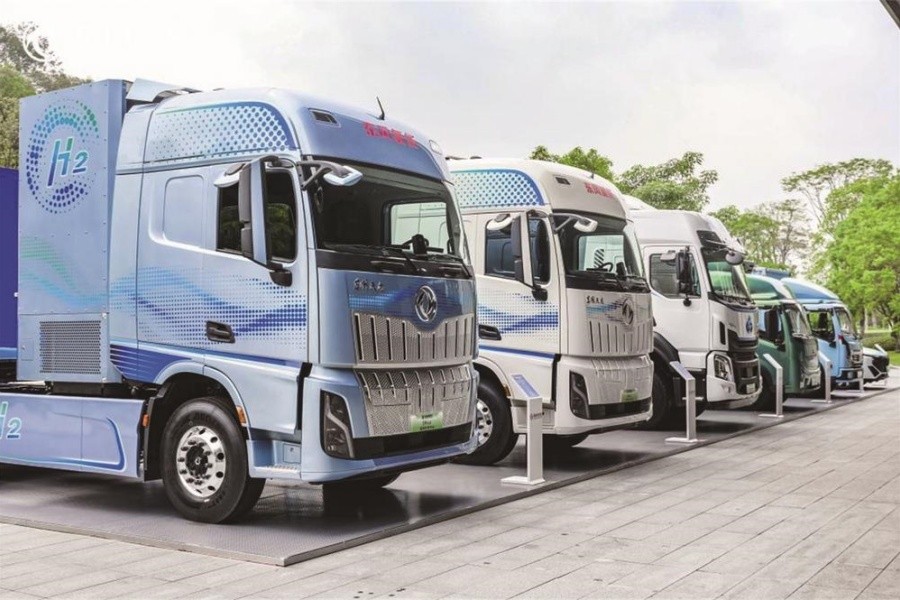
Chinese automaker Dongfeng has introduced a new 400 kW hydrogen fuel cell system for heavy-duty commercial vehicles and unveiled a dedicated vehicle platform designed to support the technology, as the company seeks to expand its presence in the hydrogen-powered transport sector.
The announcement was made during Dongfeng’s “Hydrogen Propulsion for Dongfeng – Pioneering the Future” event in Wuhan, where the manufacturer showcased what it described as its latest-generation fuel cell technology for commercial vehicles.
According to Dongfeng, the new fuel cell system delivers 400 kW of power, offers a service life exceeding 30,000 operating hours and is capable of starting in temperatures as low as minus 40 degrees Celsius. The addition expands the company’s hydrogen fuel cell portfolio, which now includes systems with outputs of 70 kW, 150 kW and 400 kW.
Dongfeng said the new system is China’s first hydrogen fuel cell platform developed using metal bipolar plate technology to pass a 10,000-hour durability test under the country’s latest national standards for fuel cell vehicles.
The company also unveiled its new T1 commercial vehicle platform, which has been developed to support the 400 kW fuel cell system and future hydrogen-powered applications.
Dongfeng positioned the platform as a foundation for large-scale commercial deployment of hydrogen-powered trucks.
“It provides a solid foundation for the large-scale, commercial operation of hydrogen-powered commercial vehicles,” Dongfeng said when describing the T1 platform.
The manufacturer highlighted four key characteristics of the architecture: low energy consumption, lightweight construction, rapid refuelling capability and enhanced safety performance.
Dongfeng provided performance figures from internal testing conducted in both mountainous and flatland environments.
“Following practical tests in mountainous and flatland regions, Dongfeng’s hydrogen vehicles achieved a hydrogen consumption of just 7 kg per 100 kilometres. The 49-tonne hydrogen-powered tractor unit weighs only 8.8 tonnes. With a refuelling time of just 15 minutes, the vehicles achieve a range of up to 1,700 kilometres,” the company said.
The T1 platform also incorporates a decentralised intelligent energy management system and an onboard battery system designed to complement the fuel cell powertrain.
Dongfeng did not specify whether the T1 architecture could support alternative powertrains, such as battery-electric or hybrid systems, and instead presented the platform primarily as a dedicated hydrogen vehicle solution.
The company’s claimed driving range of up to 1,700 kilometres is likely based on China’s CLTC testing cycle, which generally produces higher range estimates than the WLTP standard used in Europe due to lower average speeds and a greater proportion of urban driving conditions. As a result, actual real-world operating ranges may vary significantly.
Dongfeng said its hydrogen-powered commercial vehicles and passenger cars currently operating in the market have collectively accumulated more than one million kilometres of real-world driving experience.
The launch reflects growing investment by Chinese manufacturers in hydrogen technologies for heavy-duty transport, a segment where fuel cells are often viewed as a potential alternative to battery-electric systems due to their shorter refuelling times and suitability for long-distance freight operations.


