
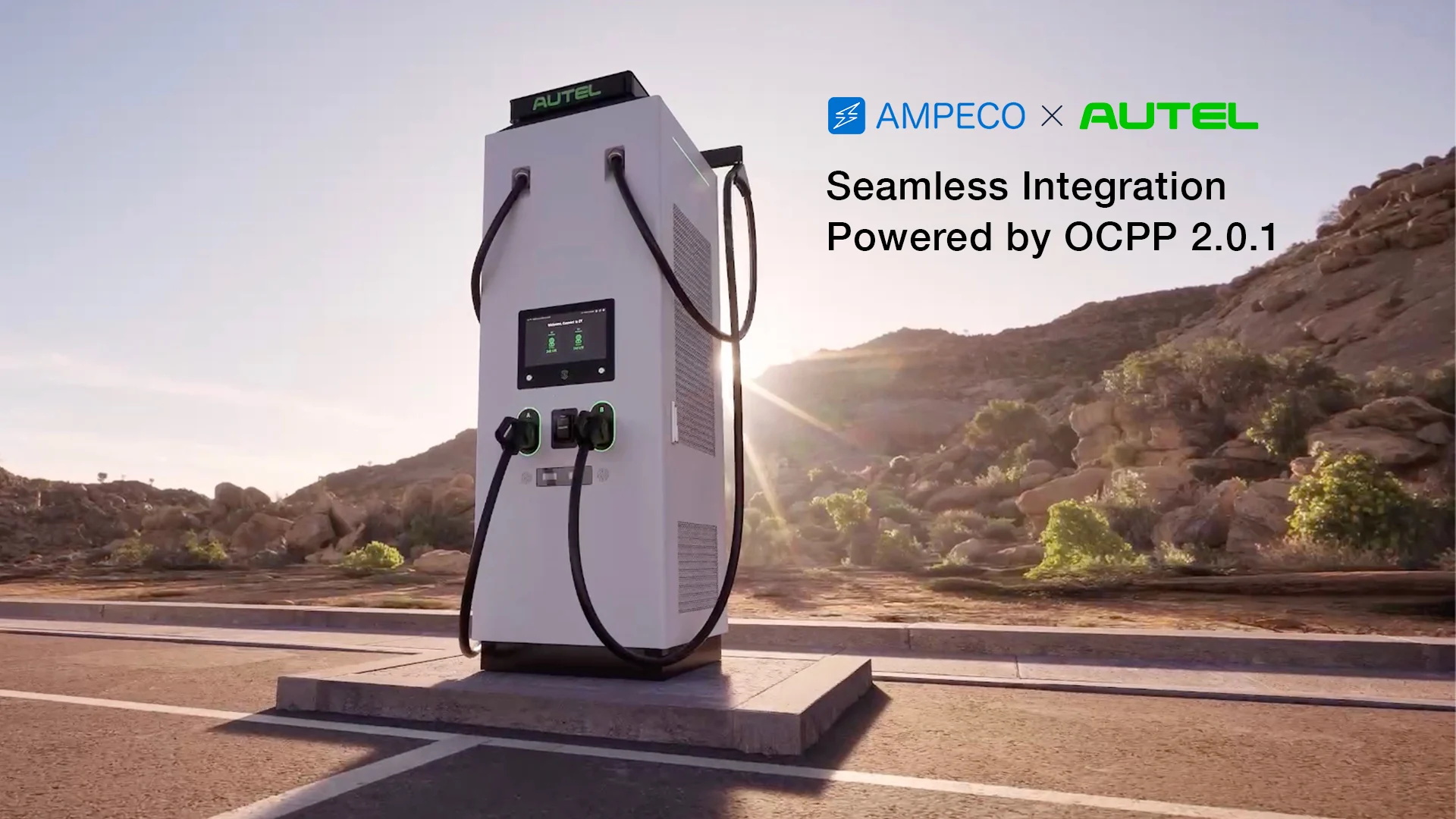
Sofia-based Ampeco and Autel Europe have completed the integration of the latest Open Charge Point Protocol (OCPP) 2.0.1, combining Ampeco’s charging management software with Autel’s MaxiCharger DH480 to enhance electric vehicle (EV) charging infrastructure in Europe.
The collaboration is designed to give charge point operators (CPOs) advanced tools for building scalable and secure charging networks, with features including high-level cybersecurity, load balancing, and remote management. Autel’s MaxiCharger DH480, a 480 kW DC charging system, is tailored for high-demand locations such as motorways, public hubs, and commercial depots.
Ampeco said the protocol supports Level 2 TLS encryption and certificate-based authentication, meeting Europe’s regulatory standards, while enabling advanced functionalities such as Plug&Charge and smart charging profiles to improve grid responsiveness. Remote management allows operators to monitor and troubleshoot charging sessions in real-time, minimizing downtime and reducing costs.
“The integration with Autel Europe showcases our dedication to best-in-class hardware compatibility, enabling CPOs to deploy advanced features confidently,” said Glenn L’Heveder, Head of Sales and Business Development Europe at Ampeco.
Autel Europe also underscored the importance of open standards for long-term growth. “This collaboration with Ampeco is a step toward scalable, future-proof EV charging networks. Our next-generation products will soon fully support OCPP 2.0.1, expanding possibilities for CPOs,” said Andreas Lastei, Vice President of Sales and Marketing at Autel Europe.
The partners said the system underwent rigorous testing to validate security, interoperability, and compatibility with dynamic charging profiles, ensuring compliance with technical requirements for grid-responsive EV infrastructure.