
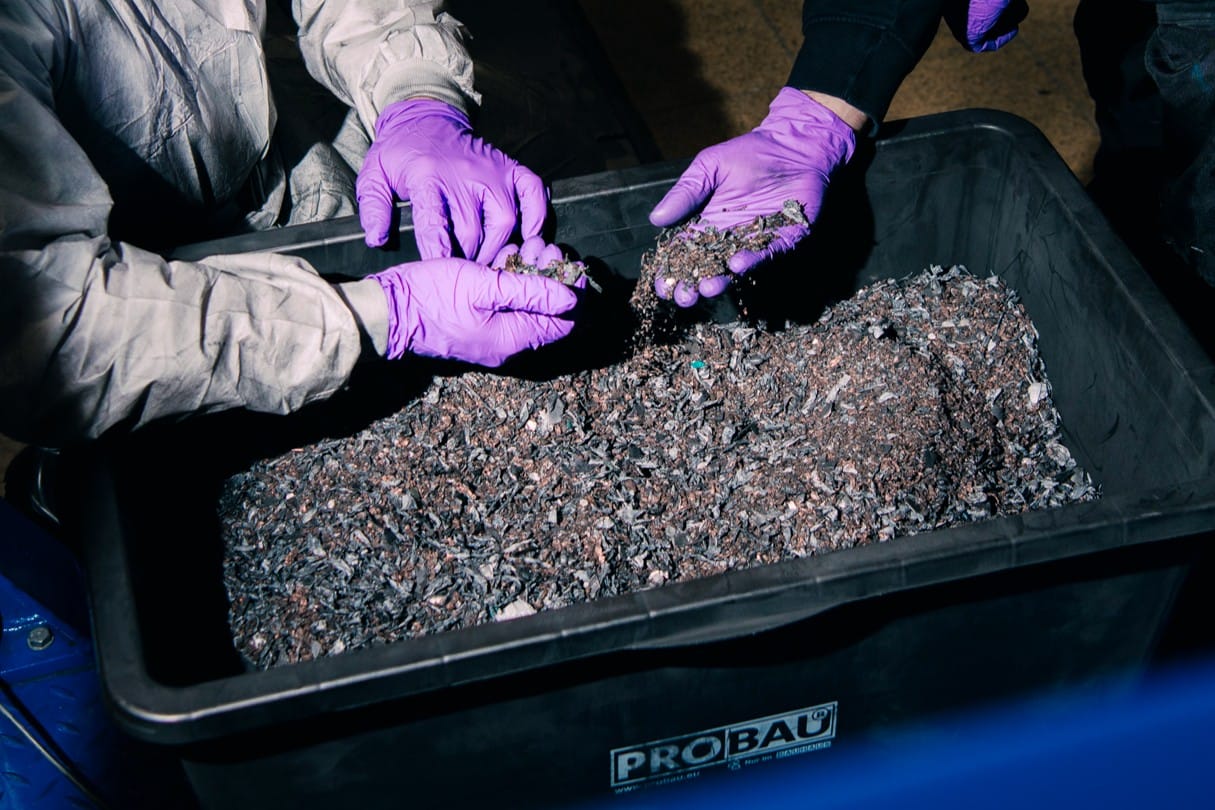
German battery recycling startup Cylib said it has successfully demonstrated its in-house recycling technology in a customer project, recovering lithium carbonate from used lithium-ion batteries that is now being used in new electric vehicle batteries.
The Aachen-based company said the lithium carbonate was produced at its pilot plant using its proprietary OLiC (Optimised Lithium and Graphite Recovery) process and has been qualified by a large, unnamed international battery manufacturer. Qualification is a critical step toward commercial use of recycled materials in battery production, although Cylib said it remains unclear whether it will become a regular supplier to the manufacturer.
See also: China to Launch National EV Battery Tracking Platform as New Recycling Rules Take Effect
Cylib’s OLiC technology is a water-based process designed to recover lithium and graphite from production scrap and so-called black mass generated from end-of-life batteries. The recovered lithium carbonate serves as a precursor material for cathode production, a key input particularly for lithium iron phosphate (LFP) batteries.
“Working closely with a leading battery manufacturer and meeting their strict specifications proves our water-based OLiC technology delivers commercial-grade circular materials,” said Lilian Schwich, co-founder and co-chief executive of Cylib. “Our recycled lithium carbonate is now going into new EV batteries – the loop is closed.”
See also: Honda, Princeton NuEnergy Sign Battery Recycling Pact After Joint Cathode Tests
Schwich added that the project shows Europe can build a circular battery value chain by recovering critical raw materials locally, reducing dependence on imports while securing supply for regional battery makers.
Cylib has previously demonstrated other lithium recovery pathways. Last summer, the company said it had worked with materials group Syensqo to produce battery-grade lithium hydroxide from used EV batteries, a form of lithium preferred by many electric vehicle battery manufacturers.
Spun out of RWTH Aachen University, Cylib has raised about €55 million from investors including Porsche Ventures and Bosch Ventures. Following the launch of its pilot plant in 2023, the company is building its first industrial-scale recycling facility at Chempark Dormagen in North Rhine-Westphalia.
See also: BMW Group, Encory Officially Commission Battery Cell Recycling Center In Bavaria
The Dormagen plant is scheduled to begin operations in 2026 and is expected to process about 30,000 tonnes of batteries per year, with a targeted material recovery rate of around 90%. In December, Cylib said it had secured €63.4 million in funding from the Federal Ministry for Economic Affairs and Climate Action to finance a second expansion phase, which would double planned capacity to 60,000 tonnes annually, equivalent to roughly 140,000 electric vehicle batteries.