




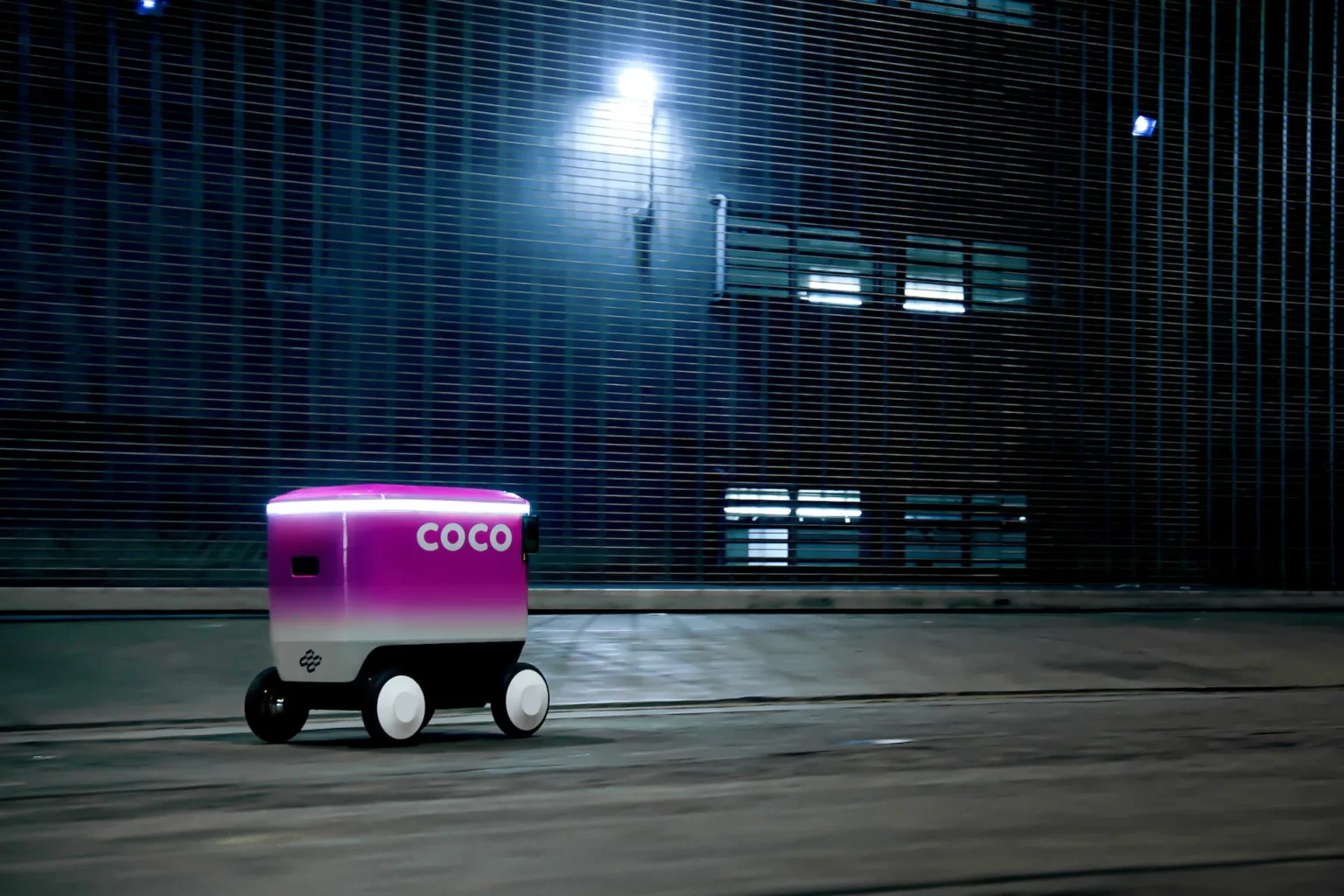
Coco Robotics has introduced its next-generation autonomous delivery robot, Coco 2, designed to expand urban logistics operations beyond sidewalks into bike lanes and roadways where local regulations permit.
The Los Angeles-based company said the new robot marks a transition from partially human-guided delivery systems to fully autonomous operations, with the aim of enabling faster and more scalable last-mile delivery services.
According to Coco Robotics, Coco 2 can reduce delivery times by up to 50% compared with its previous model while offering roughly three times longer operating uptime and improved performance in adverse weather conditions.
The platform is powered by the NVIDIA Jetson Orin NX edge computing module and uses an AI software stack developed with tools from NVIDIA. Navigation and perception tasks are processed directly on the robot, allowing it to operate without relying on cloud connectivity.
Coco Robotics said the robots use simulation environments created with NVIDIA’s NVIDIA Omniverse, Isaac Sim and Isaac Lab platforms to train artificial intelligence models in realistic virtual environments that replicate urban streets, pedestrians and traffic conditions.
Amit Goel said scaling physical AI systems requires a combination of real-world data and high-performance computing.
He said Coco Robotics is using NVIDIA’s robotics technologies to accelerate the deployment of autonomous systems in complex city environments.
The Coco 2 platform builds on data collected from millions of miles of robot operations across cities including Miami, Chicago and Los Angeles.
Zach Rash said the company uses operational data to continuously improve the robot fleet’s navigation capabilities.
He said each deployment contributes new data that helps refine the company’s machine learning models and improve performance when entering new cities.
Coco Robotics currently operates through partnerships with major delivery platforms including Uber Eats, DoorDash and Wolt, serving more than 3,000 merchants.
Founded in 2020, the company said it has completed more than 500,000 zero-emission deliveries across the United States and Europe. Coco Robotics plans to expand its fleet to thousands of robots globally by the end of 2026.


