
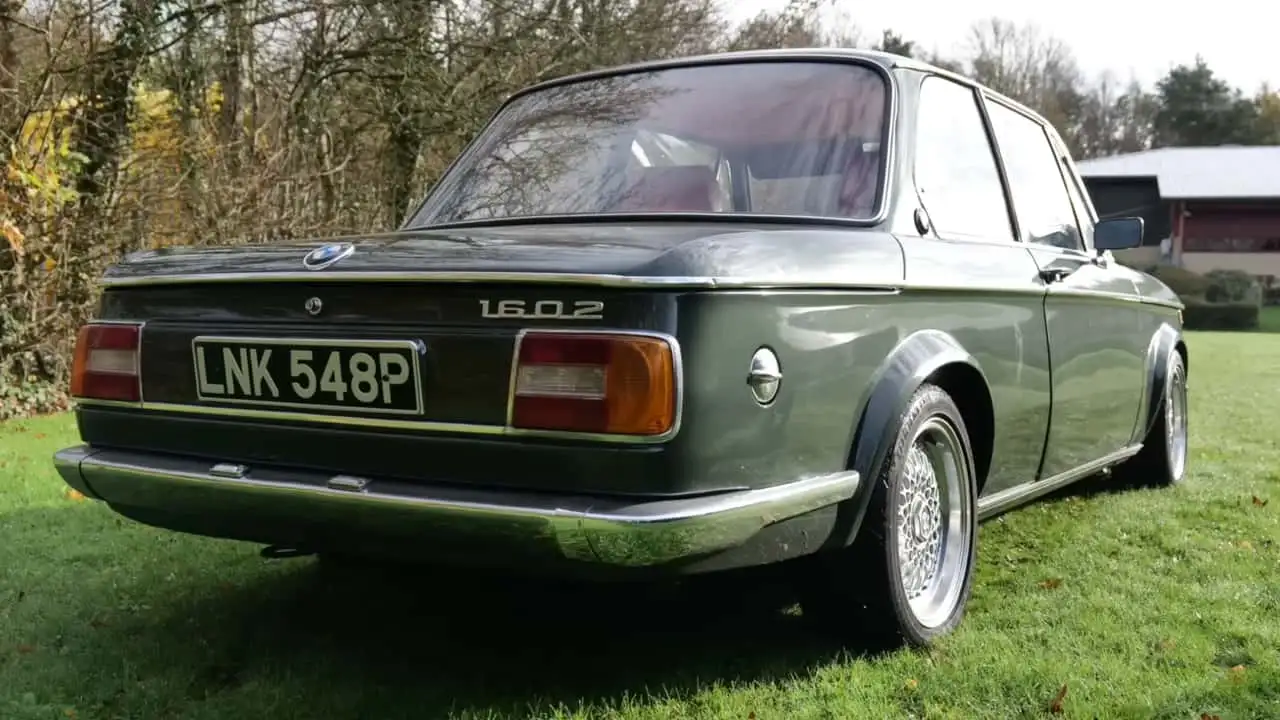
A converted BMW 1602 electric vehicle is drawing attention in the classic car and EV communities for retaining much of the driving character of its original combustion-engine form, including the use of a manual gearbox and a motor tuned to mimic traditional power delivery.
The original BMW 1602 was first converted into an electric vehicle by BMW itself in 1972, but this modern conversion was carried out about seven years ago by British specialist Electric Classic Cars. From the exterior, the car remains visually unchanged, reflecting the builders’ goal of preserving both its appearance and driving dynamics.
See also: Electric Conversion Puts 1972 BMW 2002 Back on the Road
To achieve this, the electric motor was carefully selected to closely match the torque curve and rev range of the original petrol engine. “They specifically searched for a motor with a similar torque delivery and rev range as the original combustion engine, making it a necessity to change gear when hitting the same redline as before,” said Richard Morgan of Electric Classic Cars. As with other EV conversions that retain manual transmissions, the car can be driven in higher gears for relaxed daily use, while still offering full gear-shifting engagement during more spirited driving.
The conversion avoids artificial sound generation. Instead, the sound of the electric motor is intentionally allowed into the cabin, as sound insulation was excluded from the engine bay. This gives the driver audible feedback on motor speed, prompting gear changes at around 6,000 rpm where power begins to taper off.
See also: Italian Startup Unveils Electric Conversion Kit for Classic Vespa Scooters
Power output is modest at around 120 horsepower, avoiding the excessive power often seen in EV conversions. Energy is supplied by a 40 kilowatt-hour battery pack split between the front and rear of the vehicle to maintain balanced weight distribution. The owner continues to use the car as a daily driver in London, underscoring the practicality of such conversions.
While the car does not support fast charging and delivers an estimated range of about 150 miles per charge, Morgan said that a modern battery upgrade could increase capacity to around 50 kWh and extend operating range to roughly 170 miles, reflecting broader improvements in EV conversion technology in recent years.