





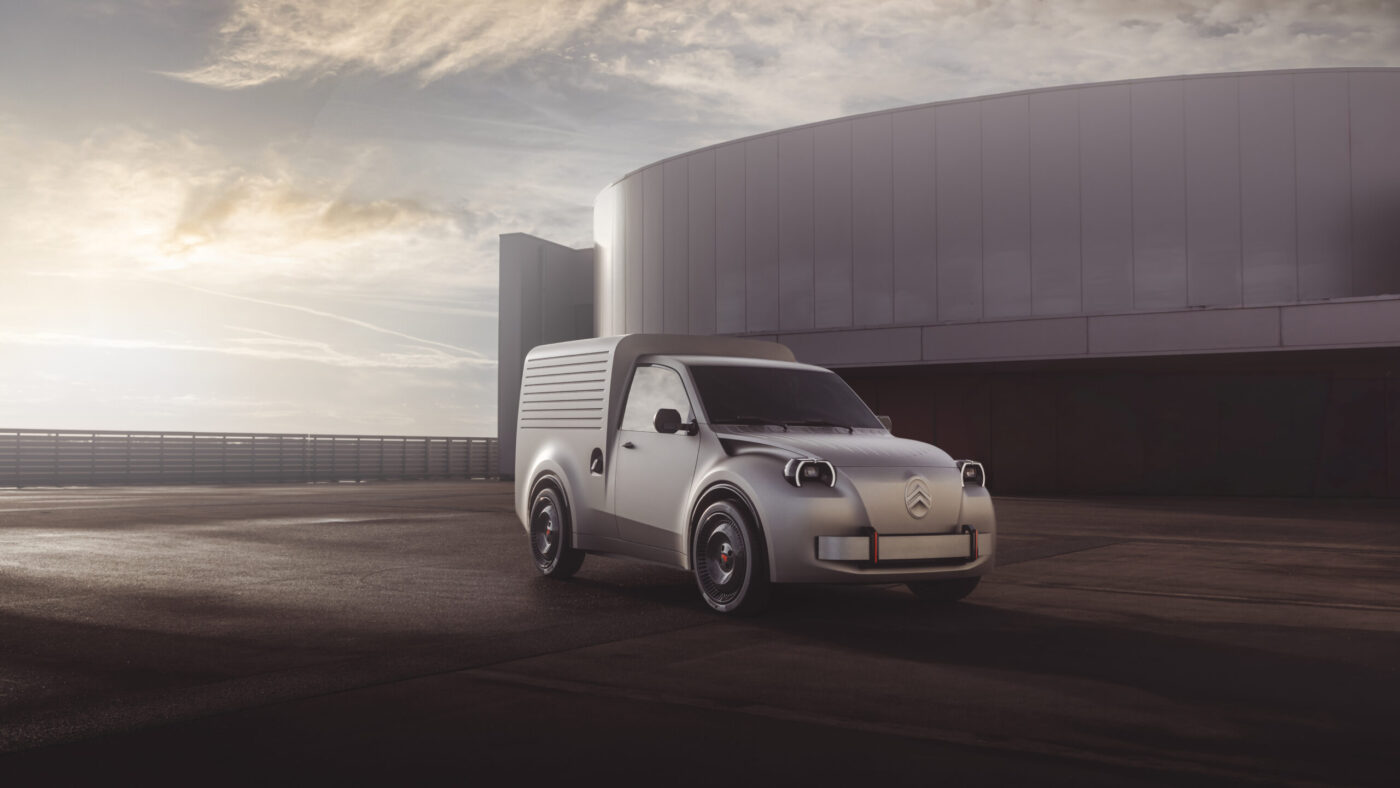
Citroen has unveiled the 2CV Fourgonnette Concept at the Paris Motor Show 2026, presenting an electric reinterpretation of its historic compact delivery van. The study extends the design philosophy of the new 2CV Concept into the light commercial vehicle segment, with an emphasis on simplicity, low weight and affordability.
Inspired by the original 2CV Fourgonnette, known in Germany as the Kastenente, the concept adopts the distinctive box-shaped silhouette of the classic utility vehicle. Citroen envisions it as a battery-electric work vehicle designed for straightforward operation and practical everyday use, with deliberately limited technological complexity.
However, the company has not confirmed plans to put the Fourgonnette into production. It has also not released technical specifications, leaving key details such as battery capacity, driving range, charging power, payload and cargo volume undisclosed.
Based on the New 2CV Concept
The Fourgonnette concept is closely related to the new 2CV Concept, which Citroen also presented in Paris. The passenger-car study reinterprets the original 2CV as a compact battery-electric vehicle focused on low weight, limited equipment and a relatively small battery.
The concept measures approximately 3.76 metres in length. Citroen is targeting a starting price of around €15,000 for a potential production version of the standard 2CV, with a market launch planned by 2028. The proposed model would sit between the Ami and C3 in the company’s range.
Citroen has also indicated that the production vehicle is intended to comply with planned European regulations for particularly compact and affordable electric cars. Specific details regarding its powertrain, battery and range have not yet been announced.
Potential Role in Urban Commercial Transport
The Fourgonnette concept applies the same low-cost, lightweight approach to commercial transport. Rather than prioritising large batteries and long driving ranges, the study focuses on a compact format and straightforward functionality.
This approach could suit urban delivery operators, tradespeople and other businesses with short, predictable daily routes. A smaller electric utility vehicle could also address applications where conventional electric vans are larger or more expensive than required.
Its commercial viability would depend on specifications that Citroen has yet to disclose, particularly cargo capacity, payload, range and charging performance. These factors will be important in determining whether the concept can meet the operational requirements of fleet customers.
Production Plans Remain Unconfirmed
Citroen describes the 2CV Fourgonnette as a design study and has not provided a production timeline. It remains unclear whether the company will develop a series-production commercial vehicle based on the new 2CV design.
If the lightweight and affordability principles outlined by Citroen are carried over to a production model, an electric Fourgonnette could target smaller urban transport applications. For now, however, the concept provides an indication of how the brand could extend its compact electric vehicle strategy into the commercial market rather than a confirmed addition to its future lineup.


