


Blocked from the U.S. market, Chinese autonomous driving technology firms are rapidly expanding into Europe, establishing headquarters, signing data agreements, and testing vehicles on public roads. The move has stirred concern among local competitors who fear intensified competition in an already fragmented market.
China, the world’s largest car market, has become a leader in vehicle automation, with more than half of new cars sold now featuring autonomous driving capabilities, often as standard. Backed by Beijing’s policy drive to dominate global self-driving development, Chinese firms are using Europe as a base for international growth, replicating the strategy that helped electric vehicle makers gain a foothold in global markets.
See also: EU’s Von der Leyen Urges AI-Driven Push for Self-Driving Cars to Revive Auto Industry
“We’re focusing on Europe for our global future,” said Dong Li, chief technology officer of Beijing-based QCraft, which recently announced plans to establish a German headquarters. Li cited Europe’s more open environment compared to the United States, where national security concerns over data collection have restricted Chinese technology.
QCraft joins several other Chinese firms, including Deeproute.ai, Momenta, WeRide, Baidu, and Pony.ai, in expanding across Europe. Deeproute.ai plans to open a data center in the region once new partnerships with automakers are finalized. Momenta, which supplies autonomous systems to Toyota and General Motors, will begin Level-4 testing with Uber in Germany next year and is set to provide driver-assistance technology for Mercedes-Benz in China. “Momenta has its eye on that prize: Europe,” one source familiar with the company said.
See also: China’s Momenta Seeks Funding Above $5 Billion Valuation, Weighs Hong Kong IPO
Chinese players view Europe as a profitable alternative to China’s saturated market. “Investors expect growth,” said Yvette Zhang, automotive consultant at AlixPartners. “They are looking for other markets to grow.” Some European startups, however, are calling for stricter oversight and government intervention. “If we want to have this technology, we need higher levels of regulation and a bit of intervention for a level playing field,” said Jim Hutchinson, CEO of British startup Fusion Processing.
Analysts say Europe’s relatively open regulatory approach makes it an attractive destination for Chinese firms following the U.S. ban on connected-car technology. “Europe is the only market they can come to,” said Tu Le, founder of consultancy Sino Auto Insights.
See also: China Proposes New Safety Standards for L2 Driving Assistance Systems
At September’s Munich auto show, Chinese self-driving technology firms appeared in force alongside electric vehicle manufacturers. Momenta’s European chairman, Gerhard Steiger, said the company’s partnership with Uber in Munich marks “the starting point for a broader rollout across Europe.” Deeproute.ai CEO Maxwell Zhou echoed that ambition, saying, “Europe is a huge market. It’s very important for us.”
Meanwhile, European firms such as Britain’s Wayve and Germany’s Vay are pushing for harmonized regulations to strengthen domestic innovation. European Commission President Ursula von der Leyen has called for a continent-wide initiative to develop autonomous vehicle technology, acknowledging Europe’s lag behind the U.S. and China.
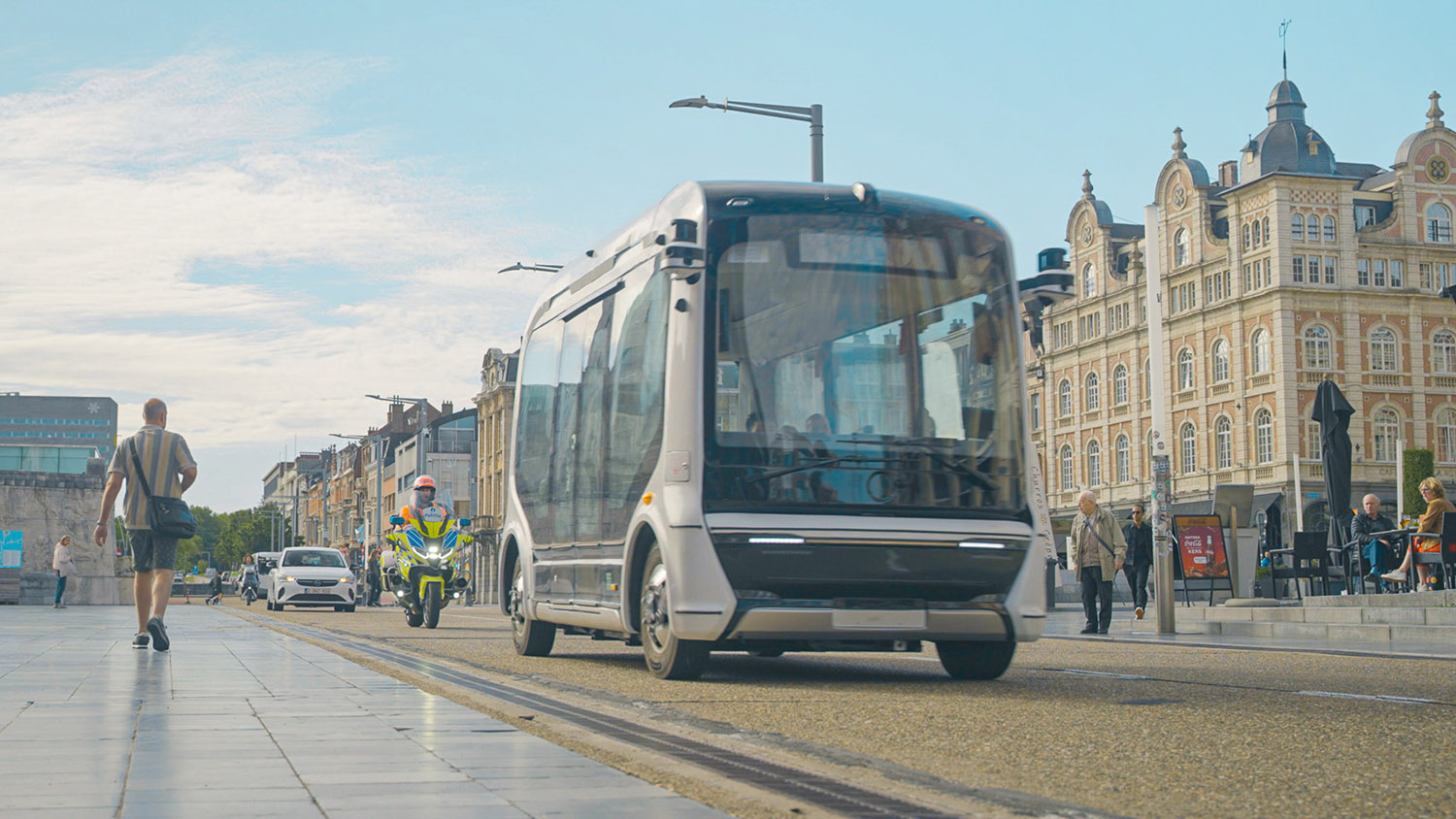
See also: WeRide Expands into Belgium with Robobus Pilot in Leuven
Vay co-founder Fabrizio Scelsi said the rise of Chinese competition will likely accelerate innovation among European players. “Chinese competition will force European players to sharpen their strategies very quickly,” he said, as the global race for autonomous driving technology intensifies.
Source: Reuters


