





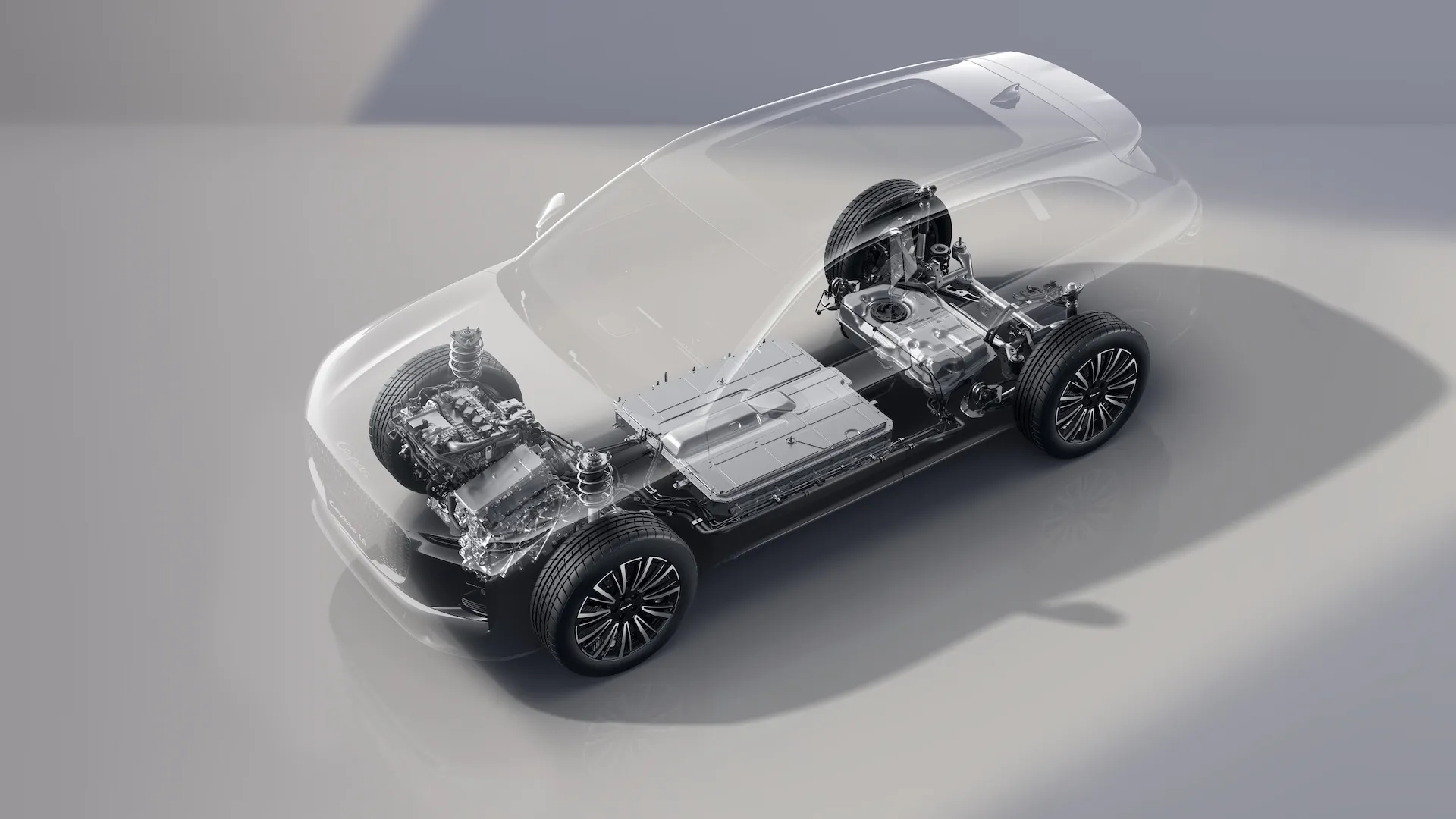
Chery’s new energy vehicle brand LEPAS has introduced its LEX vehicle platform, targeting global markets with a modular architecture designed to support pure electric, hybrid and multiple powertrain configurations.
The LEX Platform incorporates Chery’s EEA 5.1 electronic and electrical architecture, featuring a dual-zone, dual-center integrated layout. The system enables coordinated operation across intelligent cockpit functions, advanced driver assistance systems and powertrain controls, while supporting hardware standardisation, over-the-air software updates and cross-domain data sharing.
See also: Chery to Acquire Nissan’s South Africa Plant as Overseas Localization Push Advances
Chery said the platform has been engineered to meet diverse regional requirements. Battery-electric variants are equipped with an 800-volt high-voltage system, allowing significantly faster charging compared with conventional architectures. Hybrid and range-extended configurations are supported by a newly developed internal combustion engine with a thermal efficiency of 45.79%, translating into fuel consumption of about 4.9 litres per 100 kilometres in charge-sustaining mode.
Structurally, the LEX Platform features a body torsional rigidity of 23,800 newton-metres per degree, a figure the company said exceeds benchmarks for comparable vehicles. The chassis was developed with input from European engineering teams and incorporates active suspension technology and electronically controlled damping systems aimed at balancing ride comfort and handling performance.
See also: Chery Enters Germany With Plug-in Hybrid Jaecoo 7 as Tariff Pressure Shapes Strategy
Thermal management has also been tailored for global deployment. Electric models use a dual-source heat pump system designed to operate across a wide temperature range, supporting vehicle functionality in conditions as cold as minus 40 degrees Celsius, Chery said.
The automaker said the LEX Platform will underpin future LEPAS-branded vehicles across multiple segments, enabling faster development cycles and flexible adaptation to regional regulations and customer preferences as competition intensifies in global new energy vehicle markets.


