




Chinese automaker Chery is expanding its international ambitions into Japan’s highly competitive kei car segment through a newly established electric vehicle joint venture that brings together partners from China, Japan and Singapore.
The new company, Electric Mobility Technology (EMT), will market vehicles under the Emta brand, an abbreviation of “Easy, Made To All,” and plans to launch its first electric model in the Japanese market in 2027.
EMT is a multi-party alliance that includes Chery Automobile, Jiangsu Yueda Automobile Group, Japanese automotive retailer Autobacs Seven, Chinese battery manufacturer Gotion, and Japanese industrial equipment company Anest Iwata.
The venture is headquartered in Singapore and aims to develop affordable electric vehicles tailored to Japanese consumers.
According to a report by Car News China, EMT’s management team includes executives with experience at major Japanese automakers including Honda, Mazda and Nissan.
The company is led by Chief Executive Officer He Xiaoqing, whose previous career includes senior positions at Changan Ford, SAIC Motor and Chery Automobile.
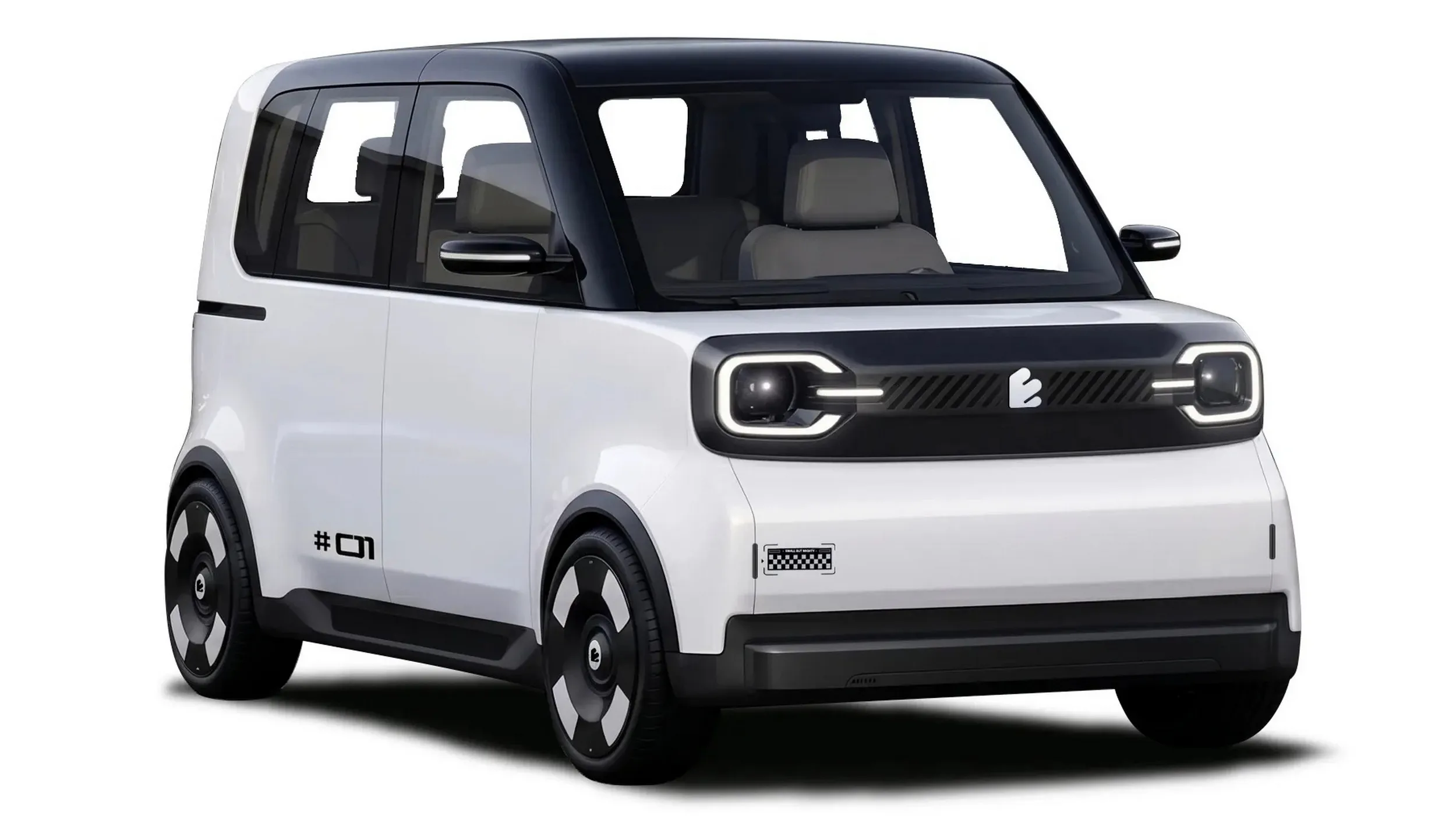
The first vehicle planned under the Emta brand is the Emta #01, a compact battery-electric hatchback expected to enter production during the second half of 2027.
Preview images show a boxy design with compact proportions, smooth body surfaces and a front fascia featuring modern LED lighting integrated into a closed grille design. The vehicle also incorporates sliding rear doors, a feature intended to improve access to the cabin in urban environments.
The Emta #01 measures approximately 3.4 metres in length, placing it within the dimensions typically associated with Japan’s kei vehicle category and comparable in size to Chinese microcars such as the Chery QQ Ice Cream.
Technical specifications have not yet been disclosed.
However, the model is expected to use Chery-developed vehicle architecture and battery technology supplied by Gotion. Industry reports also suggest the vehicle will feature modern connectivity functions, advanced infotainment systems and Level 2 advanced driver assistance systems (ADAS).
Production of the Emta #01 is planned for China, while Autobacs Seven will oversee distribution and retail sales in Japan.
The partners aim to position the vehicle at a price point comparable to conventional internal combustion engine kei cars, a strategy designed to improve EV affordability in one of the world’s most cost-sensitive small-car markets.
Upon launch, the Emta #01 is expected to become one of the few Chinese-developed kei-class electric vehicles available in Japan. According to Car News China, it would follow the BYD Racco as another Chinese-origin model targeting the segment.
EMT’s ambitions extend beyond a single model.
The company plans to introduce three additional electric vehicles by 2029, expanding its portfolio into multiple segments.
Teaser images released by the venture indicate future products could include a compact hatchback, a small crossover and a minivan.
Looking further ahead, EMT has outlined plans to establish a manufacturing facility in Japan after 2030, provided sales targets are achieved and market demand supports local production.
The move reflects growing efforts by Chinese automakers to expand internationally while leveraging partnerships with local companies to navigate regulatory requirements, distribution networks and consumer preferences in overseas markets.
For Chery, Japan represents one of the most challenging automotive markets globally, dominated by domestic manufacturers and a long-established kei car culture. Through EMT and the Emta brand, the company is seeking to gain a foothold in the country’s transition toward affordable electric mobility.


