



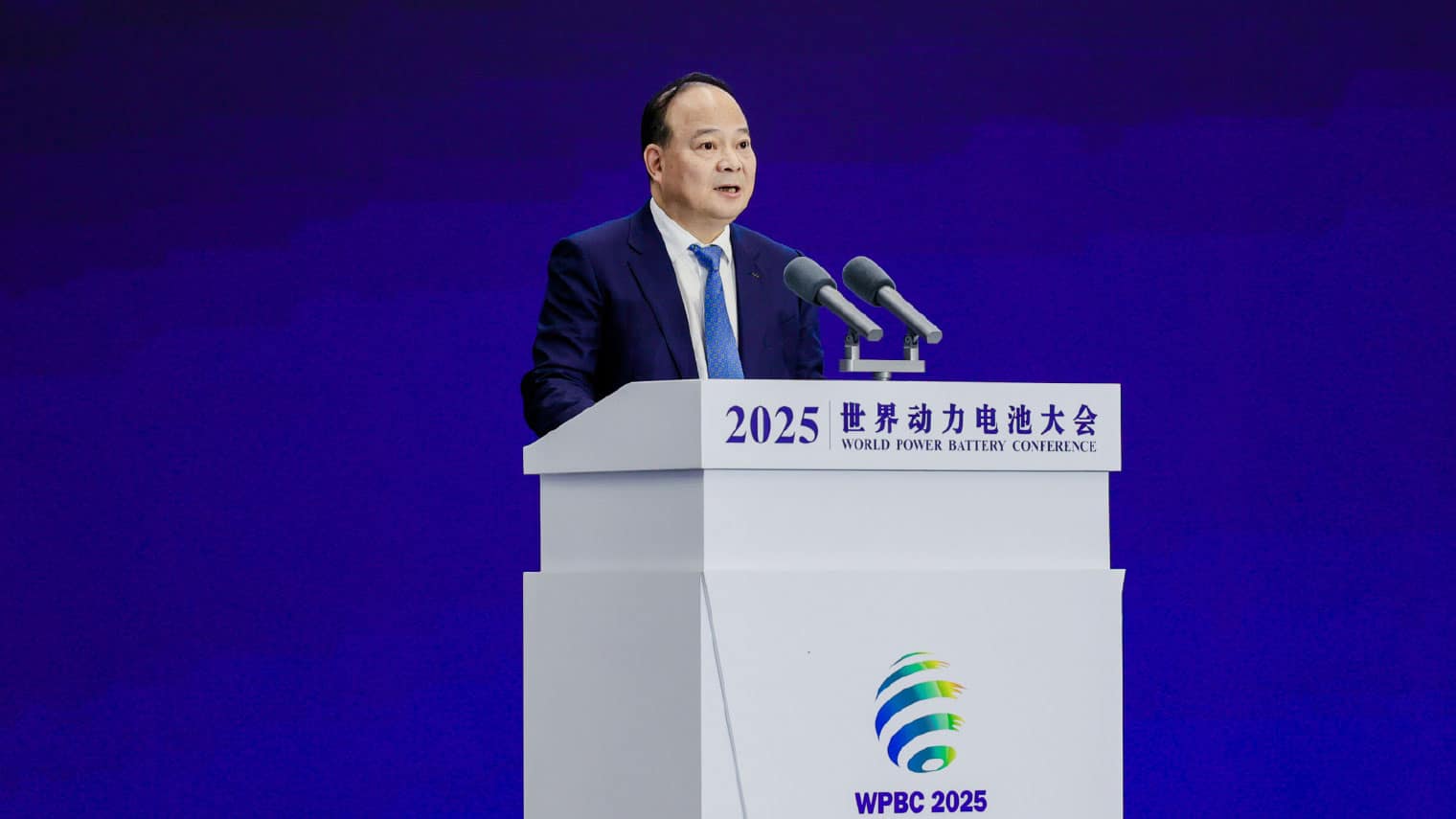
CATL has started mass production of its fifth-generation lithium iron phosphate (LFP) batteries, marking a new technological milestone in energy density and cycle life, according to Robin Zeng, the company’s founder, chairman, and CEO. The announcement was made during Zeng’s speech at the 2025 World Power Battery Conference held in Yibin, Sichuan.
Zeng said that CATL’s current fourth-generation LFP batteries already outperform mainstream second- and third-generation products in terms of energy density, lifespan, and power output. He added that the company continues to maintain leadership in ternary chemistry batteries, used in its Qilin Battery and Freevoy Battery platforms. CATL has also advanced its Naxtra sodium-ion battery, introduced earlier this year, which reduces reliance on lithium resources while improving safety and lowering carbon emissions.
See also: GAC Group and CATL Sign 10-Year Strategic Cooperation to Boost NEV Development
According to Zeng, Naxtra batteries overcome low-temperature performance issues common in traditional lithium batteries, opening new opportunities for new energy vehicle (NEV) adoption in northern high-latitude regions. He also highlighted progress in all-solid-state battery research and industrialization, saying CATL ranks among the global leaders in this technology.
Data from SNE Research shows CATL held a 36.6% global market share in power batteries between January and September, maintaining its position as the world’s largest manufacturer. In China, CATL led the EV battery market in October with 36.14 GWh of installed capacity, capturing 43% of the total market. The company also held 72.79% of the ternary lithium battery segment and 35.71% of the LFP segment last month.
See also: Chinese Automakers Race to Secure CATL Batteries Ahead of NEV Tax Incentive Cut
Zeng said CATL supplied 120 GWh of China’s nearly 200 GWh lithium battery exports in the first three quarters of 2025. The company has created nearly 150,000 jobs across 13 production bases worldwide and paid RMB 24.5 billion ($3.44 billion) in taxes during the same period. Over the past decade, CATL has invested more than RMB 80 billion in R&D, including RMB 15 billion this year alone.
Zeng noted that over 20 million NEVs globally now use CATL batteries, collectively reducing carbon dioxide emissions by about 14 million tons annually. Beyond passenger vehicles, CATL batteries power commercial trucks, electric vessels, and aircraft.
Its Tectrans series batteries are used in pure-electric heavy-duty trucks, while nearly 900 electric vessels are equipped with CATL systems. In low-altitude mobility, CATL’s two-ton eVTOL has completed multiple flight tests in complex environments and received Type Certificate (TC), Production Certificate (PC), and Airworthiness Certificate (AC). The company is now pursuing an Operation Certificate (OC), signaling new frontiers in electric aviation.


