




BYD plans to launch its ultra-fast “flash charging” network in South Africa, extending the 1,000 kW charging technology already being deployed in China and planned for Europe. The first stations are scheduled to go live in April or May 2026, the company’s senior vice president and head of Europe, Stella Li, told South African technology outlet TechCentral.
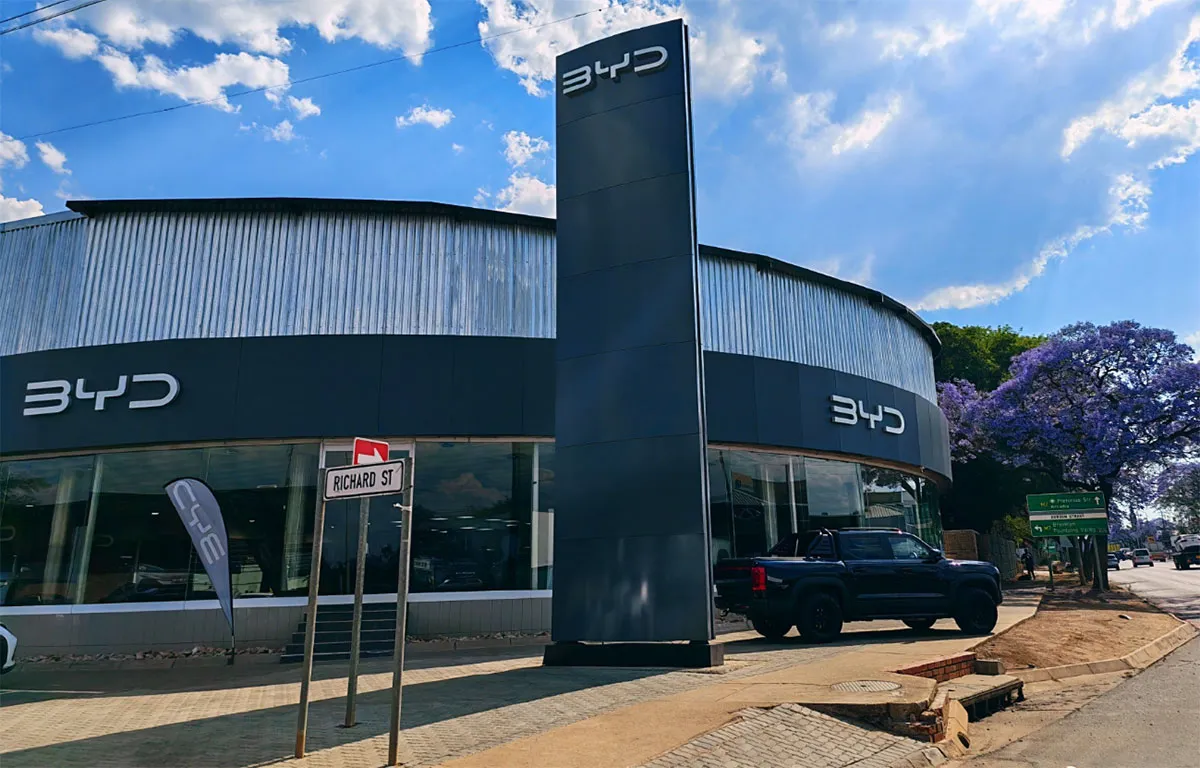
The new charging network will initially be installed across BYD’s expanding dealership network before extending to key motorway locations. “We want to cover 100% of the country,” Li said in the interview. “By the end of next year, we will have 200 or 300 Flash charging stations in South Africa.” The chargers will reportedly draw power from both the national grid and solar energy systems, enabling deployment beyond major urban centers. BYD signed an agreement with South African electricity provider Eskom in September to support the rollout.
See also: BYD Logs Over 100 Million Kilometers of Assisted Driving Data Daily in China
The flash charging technology was first introduced in March alongside updated versions of BYD’s Han L and Tang L electric vehicles, which feature a 1,000-volt platform. The system can add enough charge for around 400 kilometers of range in five minutes under the CLTC cycle. The same capability — charging a 100 kWh battery from 7% to over 50% in five minutes — is expected to be available in South Africa next year.
BYD has already installed several hundred flash chargers across China and plans to expand the network to more than 15,000 megawatt-capable charging stations through various partnerships. In Europe, the company expects to deploy several hundred chargers in 2026, with up to 300 stations operational by the end of the second quarter. The European version of the system will differ slightly from China’s, using a single charging cable instead of two.
See also: BYD Favors Spain for Potential Third European Car Plant
Despite the investment in local charging infrastructure, BYD has no immediate plans to establish manufacturing operations in South Africa. “Not at this point; we are too new to the market,” Li told TechCentral. “We only invest [in manufacturing plants] where we have a big market. We are new here; we still need to understand [the market more fully].”


