





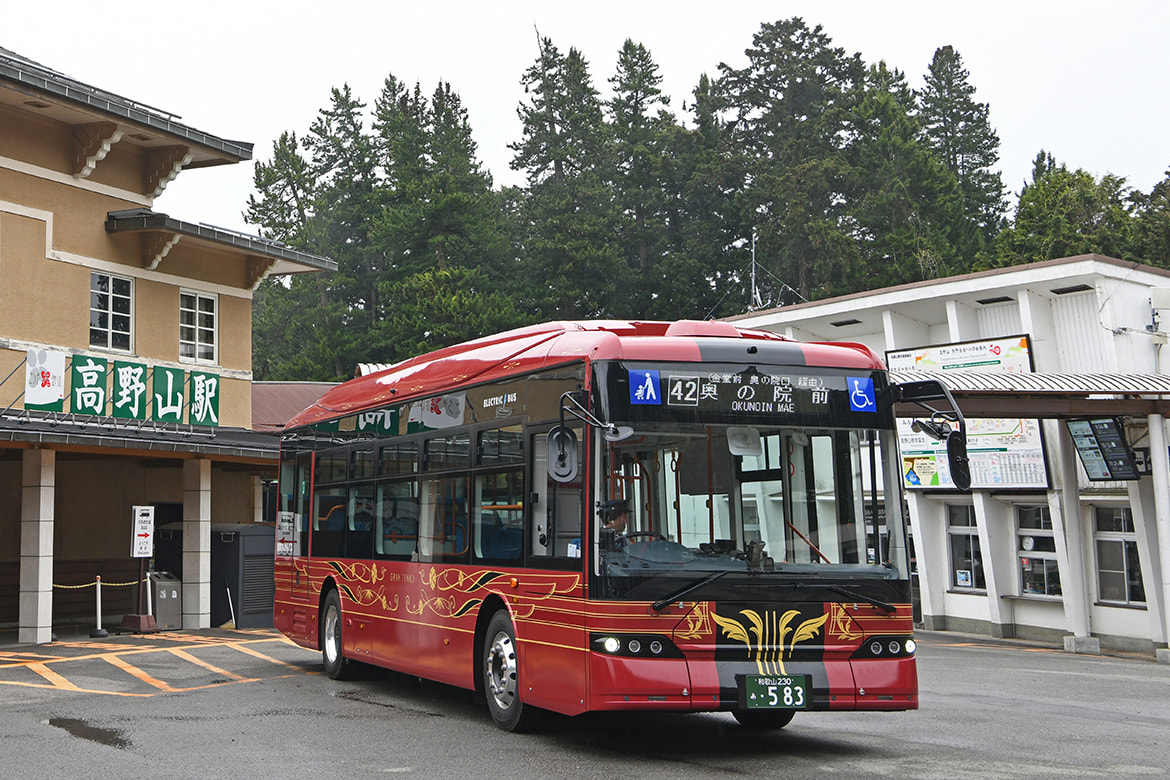
BYD has commissioned six additional electric buses in Japan, bringing the company’s total number of electric buses operating in the country to 500.
The latest vehicles were delivered to Nankai Rinkan Bus, a transport operator based in Hashimoto in Wakayama Prefecture.
According to BYD, the buses will operate on the Koyasan Inland Line connecting Koyasan Station and Okunoin-mae.
The deployment marks the first commercial introduction of BYD electric buses in Wakayama Prefecture.
Nankai Rinkan Bus has introduced six units of the BYD K8, currently the largest electric bus model offered by the Chinese manufacturer in Japan.
The K8 measures 10.5 metres in length, 2.5 metres in width and 3.3 metres in height, with a wheelbase of 5.3 metres.
BYD offers the K8 in both urban and suburban configurations in the Japanese market.
The urban version accommodates up to 80 passengers, including seated and standing passengers as well as two wheelchair spaces, while the suburban version has capacity for 76 passengers.
The buses are powered by two 100-kW electric motors delivering combined output of 200 kW.
According to BYD, the K8 can reach a maximum speed of 70 km/h and handle road gradients of up to 15%.
The vehicle uses a 314-kWh lithium iron phosphate battery pack providing a driving range of approximately 240 kilometres.
The battery system supports charging power of up to 90 kW, with BYD stating a charging time of up to 3.5 hours.
The company did not specify the charging standard used.
The K8 also features air suspension systems on both axles and has a turning radius of 8.3 metres.
BYD entered the Japanese electric bus market in 2015 with its first deployment in Kyoto.
Junichi Wada, president and chief executive of Nankai Rinkan Bus, said the company selected the vehicles partly due to their suitability for the demanding operating conditions in the Koyasan region.
“BYD’s EV buses have already been introduced within the Nankai Group, and we prioritised their range and performance that can withstand use in Koyasan, where temperatures can drop to -15°C in winter,” Wada said.


