


Bucharest has secured €87.44 million in non-repayable funding from the European Union’s Modernisation Fund to renew its public transport fleet, including plans to procure 40 battery-electric buses, 45 trolleybuses and 10 trams.
Mayor Ciprian Ciucu announced the funding on Facebook, stating that the European Investment Bank had identified the project as a priority investment for the Romanian capital. The city will be responsible for covering the value-added tax (VAT), while the funding itself does not need to be repaid.
Plans to Replace Older Public Transport Vehicles
The fleet renewal programme covers three vehicle categories. Ten new trams are planned to replace V3A(M) vehicles, while 45 trolleybuses will replace older Astra-Ikarus models.
The planned electric bus procurement consists of 20 vehicles measuring 12 metres and another 20 measuring 10 metres. These buses are intended to replace Mercedes-Benz Citaro vehicles equipped with Euro 3 diesel engines.
The investment is intended to modernise the fleet operated by Societatea de Transport București (STB) and expand the use of electric public transport across the city.
Bucharest Continues Public Transport Electrification
Bucharest has already taken several steps to increase the number of electric vehicles in its public transport system.
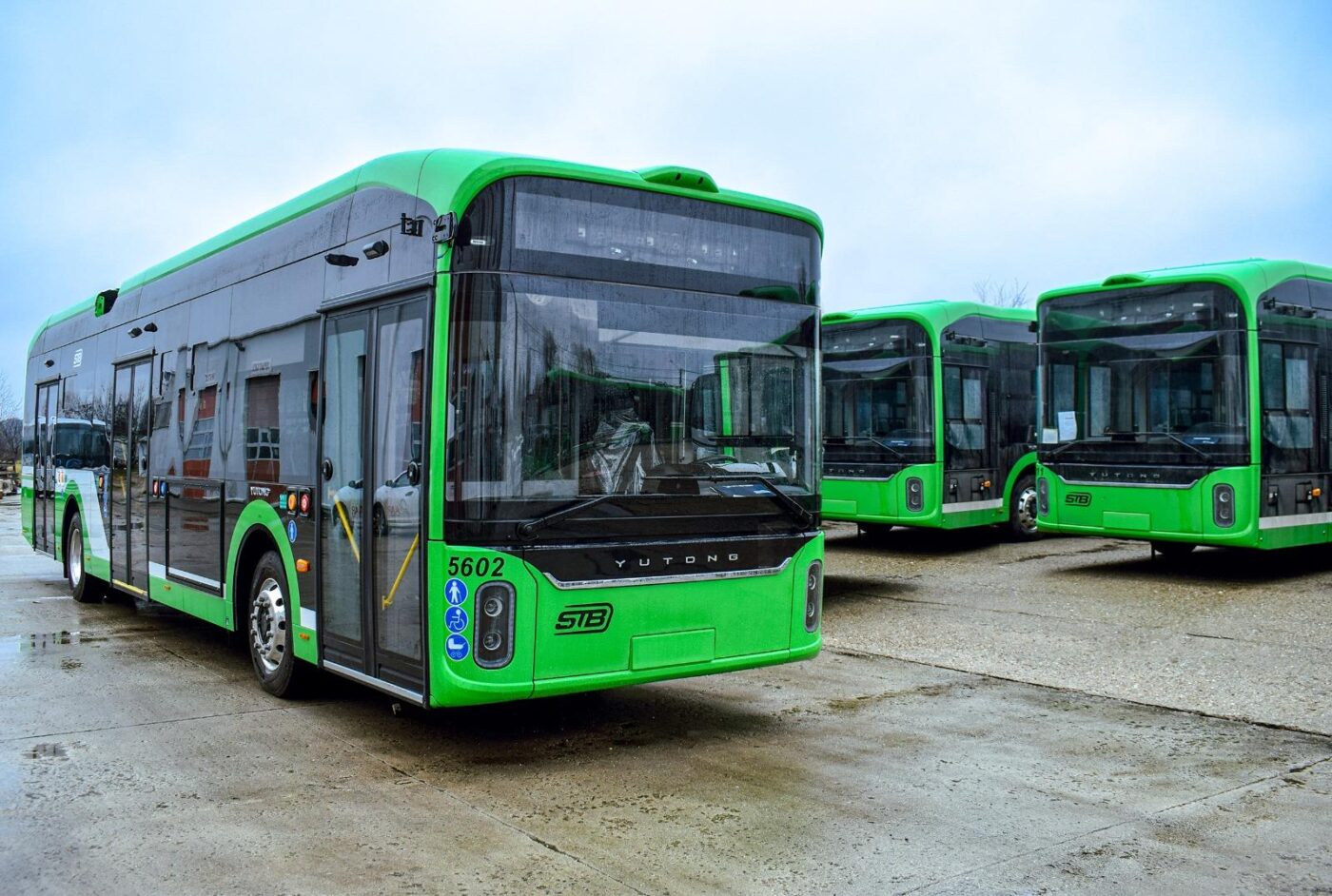
At the beginning of 2026, the city received 22 Yutong U12 battery-trolleybuses. Their onboard batteries allow them to travel up to 20 km without connection to overhead power lines, providing additional flexibility on routes where continuous overhead infrastructure is unavailable.
The city has also received 100 Solaris Trollino 12 trolleybuses. Separately, Bucharest ordered 100 battery-electric buses from Karsan and announced plans to install 100 charging stations.
Charging Infrastructure a Key Requirement
The planned procurement of 40 battery-electric buses will require further investment in charging infrastructure. According to Ciucu, the city needs to ensure that the necessary charging facilities are available so the buses can enter service as soon as they are delivered.
Coordinating vehicle procurement with charging infrastructure is an important part of the transition to battery-electric public transport, helping operators integrate new buses into existing routes and schedules.
Focus on Fleet Modernisation and Air Quality
The programme is intended to replace older diesel buses and trolleybuses while improving the condition of Bucharest’s public transport fleet. The planned tram replacement will also form part of the broader renewal effort.
City officials expect the investment to improve public transport services and reduce local air pollution through the replacement of older vehicles with newer electric alternatives. The scale of these benefits will depend on the deployment of the vehicles, their operating patterns and the supporting infrastructure.


