


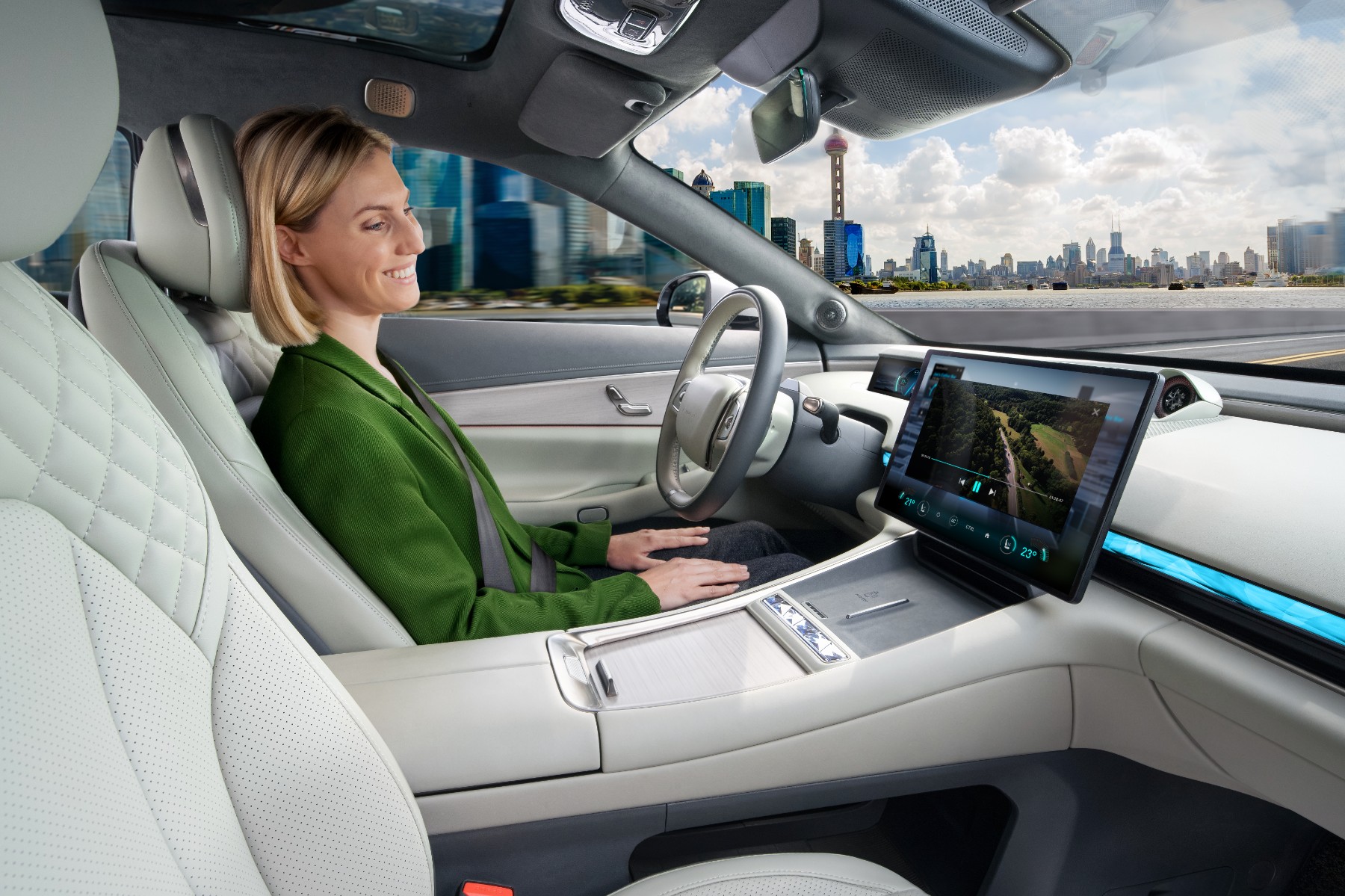
Bosch has introduced a new Level 3 driver assistance system capable of “hands-off, eyes-off” driving at Auto China, marking the company’s entry into highly automated driving.
The system, developed by Bosch Mobility, is currently being tested on public roads in Wuxi following regulatory approval granted in March 2026. Unlike Level 2 systems, which require continuous driver supervision, Level 3 automation allows the vehicle to take over driving tasks in defined conditions, enabling drivers to disengage from active control.
Bosch said the system is designed for use on motorways and urban expressways, operating at speeds of up to 120 km/h and functioning in reduced visibility conditions of as low as 300 metres. It is also capable of automated lane changes.
“In a world that is moving ever faster, Bosch technology will give drivers back the valuable time they spend in the car,” the company said.
“We use AI in every software component and combine it with a redundant safety architecture,” said Markus Heyn, Managing Director of Robert Bosch GmbH and Chairman of Bosch Mobility. “Our knowledge spans all vehicle domains, and that makes us the ideal partner for manufacturers to scale Level 3,” he added.
The system builds on Bosch’s existing advanced driver assistance technologies and is already being deployed in vehicles such as the Chery Exeed ES in China. Bosch said its capabilities draw on in-house expertise across sensors, braking, steering, powertrain systems, high-performance computing, and artificial intelligence, including its latest radar technology.
The company emphasized that the technology is intended for global markets. “We can transfer knowledge from one market to another. Our aim is to be the preferred partner for Chinese and Western manufacturers,” Heyn said.
Stefan Hartung added that adapting to regional conditions would be key to success. “The future belongs to those like us who can adapt their portfolios and supply chains to regional conditions – and at the same time deliver world-class quality,” he said.
Bosch’s announcement comes as some automakers reassess their Level 3 strategies. Mercedes-Benz and BMW have recently scaled back or limited the rollout of such systems, citing high hardware costs, including LiDAR sensors and redundant safety components.
Mercedes’ Drive Pilot system, for example, has been offered at an additional cost of between €6,000 and €9,000 in models such as the S-Class and EQS, while BMW’s Personal Pilot L3 has also faced limitations in availability and usage.
Both automakers are increasingly focusing on advanced Level 2 systems that offer broader usability across driving scenarios but still require driver supervision.
Bosch said its Level 3 system aims to balance performance, scalability and cost as the industry continues to evaluate the commercial viability of higher levels of automation.


